
Ice Maker Not Working? Here's Exactly How We Diagnosed and Fixed One in Chicago
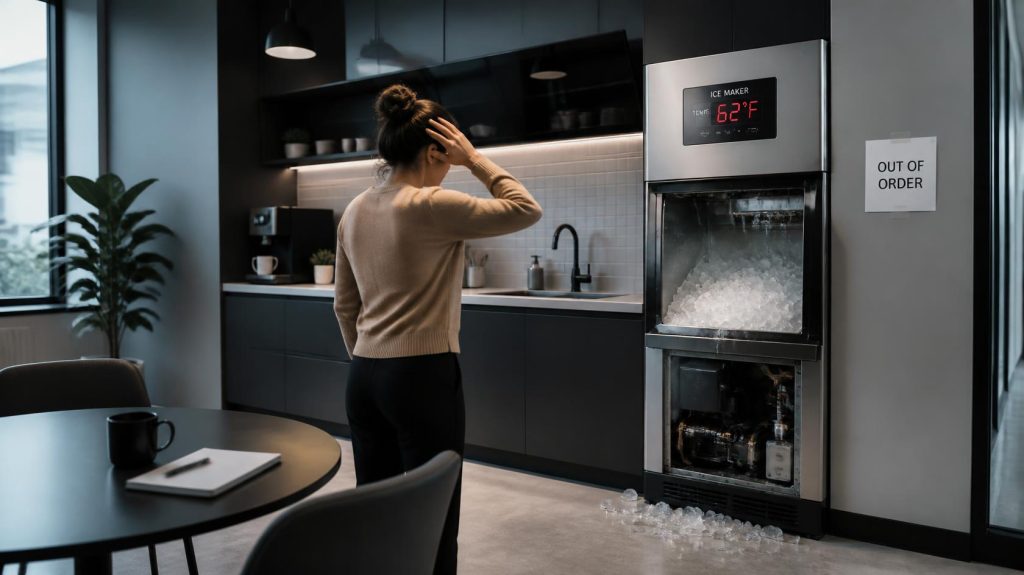
A step-by-step look at a real refrigerator ice maker repair, from no ice to full production
An ice maker that suddenly stops producing gets blamed on the appliance itself more often than not. In this case, the refrigerator was fine. Here is the exact diagnostic process our certified technicians used to find the real cause, fix it in a single visit, and get ice production running again.
Case Snapshot
The Problem
Ice Production Slowed, Then Stopped
Water kept collecting on the kitchen floor near the refrigerator, worse by the end of the day than in the morning. There was no visible crack, hose, or line leaking anywhere the homeowner could see, which made it feel like it could be almost anything. Ice maker failures can come from several different points in the system (the on/off switch, the freezer temperature, the water supply, the filter, or the ice maker module itself) so narrowing down which one is actually at fault matters more than replacing parts on a guess.
The Diagnostic Process
Five Checks, In Order
Our certified technicians follow the same sequence on every ice maker not working call, because ruling out the simple causes first prevents unnecessary part replacement.
Check the ice maker's on/off switch or arm position
Most ice makers have a metal arm or digital switch that stops production when raised or toggled off, and it's easy to bump accidentally.
Checked, confirmed onCheck the freezer temperature
Ice makers need the freezer at or below the manufacturer's recommended range, typically around 0°F, to cycle properly.
Within correct rangeCheck the water supply line
This line runs from the home's water source to the back of the refrigerator, often through an unheated space or exterior wall.
Found frozen solid — root cause foundCheck the water filter
With the line identified as frozen, the filter was inspected as a secondary check to rule out an additional restriction.
Within replacement window, not a factorCheck the water inlet valve
Once the line was thawed, the inlet valve was tested to confirm it opened and closed properly and wasn't a second point of failure.
Confirmed workingThe Root Cause: A Frozen Water Supply Line
The water supply line running behind the refrigerator had frozen solid, most likely from running along an exterior wall in an unheated section of the kitchen during a stretch of cold weather. With no water able to reach the ice maker, production slowed and then stopped entirely as the existing ice in the bin was used up.
The Fix & The Result
Fixed in One Visit, With a Line Rerouted to Prevent a Repeat
The technician thawed the line, confirmed water flow was fully restored, and rerouted a section of the line away from the coldest part of the wall with added insulation to reduce the chance of it refreezing. Ice production was tested through a full cycle before completing the visit.
The ice maker resumed normal production the same day, and the rerouted, insulated line means the homeowner isn’t likely to see the same freeze-up again next winter. This is the outcome we aim for on every ice maker not working call: find the actual cause fast, and fix the conditions that caused it, not just the symptom.
Ice maker, dispenser, or water line giving you trouble? Our refrigerator repair service covers ice makers, inlet valves, and water lines for all major brands.
Want the full list of causes, not just this one? Our ice maker repair guide breaks down all 7 reasons Chicago refrigerators stop making ice, ranked by how common they are.
Read the Full GuideBeyond This Case
Common Causes of an Ice Maker Not Working
Not every case matches this one. Here are the most common reasons an ice maker stops working, from easiest to most involved.
| Cause | How Common | DIY Fixable? |
|---|---|---|
| Ice maker switched off or arm bumped up | Very common | Yes |
| Freezer temperature set too warm | Common | Yes. If adjusting the setting doesn't help, see our freezer running too warm repair |
| Frozen water supply line (common in Chicago winters) | Common | Sometimes. Refreezing often needs rerouting or insulation. A frozen line can also stop the dispenser, as in our water dispenser repair |
| Clogged or overdue water filter | Common | Yes |
| Faulty water inlet valve | Less common | No. A failing valve can also cause a refrigerator leaking water |
| Ice maker module or motor failure | Less common | No |
Brand-Specific Notes
This Happens Across All Major Brands
Frozen supply lines and water inlet valve failures show up across all major brands we service, including Samsung, LG, Whirlpool, GE, and Sub-Zero. Our certified appliance technicians have experience diagnosing ice maker not working issues across all these brands and more.
Prevention
Keep It From Happening Again
- Insulate or reroute water lines that run through unheated spaces or exterior walls
- Replace the water filter on the manufacturer's recommended schedule
- Confirm the freezer stays at or below the recommended temperature
- Check the ice maker arm or switch position periodically, especially after loading groceries
- Avoid overloading the freezer in a way that blocks airflow to the ice maker
Before You Call
DIY vs. Calling a Professional
Reasonable to Try Yourself
Checking that the ice maker is switched on, the freezer is set between 0 and 5°F, the water valve is fully open, and the filter is locked in place are reasonable first steps before calling for refrigerator repair. Whirlpool's ice maker checklist walks through the same checks.
Call a Certified Technician
A frozen line, a faulty inlet valve, or a failed ice maker module usually means getting to the line routing or interior components. That's where a certified technician prevents guesswork and repeat freeze-ups.
FAQ
Ice Maker Not Working: Common Questions
Answers to the questions we hear most on ice maker not working calls in Chicago.
Why does my ice maker work fine in summer but not in winter?+
The usual culprit is the water supply line. If it runs along an exterior wall, through an unheated space, or near a drafty window, Chicago winter temperatures can freeze the water inside it. The ice maker then gets little or no water, even though everything works normally once the weather warms up.
Is a frozen water line something I can thaw myself?+
We recommend leaving it to a technician. Heat guns, open flames, or boiling water can melt or crack the plastic tubing, and the frozen section is often behind the refrigerator or inside a wall. Thawing it also doesn't fix why it froze. A technician can thaw the line safely, check it for damage, and reroute or insulate it so it doesn't freeze again.
How long does it take to repair an ice maker that isn't working?+
Thawing and rerouting a frozen line can often be done in a single visit, as in this case. If an inlet valve or ice maker module needs to be ordered for your model, we'll return to install it once it arrives. Keep in mind that a repaired ice maker usually takes several hours to start filling the bin again. We offer same-day and next-day appointments seven days a week.
What does it cost to diagnose an ice maker issue?+
The diagnostic visit is $89, waived when you book the repair. Most repairs fall between $129 and $400. Your exact price depends on the issue, and we quote it before any work starts. First-time customers also get 10% off, and every repair is backed by a warranty.
Why is my ice maker making ice slower than usual instead of stopping completely?+
Slow ice usually means the ice maker is getting less water than it should, or the freezer isn't cold enough. A partly frozen supply line, a clogged or overdue filter, a kinked line, or a supply valve that isn't fully open can all reduce flow. A freezer set warmer than 0 to 5°F also slows freezing. Smaller or hollow cubes are a common sign of low water flow.
Will a frozen water line happen again after it's fixed?+
Not if the cause is addressed. Simply thawing the line leaves it in the same cold spot, so it can freeze again with the next cold snap. That's why our technician rerouted part of the line away from the coldest wall section and added insulation in this case. Rerouting or insulating is what keeps it from coming back.
Do all ice maker problems require a technician visit?+
No. Check a few things first: that the ice maker is switched on and the arm isn't raised, that the freezer is set between 0 and 5°F, that the water valve is fully open, and that the filter is locked in place and not overdue. If none of those fix it, the problem is likely a frozen line, an inlet valve, or the ice maker module, which need a technician.
Do all refrigerator brands have the same ice maker failure points?+
Mostly, yes. Frozen supply lines, clogged filters, and failing inlet valves happen across every major brand. Ice maker designs do vary, though, especially in-door ice makers on French door models, which changes where parts sit and how a technician reaches them. We repair all major and luxury appliance brands.
Ice Maker Not Working?
Get It Diagnosed the Right Way, the First Time
Same-day and next-day appointments available across Chicago and the surrounding suburbs. $89 diagnostic fee, waived with repair. 10% off your first repair.