
Refrigerator Water Dispenser Issues? Here's Exactly How We Diagnosed and Fixed One in Chicago
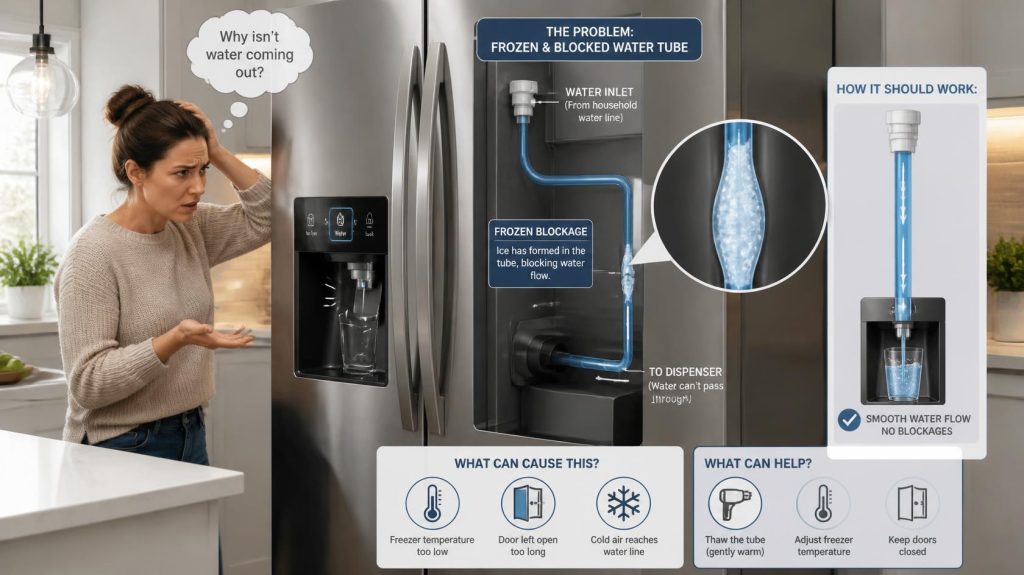
A step-by-step look at a refrigerator water dispenser that slowed to a trickle and then stopped, and the frozen line our certified technicians found
A water dispenser that goes from a normal flow to a trickle, then stops altogether, is one of the more common calls we get, and one of the more misunderstood. Most homeowners assume it’s a pump or valve failure. In this case, the real cause was simpler and colder. Here is the exact diagnostic process our certified appliance technicians used to trace the issue back to a frozen water line, clear it, and restore normal flow the same day.
Case Snapshot
The Problem
Flow that slowed down, then stopped
The homeowner noticed the water dispenser slowing down over about a week before it stopped producing water entirely. The ice maker was still working, which ruled out a full water supply failure, but nothing came out of the dispenser no matter how long they held the lever.
The Diagnostic Process
How our technicians traced the cause
- Confirmed water was reaching the refrigerator by checking the supply line at the shutoff valve
- Traced the water line's path from the inlet valve through the freezer compartment to the dispenser
- Found the section of tubing that runs through the freezer wall was frozen solid, blocking flow
- Checked freezer temperature settings and door seal condition to identify why the line had frozen in the first place
The Root Cause
A blocked line, one freeze at a time
Diagnosis
The water tube where it passes through the freezer wall had developed an ice blockage. This typically happens when the freezer runs colder than necessary, when a door seal isn't sealing properly and lets in extra moisture, or when the tube itself has developed a partial obstruction that slows flow enough for the water sitting in the line to freeze.
The Fix
Thawing the line and adjusting the freezer temperature
Our certified appliance technicians thawed the blocked section of tubing, inspected it for damage, and adjusted the freezer temperature setting to a level that keeps ice production reliable without unnecessarily chilling the water line.
Dispenser, ice maker, or water line acting up? Our refrigerator repair service covers water lines, inlet valves, dispensers, and controls for all major brands.
The Result
Water flow restored the same day
Water flow returned to normal immediately after the blockage cleared. The homeowner confirmed steady flow with no further slowdown over the following days.
Common Causes
Common Causes of Refrigerator Water Dispenser Issues
| Condition | Signs | Fix |
|---|---|---|
| Frozen water line | Flow slows gradually, then stops; ice maker often still works | Thaw line, adjust freezer temperature |
| Faulty water inlet valve | No water reaches the dispenser or ice maker at all | Valve replacement. A failing valve usually stops the ice maker too, which we cover in ice maker not working |
| Kinked or pinched tubing | Inconsistent or reduced flow, sometimes intermittent | Reroute or replace tubing. A cracked line can also leave a refrigerator leaking water |
| Clogged water filter | Weak or slower flow from the dispenser | Filter replacement, about every 6 months per Whirlpool's filter guidance |
| Door switch or dispenser control fault | Dispenser doesn't activate even with a full water supply | Switch or control replacement |
Brand-Specific Notes
What we see across different brands
[Placeholder pending Ben’s input. No factory-specific certification claims for luxury brands (Sub-Zero, Viking, Thermador, Gaggenau, etc.) — use “certified appliance technicians with experience in [brand/system]” language if brand notes are added here.]
Prevention
How to keep this from happening again
- ✓Avoid setting the freezer colder than necessary for reliable ice production
- ✓Check door seals periodically for gaps that let in extra moisture, and repair refrigerator door seal problems early
- ✓Replace the water filter about every 6 months, or sooner if flow slows down. Whirlpool's filter guidance notes that weaker flow is a sign the filter is clogged
- ✓Use the dispenser regularly, since infrequent use makes line freezing more likely
- ✓Have the water line checked if it has frozen before
DIY vs. Professional
What you can check yourself vs. what needs a pro
You Can Try
- Checking that the water supply shutoff valve is open
- Checking the supply line behind the refrigerator for kinks, which Whirlpool lists as a common cause of reduced flow
- Replacing the water filter
- Confirming the freezer isn't set colder than needed
Call a Professional
- Thawing a frozen line safely
- Valve replacement
- Dispenser control or switch diagnosis
FAQ
Frequently Asked Questions
Why did my refrigerator water dispenser suddenly stop working?+
The most common cause is a frozen water line where the tubing passes through the freezer. Other causes include a closed or partly closed supply valve, a kinked supply line, a clogged water filter, a failing water inlet valve, or a faulty door switch or dispenser control. If the ice maker still works, a frozen line or a dispenser-side problem is more likely than a supply issue.
How do I know if my water line is frozen?+
A frozen line usually shows a pattern: water flow slows over several days, then stops, while the ice maker may keep working. You may also hear the dispenser click or hum with no water coming out. If the supply valve is open, the filter is fresh, and the freezer is set very cold, a frozen section of tubing is a likely cause.
Can I thaw a frozen refrigerator water line myself?+
We recommend leaving it to a technician. The frozen section is often inside the freezer wall or door, and reaching it can mean removing panels near wiring. Heat guns, open flames, or sharp tools can melt or crack the plastic tubing. A technician can thaw the line safely, check it for damage, and fix whatever caused it to freeze.
Why does my water dispenser work slowly but my ice maker works fine?+
On many models, the dispenser and ice maker share a water supply but split into separate lines. If the ice maker is fine, water is reaching the refrigerator, so the problem is usually on the dispenser's side. That's often a partly frozen dispenser line, a kink in that section of tubing, or a filter that's starting to clog and slows the dispenser more noticeably.
How often should I replace my refrigerator water filter?+
About every 6 months, or when your refrigerator's filter indicator light comes on. Replace it sooner if you notice the water flow slowing down, since weaker flow is a common sign the filter is clogged. Check your owner's manual for the exact filter model and schedule for your refrigerator.
Will a frozen water line damage my refrigerator?+
It can. Water expands as it freezes, which can stress or crack the tubing, and a cracked line may start leaking once it thaws. That's why our technician inspects the line after thawing it, not just restores flow. Fixing the cause, like an overly cold freezer setting or a worn door seal, keeps it from freezing again.
How much does it cost to fix a water dispenser?+
Our visit starts with an $89 diagnostic fee, waived when you book the repair. Most repairs fall between $129 and $400. Your exact price depends on the issue, whether that's thawing a line or replacing a valve or control, and we quote it before any work starts. First-time customers also get 10% off, and every repair is backed by a warranty.
How long does this kind of repair take?+
Thawing a frozen line and adjusting the freezer setting can often be done in a single visit, as in this case. If a water inlet valve, tubing, or dispenser control needs to be ordered for your model, we'll return to install it once it arrives. We offer same-day and next-day appointments seven days a week, and you'll get a time estimate after the diagnosis.
Is Your Water Dispenser Not Working?
$89 diagnostic fee, waived with repair · 10% off your first repair · Same-day appointments available