
Dishwasher Leaving Spots on Dishes? Here's Exactly How We Diagnosed and Fixed One in Chicago
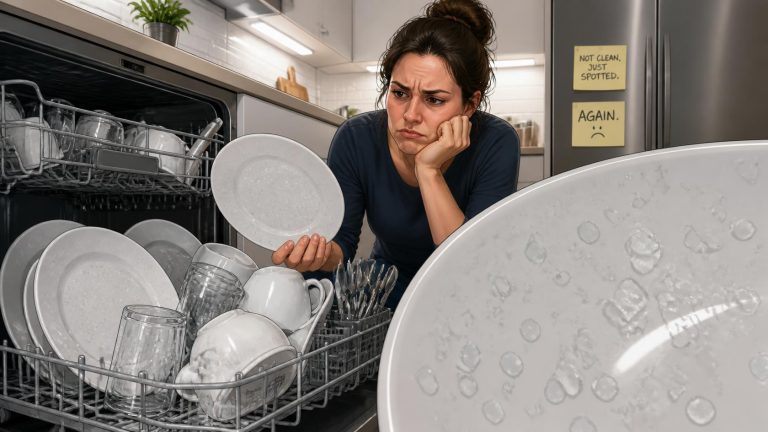
A step-by-step look at a real dishwasher repair, from cloudy glasses to spot-free dishes
Spots and film on dishes after a full cycle get blamed on the dish soap, the water, or bad luck more often than the dishwasher itself. In this case, two separate issues were working against each other at once. Here is the exact diagnostic process our certified technicians used to find both causes, fix them in a single visit, and get dishes coming out clean again.
Case Snapshot
The Problem
Spots and Film That Wouldn't Go Away
Dishes had been coming out of the dishwasher with a chalky white film and visible spots for a few weeks, worse on glassware than on plates. The homeowner had already tried switching detergent brands and running an empty cycle with vinegar, with only minor improvement. Spotting can come from several different places (water hardness, detergent, rinse aid, water temperature, or something physically blocking water distribution) so it’s easy to fix the wrong one first and see no real change.
The Diagnostic Process
Five Checks, In Order
Our certified technicians follow the same sequence on every dishwasher spotting call, because spotting often has more than one contributing cause and stopping at the first one found can leave the problem only partly fixed.
Check the rinse aid dispenser
Rinse aid helps water sheet off dishes instead of beading and drying as spots.
Topped off, dispensing normallyCheck the water temperature entering the dishwasher
Water that's too cool doesn't dissolve detergent fully or rinse minerals away effectively.
Within correct rangeTest the water hardness
Chicago-area water hardness varies by neighborhood and can be significant enough on its own to leave mineral spots even with everything else working correctly.
Hard water confirmed as a contributing factorInspect the spray arms
Both the upper and lower spray arms were removed and checked for blocked or clogged holes.
Lower spray arm partially clogged — second factor foundInspect the detergent dispenser and cycle settings
Checked as a final step to confirm detergent was being released properly and the cycle selected matched the soil level.
No issues foundThe Root Cause: Hard Water Plus a Clogged Spray Arm
Two things were happening at once: hard water was leaving mineral deposits on dishes as they dried, and a partially clogged lower spray arm was reducing water pressure enough that rinse water wasn't fully clearing detergent residue and loosened minerals off the bottom rack. Either issue alone might have caused mild spotting, but together they explained the more noticeable film across both racks.
The Fix & The Result
Fixed in One Visit, With Both Causes Addressed
The technician cleaned and cleared the spray arm holes, ran a full descaling cycle to address existing mineral buildup inside the unit, and confirmed rinse aid settings were adjusted appropriately for the home’s water hardness level. A full cycle was run with real dishes to confirm the fix before completing the visit.
Dishes came out of the very next cycle clean and spot-free, with the improved rinse aid setting helping offset the hard water going forward. This is the outcome we aim for on every dishwasher spotting call: identify every factor at play, not just the first one found, so the fix actually holds.
Beyond This Case
Common Causes of Dishwasher Spots on Dishes
Not every case matches this one. Here are the most common reasons dishes come out spotted, from easiest to most involved.
| Cause | How Common | DIY Fixable? |
|---|---|---|
| Low or empty rinse aid | Very common | Yes |
| Hard water mineral deposits | Very common (Chicago-area water varies) | Partially, rinse aid settings help but softening needs equipment |
| Clogged or blocked spray arm | Common | Yes, arms can be removed and cleaned |
| Water temperature too low | Common | Yes, check water heater setting |
| Using the wrong detergent type | Common | Yes |
| Worn out or failing water inlet valve | Less common | No |
Brand-Specific Notes
This Happens Across All Major Brands
Spray arm clogs and hard water buildup happen across all major brands we service, including Bosch, KitchenAid, Whirlpool, Samsung, and Miele. Our certified appliance technicians have experience diagnosing dishwasher spotting issues across all these brands and more.
Prevention
Keep Dishes Coming Out Clean
- Keep the rinse aid dispenser topped off and adjust the setting for your home's water hardness
- Run a descaling cycle every 1 to 2 months, more often with harder water
- Check and clean spray arm holes periodically, especially if you notice reduced spray pressure
- Confirm your water heater is set to at least 120°F for effective rinsing
- Use a rinse aid or detergent formulated for hard water if spotting is a recurring issue
Before You Call
DIY vs. Calling a Professional
Reasonable to try yourself
Topping off rinse aid, switching detergents, running a vinegar or descaling cycle, and removing/cleaning the spray arms are all reasonable first steps before calling for dishwasher repair.
Call a certified technician
If spotting continues after trying those, a failing water inlet valve or a heating element not reaching the right rinse temperature usually needs a certified technician to diagnose correctly.
FAQ
Dishwasher Spots on Dishes: Common Questions
Answers to the questions we hear most on dishwasher spotting calls in Chicago.
Why do only my glasses get spots, not my plates?
Is hard water actually causing this, or is it my detergent?
How often should I clean my dishwasher's spray arms?
What does it cost to diagnose a dishwasher spotting issue?
Will a water softener fix this permanently?
Why did switching detergents only partly help?
Can spots on dishes mean something is actually broken?
Do all dishwasher brands have the same spotting issues?
Dishwasher Leaving Spots?
Get It Diagnosed the Right Way, the First Time
Same-day and next-day appointments available across Chicago and the surrounding suburbs. $89 diagnostic fee, waived with repair. 10% off your first repair.