
Oven Not Heating? Here's Exactly How We Diagnosed and Fixed One in Chicago
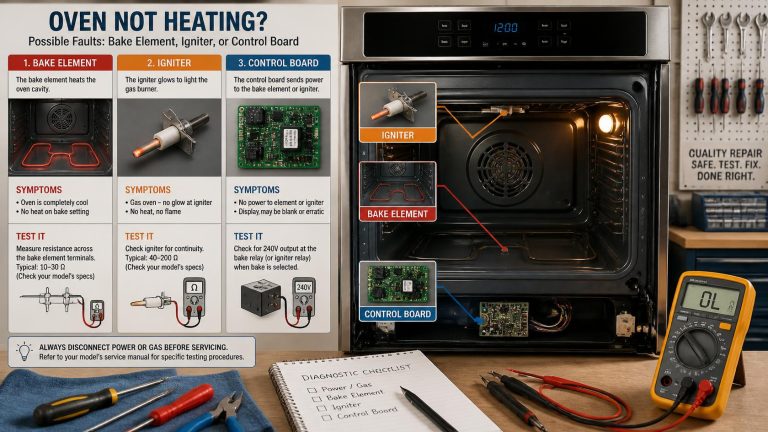
A step-by-step look at a real oven repair, from a dead oven to reliable, even heat
An oven that won’t heat gets blamed on the igniter or the control board almost immediately, since those are the two “big” suspects. In this case, the igniter looked like it was working fine, which is exactly what made the real problem easy to miss. Here is the exact diagnostic process our certified technicians used to catch what a visual check alone couldn’t, fix it in a single visit, and get the oven heating reliably again.
Case Snapshot
The Problem
A Working Igniter That Wasn't Actually Working
The oven had stopped heating entirely, while the stovetop burners continued working without any issue. The display showed no error code and appeared to be functioning normally, which pointed suspicion toward the igniter or the control board right away. Oven heating failures can come from several different places (a failed bake element, a weak or failed igniter, a blown thermal fuse, a bad temperature sensor, or a control board issue) so confirming which one is actually at fault matters more than replacing the most obvious suspect first.
The Diagnostic Process
Five Checks, In Order
Our certified technicians follow the same sequence on every oven not heating call, because a visual check alone can miss a weak component that still appears to be functioning.
Confirm the oven isn't heating at all, versus a calibration issue
A full preheat cycle was run and monitored to rule out a temperature accuracy problem rather than a total failure to heat.
No heat produced at any point in the cycleWatch the igniter's glow behavior during a preheat attempt
A working igniter should glow steadily and open the gas valve within roughly 30 to 90 seconds.
Glowed weakly, burner never ignitedMeasure the igniter's amperage draw with a multimeter
A weak igniter can visibly glow while still drawing less current than needed to trip the safety valve.
Amperage below the threshold required to open the valveCheck the safety valve and gas supply
Checked to rule out a valve or gas supply issue as a separate contributing factor.
Confirmed functional with a properly performing igniterCheck the control board's voltage output to the igniter circuit
Confirmed the board was sending correct voltage to the igniter.
Board ruled out as the causeThe Root Cause: A Weak Igniter That Looked Fine
The igniter had weakened to the point where it still visibly glowed, which is why it looked like it was working, but no longer drew enough amperage to open the gas safety valve. Without the valve opening, gas never reached the burner and the oven never actually ignited, despite every visible sign suggesting it should. This is a common gas oven failure that gets misdiagnosed as a control board issue, since the display and igniter both appear normal at a glance.
The Fix & The Result
Fixed by Replacing the Igniter, Not the Control Board
The technician replaced the igniter assembly, tested its amperage draw against manufacturer specification to confirm it met the threshold, and ran multiple preheat cycles to verify consistent, reliable ignition before completing the visit.
The oven now reaches temperature and holds it steadily across preheat cycles. Replacing the igniter instead of guessing at the control board meant a far less expensive repair. This is the outcome we aim for on every oven not heating call: confirm the actual point of failure instead of assuming it’s the most expensive part.
Beyond This Case
Common Causes of an Oven Not Heating
Not every case matches this one. Here are the most common reasons an oven stops heating, from easiest to most involved.
| Cause | How Common | DIY Fixable? |
|---|---|---|
| Tripped circuit breaker or blown fuse | Common | Yes |
| Burned out bake element (electric ovens) | Very common | Sometimes, if visibly broken and accessible |
| Weak or failed igniter (gas ovens) | Common | No |
| Blown thermal fuse | Common | No |
| Faulty temperature sensor | Common | No |
| Failed control board | Less common | No |
Brand-Specific Notes
This Happens Across All Major Brands
Igniter and bake element failures show up across all major brands we service, including GE, Whirlpool, Samsung, KitchenAid, and Bosch, whether gas or electric. Our certified appliance technicians have experience diagnosing oven heating issues across all these brands and more.
Prevention
Catch a Weak Igniter or Element Before It Fails Completely
- Have gas ovens checked periodically for igniter amperage, especially if preheat times start taking noticeably longer
- Treat longer-than-usual preheat times as an early warning sign, not something to ignore
- Keep the bake element and oven interior free of heavy grease buildup, which can shorten element life
- Don't repeatedly reset a tripped breaker without addressing the underlying cause
- Schedule periodic maintenance, especially for ovens more than a few years old
Before You Call
DIY vs. Calling a Professional
Reasonable to try yourself
Checking the circuit breaker, confirming the correct bake setting is selected, and visually inspecting an electric bake element for a visible break or blister are reasonable first steps a homeowner can try before calling for oven repair.
Call a certified technician
Gas components like igniters and safety valves, along with control board diagnostics, involve amperage testing and gas safety considerations that call for a certified technician.
FAQ
Oven Not Heating: Common Questions
Answers to the questions we hear most on oven not heating calls in Chicago.
Why does my oven's igniter glow if it's not actually working?
Is it safe to keep trying to use a gas oven that won't heat?
What's the difference between a bake element and an igniter?
How much does it cost to diagnose an oven not heating?
Can I replace a bake element myself?
Why does the display work fine but the oven still won't heat?
How long does an igniter usually last before it needs replacing?
Do all oven brands have the same heating issues?
Oven Not Heating?
Get It Diagnosed the Right Way, the First Time
Same-day and next-day appointments available across Chicago and the surrounding suburbs. $89 diagnostic fee, waived with repair. 10% off your first repair.