
Dryer Taking Forever to Dry? Here's What Was Really Wrong
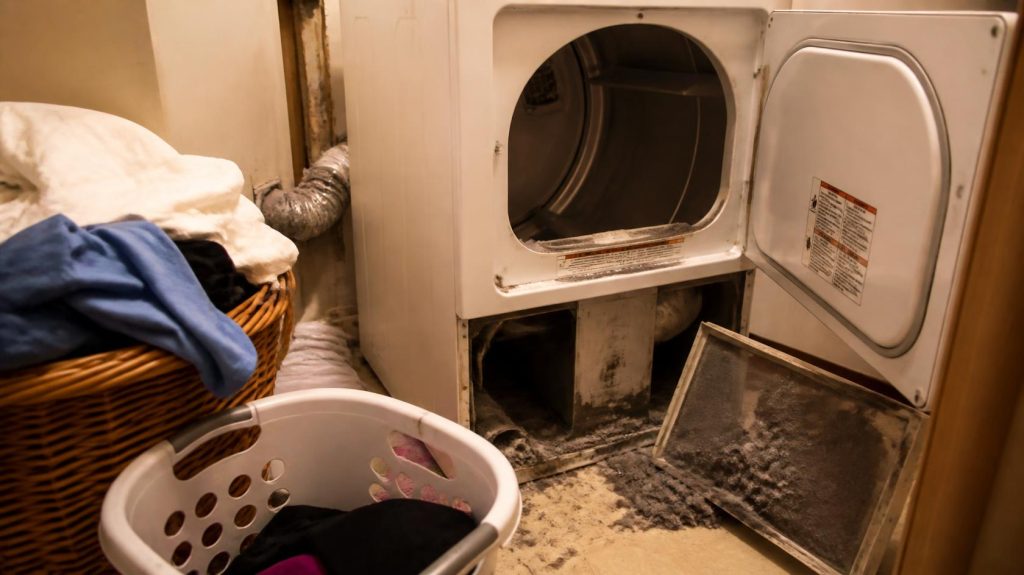
A step-by-step look at a real slow-drying dryer repair, from a gradual slowdown to the fix
A dryer that gradually takes longer and longer to finish a load is rarely down to just one thing. Here is the exact diagnostic process our certified technicians used to find every factor slowing this dryer down and get dry times back to normal.
Case Snapshot
Symptom
Dry times nearly doubled over months
Appliance
Electric Dryer
Location
Deerfield, IL
Diagnosis
Clogged trap + kinked vent + weak element
Time to Repair
Same visit, under 1.5 hours
Outcome
Normal dry times restored
The Problem
A Deerfield homeowner reached out about her dryer taking noticeably longer to dry a load than it used to. It had happened gradually over a few months, a load that once finished in about 45 minutes was now regularly needing a second full cycle to finish drying. The dryer still felt warm inside and never stopped mid-cycle, so nothing seemed obviously broken, it had just quietly gotten slower and slower.
She cleaned the lint trap regularly, so she wasn't sure what else could be causing it, and booked a diagnostic visit to find out.
The Diagnostic Process
Confirmed the extended dry time directly
Our technician ran a timed test load with a standard cycle and confirmed the clothes were still noticeably damp at the point they should have been dry, matching what the homeowner described.
Inspected the lint trap screen closely
While it looked clean at a glance, closer inspection showed a thin, filmy residue embedded in the mesh itself, likely from fabric softener sheets, which restricts airflow even when the trap looks empty.
Measured airflow at the exterior vent
Even after addressing the lint trap, an airflow test at the exterior vent came in below the manufacturer's minimum specification, pointing to a restriction further along the vent line.
Found a crushed section of flexible vent hose
Behind the dryer, the flexible vent hose had been pinched into a tight kink, likely from the dryer sitting too close to the wall, significantly narrowing the airflow path.
Tested the heating element with airflow corrected
With the trap and vent issues addressed, the technician tested heat output and found the element was cycling slightly more than expected for its wattage, a sign it had started to weaken rather than fail outright.
The Root Cause
Three separate factors stacking on top of each other: a lint trap screen coated in a residue film that reduced airflow at the source, a kinked vent hose restricting airflow downstream, and a heating element that had begun to weaken and produce less heat than its rating. No single one of these would likely have doubled the dry time on its own, but together they explained exactly what the homeowner was experiencing.
The Fix
With all three factors confirmed, our technician addressed each one in a single visit:
- Replaced the lint trap screen, since the residue had degraded the mesh beyond what a normal cleaning could fully restore
- Replaced the crushed flexible vent hose with rigid metal ducting where it ran behind the dryer, reducing the chance of future kinking
- Replaced the weakening heating element with a manufacturer-spec part
- Retested airflow at the exterior vent to confirm it now met specification, and ran a full timed test cycle to confirm normal dry times
The Result
A standard load now dries fully in about 45 minutes again, matching what the customer remembered from before the slowdown started. The $89 diagnostic fee was waived since she moved forward with the repair, and the repair is backed by our standard 3-month warranty. As a first-time customer, she also received 10% off the total repair cost.
Common Causes of a Dryer Taking Too Long
| Cause | Signs | DIY-Fixable? |
|---|---|---|
| Lint trap clogged or coated with residue | Screen looks lint-covered, or feels filmy even after removing visible lint | Yes, clean or wash the screen regularly |
| Vent blockage or a crushed, kinked hose | Weak airflow at the exterior vent cap, dryer runs hotter than usual | Sometimes, if the hose is accessible behind the dryer |
| Weak or partially degraded heating element | Dryer still feels warm but noticeably less hot than before | No, replacement required |
| Overloading the dryer | Only large loads take too long, smaller loads dry normally | Yes, reduce load size |
| Vent line too long or with too many bends | Dry times have always been long since installation, not a gradual change | No, requires professional vent redesign |
Brand-Specific Notes
PLACEHOLDER, pending Ben's input. Reminder: for luxury brands (Sub-Zero, Viking, Thermador, Gaggenau, Miele, Fisher & Paykel), use "experience across [brand]" language only, never factory-certification claims.
How to Prevent This
Clean the lint trap before every load, and wash the screen with soap and water periodically to clear residue film
Leave clearance behind the dryer so the vent hose isn't crushed against the wall
Replace flexible vent hose with rigid or semi-rigid metal ducting where possible
Avoid overloading the dryer beyond its rated capacity
Schedule a professional airflow check annually, especially if dry times start creeping up gradually
DIY vs. Call a Professional
Safe to Try Yourself
- Cleaning the lint trap before every load, and occasionally washing the screen
- Checking that the vent hose behind the dryer isn't crushed or kinked
- Splitting up oversized loads into smaller ones
Call a Professional
- Dry times keep increasing even after cleaning the trap and checking the vent
- The dryer feels less hot than it used to inside, even though it's still warm
- Vent airflow testing or replacing sections of ducting
- Heating element testing or replacement
Frequently Asked Questions
Why is my dryer taking so much longer to dry clothes than it used to?
How often should I clean my lint trap?
Can a kinked vent hose really slow down drying that much?
How do I know if my heating element is weak versus fully broken?
Is a longer dry time a fire risk?
How much does this repair cost?
How long does this repair take?
How can I prevent this from happening again?
Dryer Taking Forever to Dry?
Same-day dryer repair across Chicago and the suburbs. $89 diagnostic fee, waived when you book the repair.
Book a Repair Call (773) 377-4212