
Washer Not Spinning? Here's What Was Really Wrong
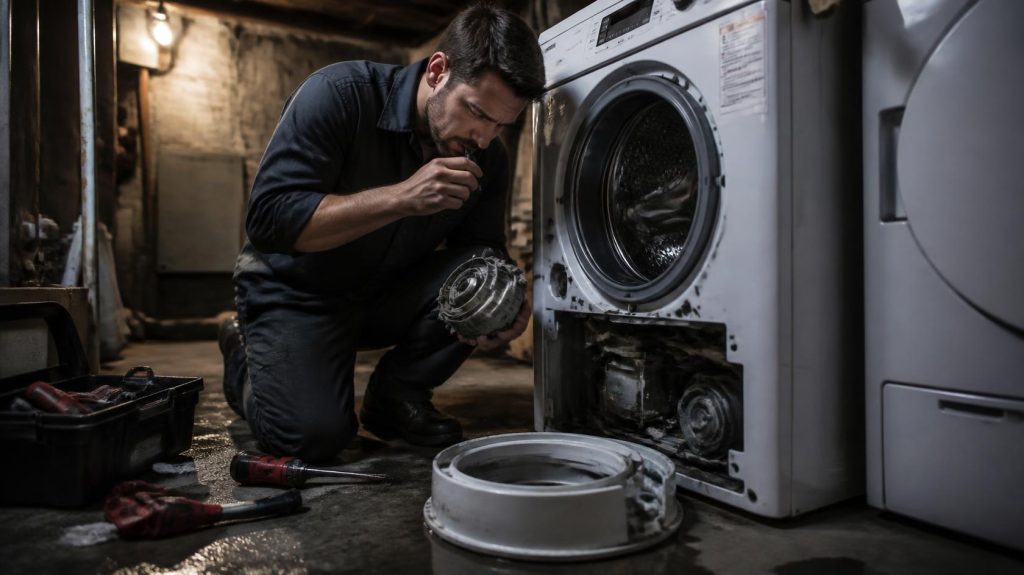
A step-by-step look at a real washer no-spin repair, from soaked clothes to the actual cause
When a washer fills and agitates normally but never spins, there are three usual suspects. Here is the exact process our certified technicians used to test each one in order and confirm what was actually stopping this washer from spinning.
Case Snapshot
Symptom
Fills and agitates, but won't spin
Appliance
Top-Load Washer
Location
Morton Grove, IL
Diagnosis
Worn motor coupling (lid switch & belt fine)
Time to Repair
Same visit, under 1 hour
Outcome
Spins reliably, clothes properly wrung
The Problem
A Morton Grove homeowner called Dara Appliance Repair after her top-load washer stopped spinning. The cycle still filled with water and agitated normally, but at the point it should have started spinning, nothing happened, and every load came out just as soaked as when it went in.
She could hear a faint motor sound during the spin portion of the cycle, which made her wonder whether the motor itself was failing or if something simpler was going on.
The Diagnostic Process
Confirmed the pattern first
Our technician ran a cycle and confirmed the washer filled and agitated normally, but never spun at any point, matching exactly what the homeowner described.
Tested the lid switch
A faulty lid switch can prevent spinning as a safety measure. The technician tested it for continuity and confirmed it was correctly detecting the lid as closed, ruling it out.
Inspected the drive belt
The belt was properly tensioned with no fraying, glazing, or slipping, ruling out a worn or broken belt as the cause.
Inspected the motor coupling
With the lid switch and belt both ruled out, the technician checked the motor coupling, a small part connecting the motor to the transmission, and found it visibly worn and stripped, no longer transferring power for the spin cycle.
Confirmed the motor itself was running fine
The motor engaged and ran normally during the spin attempt, explaining the faint sound the homeowner had noticed, it simply couldn't transfer that power to the tub because the coupling between them had failed.
The Root Cause
A worn motor coupling, a small part many manufacturers intentionally design to fail before more expensive components like the motor or transmission, since it's a far cheaper and simpler part to replace. The lid switch and drive belt were both working correctly, and the motor itself was fine. The coupling in between them was the single point of failure.
The Fix
With the coupling confirmed as the sole cause, our technician completed the repair in a single visit:
- Installed a new motor coupling matching the washer's manufacturer specifications
- Reassembled the motor and transmission connection, confirming a secure fit
- Left the lid switch and drive belt in place, since both had already tested as fully functional
- Ran a full test cycle with an actual load to confirm reliable spinning and proper water extraction
The Result
The washer now spins reliably through every cycle, and clothes come out properly wrung rather than soaked. The $89 diagnostic fee was waived since the customer moved forward with the repair, and the repair is backed by our standard 3-month warranty. As a first-time customer, she also received 10% off the total repair cost.
Common Causes of a Washer Not Spinning
| Cause | Signs | DIY-Fixable? |
|---|---|---|
| Worn or broken motor coupling | Fills and agitates fine, no spin; motor may still run or hum | No, but often a relatively affordable, quick repair |
| Faulty lid switch | May not agitate or spin at all; lid may not click firmly when closed | Sometimes, check lid alignment and the switch first |
| Worn or broken drive belt | No spin, sometimes no agitation either; possible burning rubber smell | No, replacement required |
| Unbalanced load | Washer stops mid-spin repeatedly, resumes after the load is redistributed | Yes, redistribute the load evenly |
| Failed drain pump | Won't spin because standing water hasn't drained from the tub | No, replacement required |
Brand-Specific Notes
PLACEHOLDER, pending Ben's input. Reminder: for luxury brands (Sub-Zero, Viking, Thermador, Gaggenau, Miele, Fisher & Paykel), use "experience across [brand]" language only, never factory-certification claims. Worth noting here whether specific washer brands commonly serviced use a motor coupling design at all, some direct-drive and front-load models use different mechanisms.
How to Prevent This
Avoid overloading the washer, which puts extra strain on the motor coupling and drive belt
Distribute loads evenly, especially bulky items like towels or bedding
Address a lid that doesn't close or click firmly before it becomes a bigger issue
Don't repeatedly restart a washer with a chronically unbalanced load, redistribute it instead
Schedule a professional inspection if spin performance gradually weakens rather than stopping suddenly
DIY vs. Call a Professional
Safe to Try Yourself
- Making sure the lid closes fully and clicks into place
- Redistributing an unbalanced load evenly around the tub
- Checking whether standing water is still in the tub, which could point to a drain issue instead
Call a Professional
- The washer fills and agitates but never spins, even with a balanced load
- Motor coupling or drive belt replacement
- Lid switch testing or replacement
- Drain pump diagnosis and replacement
Frequently Asked Questions
Why does my washer fill and agitate but not spin?
Is a motor coupling expensive to replace?
Could it just be an unbalanced load?
How do I know if it's the lid switch or something else?
Why does the washer still make a motor sound but not spin?
How much does this repair cost?
How long does this repair take?
How can I prevent this from happening again?
Washer Not Spinning?
Same-day washer repair across Chicago and the suburbs. $89 diagnostic fee, waived when you book the repair.
Book a Repair Call (773) 377-4212