
AC Bills Climbing Even Though It Still Cools Fine? Here's What Was Really Wrong
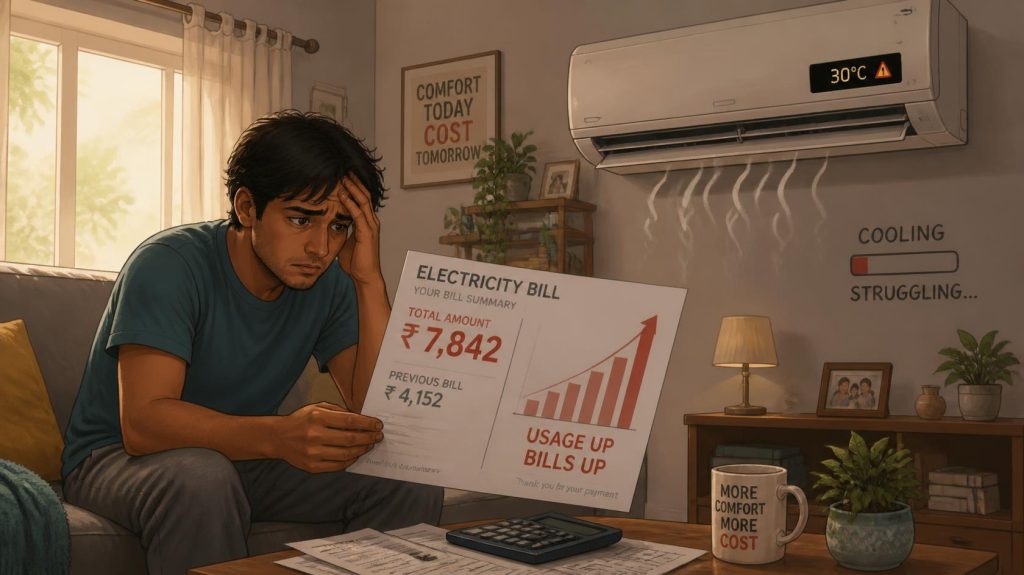
A step-by-step look at a real efficiency repair, from a spiking electric bill to the fix
A system that still cools the house but costs more to run every month usually isn’t failing, it’s working harder than it should to do the same job. Here is the exact diagnostic process our certified technicians used to find out why.
Case Snapshot
Symptom
High bills, cooling still works fine
System
Central Air Conditioning
Location
Hoffman Estates, IL
Diagnosis
Dusty evaporator coil + slow refrigerant leak
Time to Repair
Same visit, under 1.5 hours
Outcome
Shorter run times, lower energy use
The Problem
A Hoffman Estates homeowner called Dara Appliance Repair after noticing her electric bill had climbed noticeably compared to the same month the year before. The AC itself seemed to be doing its job, the house reached and held the set temperature just fine, but the system appeared to be running almost constantly to get there.
Since nothing was obviously broken, she wasn't sure whether this was worth a service call or just normal for an aging system.
The Diagnostic Process
Confirmed excessive runtime
Our technician observed the system running for extended stretches to maintain the set temperature, well beyond what a healthy system needs on a comparable day, confirming an efficiency problem rather than a comfort complaint.
Inspected the indoor evaporator coil
The evaporator coil had a layer of dust and fine debris across its surface, not a severe blockage, but enough to measurably reduce heat transfer efficiency.
Cleaned the coil and retested
Runtime improved somewhat after cleaning, but the system was still working harder than it should, suggesting another factor was also involved.
Checked the refrigerant charge
Gauge readings showed the charge measurably below the optimal level, though not dramatically low, consistent with a slow, gradual loss rather than a sudden failure.
Located a slow leak at a coil fitting
An extended search with a sensitive electronic leak detector found a very slow leak at a fitting on the coil, the kind of leak that can take months to noticeably affect performance.
The Root Cause
A dusty evaporator coil reducing heat transfer, combined with a slow refrigerant leak that had let the charge drift gradually below its optimal level over an extended period. Neither issue was severe enough on its own to stop the system from cooling the house, which is exactly why it had gone unnoticed. Together they forced the system to run far longer than necessary to reach the same comfort level, and that extra runtime is what was showing up on the electric bill.
The Fix
With both causes confirmed, our EPA-certified technician completed the repair in a single visit:
- Fully cleaned the evaporator coil to restore proper heat transfer
- Repaired the slow leak at the coil fitting
- Recharged the system to the manufacturer's specified refrigerant level
- Measured runtime and system amp draw before and after the repair to confirm a real improvement in efficiency
The Result
The system now reaches and holds the set temperature with noticeably shorter run times, meaning less electricity used to deliver the same comfort. The $89 diagnostic fee was waived since the customer moved forward with the repair, and the repair is backed by our standard 3-month warranty. As a first-time customer, she also received 10% off the total repair cost.
Common Causes of Rising AC Energy Bills
| Cause | Signs | DIY-Fixable? |
|---|---|---|
| Dirty evaporator or condenser coils | System runs longer to reach the same temperature, bills climb gradually | Sometimes, the outdoor condenser can often be rinsed with the system off |
| Slow refrigerant leak | Gradual efficiency loss over weeks or months, may not show obvious symptoms at first | No, requires EPA-certified detection, repair, and recharge |
| Aging or inefficient system components | Efficiency naturally declines with system age, especially past 10 to 15 years | No, may point toward considering system replacement |
| Incorrect thermostat settings or scheduling | Unnecessary runtime from poor scheduling rather than a mechanical issue | Yes, review and adjust settings |
| Leaky ductwork | Conditioned air escapes before reaching living spaces, forcing longer runtimes | No, requires professional duct inspection and sealing |
Brand-Specific Notes
PLACEHOLDER, pending Ben's input. Reminder: for luxury or specialty HVAC brands, use "experience across [brand]" language only, never factory-certification claims.
How to Prevent This
Schedule annual maintenance including coil cleaning, especially before peak cooling season
Address rising bills early, before inefficiency has a chance to compound
Have refrigerant levels checked periodically, even without an obvious symptom
Use a programmable or smart thermostat to avoid unnecessary runtime
Have ductwork inspected if bills stay high even after other causes are ruled out
DIY vs. Call a Professional
Safe to Try Yourself
- Reviewing and adjusting thermostat scheduling and settings
- Replacing the air filter regularly
- Rinsing the accessible outdoor condenser coils with the system off
Call a Professional
- Evaporator coil cleaning, which usually requires disassembly
- Refrigerant leak detection, repair, and recharging, which requires EPA certification
- Ductwork inspection and sealing
- A full system efficiency evaluation
Frequently Asked Questions
Why are my energy bills going up even though my AC still cools fine?
Can dirty coils really affect my electric bill that much?
Could a small refrigerant leak really cause higher bills?
Is this a sign I need a new system?
Could my ductwork be the problem instead?
How much does this repair cost?
How long does this repair take?
How can I prevent this from happening again?
AC Driving Up Your Energy Bills?
Same-day air conditioning efficiency checks across Chicago and the suburbs. $89 diagnostic fee, waived when you book the repair.
Book a Repair Call (773) 377-4212