
Pilot Light Won't Stay Lit? Here's What Was Really Wrong
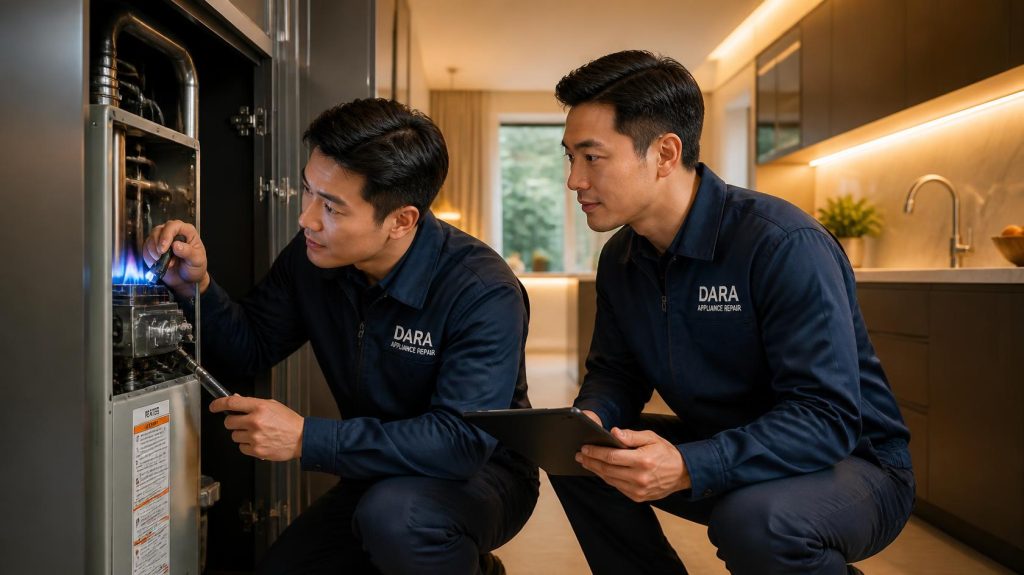
A step-by-step look at a real pilot light repair, from a flame that won't hold to the fix
A pilot light that goes out the moment you let go of the knob is a very specific symptom, and it often points to more than one cause working together.
In this case, the pilot on an older gas furnace lit every time the homeowner followed the instructions on the panel, then went out within seconds of releasing the knob. Relighting it again and again gave the same result. That pattern is a clue in itself: the flame works while you hold the knob, so the problem is in the parts that keep the gas flowing once you let go.
Here is the exact diagnostic process our certified technicians used to sort this one out, find both causes, and fix it in a single visit as part of our heating system repair service.
Case Snapshot
Symptom
Pilot won't stay lit
System
Standing-Pilot Gas Furnace
Location
Villa Park, IL
Diagnosis
Misaligned pilot assembly + weak thermocouple
Time to Repair
Same visit, under 1 hour
Outcome
Pilot stays lit reliably
The Problem
A Villa Park homeowner called Dara Appliance Repair about her older gas furnace's pilot light. She could get it lit by following the instructions on the panel, holding the gas control knob down for the recommended time, but the moment she released the knob, the flame went out within seconds every single time.
She'd tried relighting it several times with the same result, and didn't want to keep attempting it without knowing what was actually wrong.
She made the right call. When a pilot keeps going out, relighting it over and over doesn't fix the cause. In fact, the furnace shutting off the gas when the flame goes out is a safety feature doing its job. The real question is why the flame isn't holding, and that takes testing, not more attempts.
A quick safety note: before relighting a pilot that has gone out, the state fire marshal advises waiting five minutes or more for any gas to clear, then following the manufacturer's instructions on the furnace panel.
Smell gas? If you notice a rotten-egg smell, don't try to light the pilot. Leave the home and call your gas utility or 911 once you're outside. Not sure what you're smelling? Our furnace burning smell case study explains how a gas smell differs from a burning one.
The Diagnostic Process
Observed the pilot flame closely
Our technician lit the pilot and examined the flame's size, color, and position relative to the thermocouple, and noticed it was small and not making solid contact with the thermocouple tip.
Found the pilot assembly slightly misaligned
A slightly bent pilot assembly bracket was holding the flame just out of proper alignment with the thermocouple, reducing how much heat actually reached it.
Realigned the pilot and retested
With the flame now properly contacting the thermocouple, the pilot stayed lit while the knob was held down, but still went out shortly after being released, pointing to a second issue with the thermocouple itself.
Tested the thermocouple's millivolt output
With a meter connected while the pilot was lit and properly aligned, the thermocouple's output still measured below the minimum needed to hold the gas valve open, confirming it had weakened with age.
Checked the pilot orifice for additional debris
A small amount of debris in the pilot orifice was also cleaned out, having contributed to the initially small, misshapen flame alongside the alignment issue.
The Root Cause
A misaligned pilot assembly, made worse by minor debris in the orifice, was preventing the flame from properly heating the thermocouple. But even after correcting that alignment, the thermocouple itself had weakened with age and could no longer generate enough millivolt output to hold the gas valve open on its own. Realigning the pilot alone would have looked like progress, holding the flame while the knob was held down, but wouldn't have solved the problem once the knob was released.
Here's why the knob matters. A thermocouple is a small sensor that sits in the pilot flame and produces a tiny electrical current when it's heated. That current keeps the gas valve open. While you hold the knob down, you're holding the valve open yourself; once you let go, the thermocouple has to take over. If it can't produce enough current, the valve closes and the pilot goes out, which is exactly the symptom the homeowner saw.
A thermocouple sits in a flame every hour the pilot is lit, so it gradually weakens over the years. That's also why it's a safety part: if the pilot ever goes out, the current stops and the gas shuts off instead of flowing unburned.
The Fix
With both causes confirmed, our technician completed the repair in a single visit, in under an hour:
- Cleaned the pilot orifice and properly repositioned the pilot assembly bracket
- Replaced the weakened thermocouple with a manufacturer-spec part
- Relit the pilot and confirmed it stayed lit reliably through multiple hold-and-release tests
- Verified millivolt output was now well above the minimum threshold needed to keep the gas valve open
The last two checks mattered most. A pilot that stays lit once can still fail the next morning, so the technician repeated the hold-and-release test several times and measured the new thermocouple's output directly. A reading well above the minimum means the pilot has room to spare, not just enough to pass a single test.
As with every heating system repair we handle, the price was quoted before any work started. Every repair is backed by a warranty, and coverage terms depend on your appliance brand.
The Result
The pilot light now stays lit reliably every time, and the furnace ignites normally on every call for heat. Because she moved forward with the repair, the diagnostic fee was waived, and as a first-time customer, she also received 10% off the total repair cost.
Fixing only one of the two problems would have left her relighting the pilot again within days. Correcting the alignment and replacing the weakened thermocouple together is what made the fix last.
If the pilot ever goes out again, follow the same steps as before: wait a few minutes for any gas to clear, relight it using the instructions on the furnace panel, and if it won't stay lit, call rather than trying again and again.
Common Causes of Pilot Light Issues
Pilot problems usually come down to the flame, the parts it heats, or the gas reaching it. Here are the most common causes and what each one looks like. If it's a gas oven or stove that won't ignite rather than your furnace, see our gas oven not igniting case study.
| Cause | Signs | DIY-Fixable? |
|---|---|---|
| Weakened or failing thermocouple | Pilot lights but goes out shortly after releasing the gas control knob | No, but often an affordable, common wear-part repair |
| Misaligned pilot assembly | Flame doesn't properly contact the thermocouple even if the thermocouple itself is fine | No, requires professional realignment |
| Dirty or clogged pilot orifice | W
How to Prevent ThisPilot problems tend to build slowly, so a few simple habits can catch them before the furnace stops heating.
DIY vs. Call a ProfessionalSafe to Try Yourself
Call a Professional
Pilot still won't hold after following the instructions? Book online and we'll find the cause and quote the price before any work starts. Have a question first? Send us a message. Pilot Light Won't Stay Lit?Same-day heating repair across Chicago and the suburbs. $89 diagnostic fee, waived when you book the repair. Book a Repair Call (773) 377-4212Frequently Asked QuestionsWhy does my pilot light go out after I let go of the knob?Usually because the gas valve isn't being held open once you let go. While you hold the knob down, you're holding the valve open yourself. After you release it, a small sensor called a thermocouple, heated by the pilot flame, has to keep it open. If the thermocouple is weak, or the flame isn't heating it properly because of misalignment or a dirty pilot orifice, the valve closes and the pilot goes out. In this case, it was both. Is a thermocouple expensive to replace?It's usually one of the simpler pilot repairs, since a thermocouple is a small, common wear part. Most of our repairs fall between $129 and $400. Your exact price depends on the issue, and we quote it before any work starts. Often the pilot also needs cleaning or realignment, which a technician can handle in the same visit. Can I realign the pilot assembly myself?We don't recommend it. The pilot assembly sits right next to the gas supply and burner, and a small change in its position affects how well the flame heats the thermocouple. A technician can check the alignment, clean the orifice, and test the thermocouple's output in one visit. What you can safely do is follow the relighting instructions on the furnace panel and note exactly what happens. Do all furnaces still use a standing pilot light?No. Most newer gas furnaces use electronic ignition instead of a pilot flame that burns all the time. Standing pilots are mainly found on older furnaces. If you can't see a small flame burning when your furnace is idle, it likely uses electronic ignition, and a no-heat problem points to a different cause. Is a pilot that won't stay lit a safety issue?Usually it means no heat rather than danger, because the furnace is designed to shut off the gas when the pilot goes out. Still, handle it carefully. Wait a few minutes for any gas to clear before relighting, and if you smell rotten eggs, don't light it: leave the home and call your gas utility or 911 from outside. A working carbon monoxide alarm is a good idea with any gas furnace. How much does this repair cost?It depends on the cause and whether parts need replacing. Most of our repairs fall between $129 and $400. Your exact price depends on the issue, and we quote it before any work starts. First-time customers also get 10% off their first repair. How long does this repair take?In this case, it was finished in the same visit, in under an hour, including the realignment, orifice cleaning, thermocouple replacement, and testing. Timing depends on the cause. If a part has to be ordered, we'll explain the timing when we quote the repair. How can I prevent this from happening again?Have your furnace professionally inspected every year, keep the pilot area clean and free of drafts, and have a pilot that's hard to light or hold checked early, before it fails completely. On older standing-pilot furnaces, a technician can also measure the thermocouple's output during routine service to catch wear before the pilot starts going out. |