
Ice Forming on Your AC Lines? Here's What Was Really Wrong
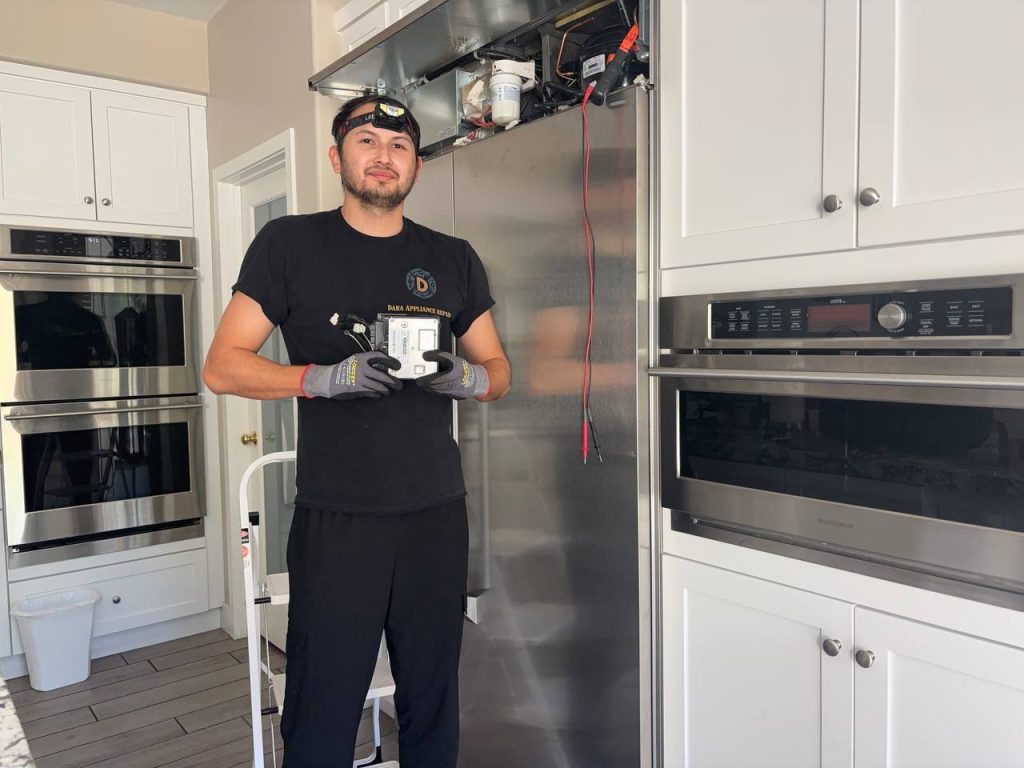
A step-by-step look at a real refrigerant leak repair, from ice on the coil to the fix
Ice on an AC coil or line usually means one of two things, restricted airflow or low refrigerant, and it’s often both at once. Here is the exact diagnostic process our certified technicians used to sort out which was driving this case, and why fixing just one wasn’t enough.
Case Snapshot
Symptom
Ice on the coil, weakening cooling
System
Central Air Conditioning
Location
Mount Prospect, IL
Diagnosis
Refrigerant leak (valve seal) + dirty filter
Time to Repair
Same visit, under 1.5 hours
Outcome
No more icing, consistent cold air
The Problem
A Mount Prospect homeowner called Dara Appliance Repair after noticing visible ice building up on the refrigerant lines near her indoor air handler. Cooling had been getting weaker over the past couple of weeks, and on the worst days the system eventually stopped blowing cold air at all, only returning to normal once she'd shut it off for a while to let the ice melt.
She'd read that ice like this usually points to either an airflow problem or a refrigerant problem, but wasn't sure which one she was actually dealing with.
The Diagnostic Process
Confirmed the ice and let it fully thaw first
Our technician confirmed visible frost on the suction line and indoor coil, and let the system sit powered off until the ice had fully melted before doing any further testing.
Checked the air filter first
The filter was significantly dirty and clogged, a well-known trigger for coil freezing on its own. The technician replaced it before testing further.
Monitored the system after the filter change
Cooling improved with the new filter, but ice began reforming on the coil within about an hour of running, meaning the filter wasn't the only issue at play.
Checked the refrigerant charge
Gauge readings showed the charge well below the system's normal operating level. Since refrigerant isn't consumed during normal use, that pointed clearly to a leak somewhere in the system.
Traced the leak to a valve seal
A leak detector located the source at a Schrader valve on the line set, a common leak point, where a minor seal failure had let refrigerant escape gradually over time.
The Root Cause
A refrigerant leak from a failed valve seal, combined with a severely clogged air filter restricting airflow across the indoor coil. Either problem alone might have caused occasional icing, but together they were causing the coil to freeze aggressively and repeatedly, explaining why replacing just the filter brought temporary relief but the ice kept coming back.
The Fix
With both causes confirmed, our EPA-certified technician completed the repair in a single visit:
- Confirmed the new air filter was already restoring proper airflow across the coil
- Repaired the leak at the Schrader valve seal
- Recharged the system to the manufacturer's specified refrigerant level
- Monitored a full cooling cycle to confirm no further ice formation and consistent, cold air output throughout
The Result
The system now runs a complete cooling cycle with no ice forming anywhere on the coil or lines, and cold air stays consistent from start to finish. The $89 diagnostic fee was waived since the customer moved forward with the repair, and the repair is backed by our standard 3-month warranty. As a first-time customer, she also received 10% off the total repair cost.
Common Causes of Ice on an AC Coil or Lines
| Cause | Signs | DIY-Fixable? |
|---|---|---|
| Refrigerant leak at a valve or fitting | Ice on the indoor coil or lines, cooling weakens progressively over days or weeks | No, requires an EPA-certified technician |
| Dirty air filter restricting airflow | Can trigger or worsen coil icing on its own | Yes, check and replace regularly |
| Leak at a brazed joint or in the coil itself | Similar icing symptoms, but the leak point needs specialized repair or coil replacement | No, professional diagnosis required |
| Undercharged system from a recent install | Icing appears soon after a new system installation rather than developing gradually | No, requires professional correction |
| Blocked return air vents or closed dampers | Can mimic a dirty filter and contribute to icing | Yes, check that vents and dampers are open |
Brand-Specific Notes
PLACEHOLDER, pending Ben's input. Reminder: for luxury or specialty HVAC brands, use "experience across [brand]" language only, never factory-certification claims.
How to Prevent This
Replace the air filter on a regular schedule, especially during heavy cooling season
Schedule annual professional maintenance to catch small leaks before they cause icing
Never run the system for extended periods if you notice ice on the coil or lines
Address weakening cooling promptly rather than waiting for a full stoppage
Keep return air vents unblocked for proper airflow
DIY vs. Call a Professional
Safe to Try Yourself
- Replacing the air filter
- Turning the system off and letting any visible ice thaw before running it again
- Checking that return air vents and dampers aren't blocked or closed
Call a Professional
- Ice keeps forming even after a fresh filter
- Refrigerant leak detection, valve or fitting repair, and recharging, which requires EPA certification
- Coil replacement if a leak is found in the coil itself
- Correcting an undercharged system from a recent install
Frequently Asked Questions
Why does ice keep forming on my AC's coil or lines?
Can a dirty filter alone cause the coil to freeze?
How do I know if it's a refrigerant leak versus just an airflow problem?
Is it safe to keep running the AC if I see ice on it?
Where do refrigerant leaks usually happen?
How much does this repair cost?
How long does this repair take?
How can I prevent this from happening again?
Ice Forming on Your AC?
Same-day air conditioning repair across Chicago and the suburbs. $89 diagnostic fee, waived when you book the repair.
Book a Repair Call (773) 377-4212