
Oven Self-Clean Not Working? Here's Exactly How We Diagnosed and Fixed One in Chicago
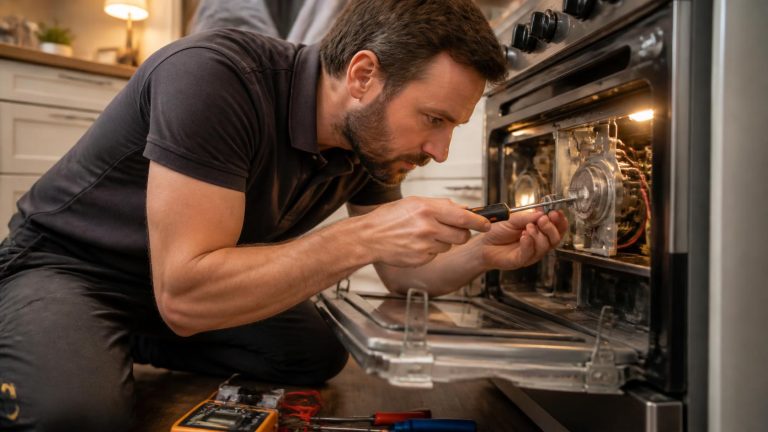
A step-by-step look at a real oven repair, from a self-clean cycle that kept quitting early to one that finishes properly
Self-clean is one of those features that only gets tested once every few months, so when it fails, it’s genuinely unclear whether something’s actually broken or the cycle is just supposed to behave that way. In this case, regular baking worked perfectly the entire time, which turned out to be the key clue. Here is the exact diagnostic process our certified technicians used to isolate a self-clean-only fault, fix it in a single visit, and get the feature working properly again.
Case Snapshot
The Problem
A Self-Clean Cycle That Kept Quitting Early
The self-clean cycle had been shutting off partway through every time it was run, always well short of the several-hour cycle completing, while regular baking and roasting continued working exactly as expected. The homeowner had tried running self-clean at different times of day, thinking it might be an oven overheating issue related to something else in the kitchen, without any change in outcome. Self-clean failures can come from a few different places (the door latch not engaging or holding, a self-clean-specific thermostat separate from the regular temperature sensor, a control board issue tied specifically to the self-clean cycle, or a genuine overheating condition) so isolating which system is actually failing matters more than assuming the whole oven has a problem.
The Diagnostic Process
Five Checks, In Order
Our certified technicians follow the same sequence on every self-clean not working call, because isolating whether the fault is specific to the self-clean system or something broader changes the entire diagnosis.
Confirm the door latch engages and holds throughout an attempted cycle
Self-clean requires the door to lock before the cycle can begin and stay locked throughout.
Latch engaged and held for the full duration of each attemptMonitor internal oven temperature during a self-clean attempt
Self-clean cycles run significantly hotter than normal baking.
Climbed normally, then stopped well below required temperatureTest the self-clean thermostat separately from the regular temperature sensor
Many ovens use a dedicated high-limit thermostat specifically for the self-clean cycle, separate from the sensor used for normal baking.
Opening its circuit prematurely, well below rated temperatureConfirm the regular bake temperature sensor was functioning correctly
Checked to rule out the same fault affecting normal cooking.
Reading accurately, normal baking unaffectedCheck wiring and connections at the self-clean thermostat
Checked to rule out a loose connection mimicking a component failure.
Secure, confirming the thermostat as the point of failureThe Root Cause: A Faulty Self-Clean Thermostat
The self-clean thermostat, a separate high-limit sensor used only during the self-clean cycle, had failed and was opening its circuit prematurely, cutting power to the cycle before the oven reached the temperature needed to complete cleaning. Because this thermostat is entirely separate from the sensor used for regular baking, normal oven use was never affected, which is exactly why the issue could look confusing without knowing to check that specific component.
The Fix & The Result
Fixed by Replacing the Self-Clean Thermostat
The technician replaced the self-clean thermostat, confirmed proper wiring and connection, and ran a full self-clean cycle to verify the oven reached and held the required temperature through completion, while also confirming regular baking function remained unaffected.
The self-clean cycle now runs to full completion without early shutoff, and regular baking continues working exactly as it did before the repair. This is the outcome we aim for on every self-clean not working call: isolate whether the fault is specific to the self-clean system or something broader, since the two require very different fixes.
Beyond This Case
Common Causes of Self-Clean Not Working
Not every case matches this one. Here are the most common reasons a self-clean cycle fails, from easiest to most involved.
| Cause | How Common | DIY Fixable? |
|---|---|---|
| Door latch not engaging or holding | Very common | No |
| Faulty self-clean thermostat | Common | No |
| Control board issue specific to the self-clean cycle | Less common | No |
| Genuine overheating condition triggering a safety shutoff | Less common | No |
| Interrupted power during a long cycle | Common | Yes, check breaker and power stability |
| User error (cycle not started or set correctly) | Common | Yes |
Brand-Specific Notes
This Happens Across All Major Brands
Self-clean thermostat and latch failures show up across all major brands we service, including GE, Whirlpool, Samsung, KitchenAid, and Bosch, particularly on ovens with heavy self-clean usage. Our certified appliance technicians have experience diagnosing self-clean issues across all these brands and more.
Prevention
Keep Self-Clean Running Reliably
- Run self-clean cycles periodically rather than letting heavy buildup accumulate, which stresses the system more per cycle
- Don't interrupt a self-clean cycle partway through unless necessary, since repeated interruptions can affect the latch and thermostat over time
- Confirm the door latch engages solidly before assuming a self-clean failure is thermostat-related
- Keep the self-clean vent area clear and unobstructed
- Address a self-clean cycle that consistently shuts off early rather than repeatedly retrying it
Before You Call
DIY vs. Calling a Professional
Reasonable to try yourself
Confirming the door latch is engaging, checking that the cycle was started and set correctly, and verifying there wasn't a power interruption are reasonable first steps a homeowner can try.
Call a certified technician
Testing the self-clean thermostat, latch mechanism, or a control board fault specific to self-clean requires internal access and specialized testing, which is where calling a certified technician avoids guesswork.
FAQ
Self-Clean Not Working: Common Questions
Answers to the questions we hear most on self-clean calls in Chicago.
Why does regular baking work fine but self-clean doesn't?
Is it safe to keep trying to run self-clean if it keeps shutting off early?
How much does it cost to diagnose a self-clean issue?
What's a self-clean thermostat, and how is it different from my oven's regular temperature sensor?
Can a door latch issue stop self-clean from starting at all?
How long should a self-clean cycle normally take?
Is it worth repairing self-clean, or can I just clean the oven manually instead?
Do all oven brands have the same self-clean failure points?
Self-Clean Not Working?
Get It Diagnosed the Right Way, the First Time
Same-day and next-day appointments available across Chicago and the surrounding suburbs. $89 diagnostic fee, waived with repair. 10% off your first repair.