
Stove Cracked Surface? Here's What We Found Underneath
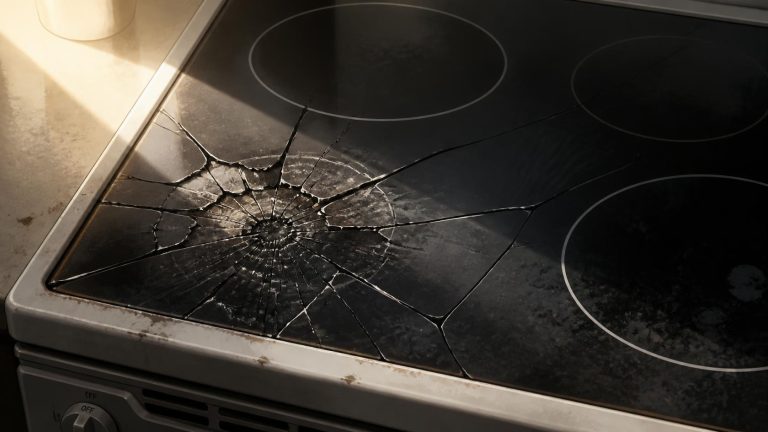
A step-by-step look at a real cracked cooktop repair, from a small chip to a full surface replacement
A crack in a glass or ceramic cooktop is rarely just cosmetic. Here is the exact process our certified technicians used to check what was happening beneath the surface and restore this cooktop to safe, working condition.
Case Snapshot
Symptom
Crack spreading across the cooktop
Appliance
Glass-Top Electric Range / Stove
Location
Diagnosis
Crack reached a heating element connection
Time to Repair
Diagnosed same day, panel installed on follow-up visit
Outcome
New surface, safe and fully functional
The Problem
A Northbrook homeowner reached out after noticing a small hairline crack on her glass cooktop, which she believed started a few weeks earlier after a cast iron pan was set down a little too hard. At first it seemed harmless, just a thin line near one of the heating zones. Over the following weeks of normal cooking, though, the crack visibly grew longer, and she began noticing that the burner nearest the crack was heating inconsistently.
Rather than keep using that burner and hoping the crack wouldn't spread further, she booked a diagnostic visit to find out whether it was still safe to use.
The Diagnostic Process
Documented the crack and its history
Our technician examined the crack's length and path, and confirmed with the homeowner when and how it likely started, useful context for judging whether it was still spreading or had stabilized.
Mapped the crack against the elements underneath
With power to the range disconnected, the technician checked where the crack sat relative to the heating element zones beneath the glass and found it extended directly over one element's connection point.
Removed the cooktop panel to inspect underneath
With the surface removed, the technician could directly inspect the wiring and element connections in the area beneath the crack rather than guessing at the extent of any damage.
Found evidence of minor arcing at one connection
The connection nearest the crack showed light discoloration consistent with minor arcing, confirming the crack had compromised the seal enough to affect that connection, not just the glass itself.
Confirmed the rest of the unit was undamaged
The remaining heating elements, wiring harness, and control board all tested normally, confirming the issue was isolated to the cracked glass and the one affected connection point.
The Root Cause
An initial impact crack from dropped cookware grew wider over repeated heating and cooling cycles, eventually reaching the connection point for one heating element. That's why the burner nearest the crack started heating unevenly, and why the issue had moved beyond a cosmetic glass problem into one that also affected the electrical connection underneath.
Uneven heating can also come from a failing element or switch with no crack involved, which we cover in our guide to an electric stove burner not heating.
The Fix
Cracked glass cooktop surfaces are always replaced as a complete panel, never patched or repaired in place, so our technician:
- Ordered a replacement glass cooktop panel matching the range's exact manufacturer specifications
- Returned to install the new panel once the part arrived, reusing the existing heating elements and wiring, which had tested as fully functional
- Reassembled and resealed the connection that had shown arcing, confirming a clean, secure fit
- Tested every heating zone across multiple cycles to confirm even, consistent heating with no arcing anywhere on the unit
Cooktop cracked, chipped, or heating unevenly? Our stove repair service covers glass-top, electric, and gas ranges across Chicago and the suburbs.
The Result
The cooktop now has a fully intact surface with every heating zone working evenly and no signs of arcing anywhere on the unit. The $89 diagnostic fee was waived since the customer moved forward with the repair, and the repair is backed by our standard 3-month warranty. As a first-time customer, she also received 10% off the total repair cost.
Common Causes of a Stove Cracked Surface
| Cause | Signs | DIY-Fixable? |
|---|---|---|
| Impact from dropped cookware or heavy objects | Sudden chip or crack at the point of impact | No, requires panel replacement |
| Thermal shock from a sudden temperature change | Crack appears with a sharp crack or pop sound, often after cold liquid meets a hot surface | No, requires panel replacement |
| An existing chip or crack spreading over time | A once-small mark gradually grows longer or wider with continued use | No, stop using that zone and have it inspected |
| Rough or incompatible cookware | Surface scratches or stress marks that can develop into cracks over time | Preventable, switch to smooth-bottomed cookware |
| Manufacturing defect or internal glass stress | A crack appears with no clear cause or impact | No, requires professional inspection |
How to Prevent This
Avoid dropping heavy or cast iron cookware onto a glass or ceramic cooktop. Whirlpool's cast iron guidance recommends setting heavy pans down gently and lifting rather than sliding them
Avoid splashing cold water or other cold liquids onto a hot cooktop, which can crack the glass through thermal shock
Use cookware with smooth, flat bottoms designed for glass or ceramic surfaces
Clean spills promptly, especially sugary ones, before they can bake onto the surface
Stop using a cracked zone immediately and have it inspected rather than waiting to see if it holds
DIY vs. Call a Professional
Safe to Try Yourself
- Stop using the cracked zone right away and, if the crack is large or near an element, switch off power to the range at the breaker
- Clean gently around the crack with a dry or barely damp cloth, without pressing on it
- If the power is still on and you need to cook, use an undamaged burner well away from the crack in the meantime
Call a Professional
- Any crack, however small, on a glass or ceramic cooktop
- A crack located near or over a heating element
- Any sparking, arcing, or unusual smell near the surface
- Cooktop glass panel replacement
Cooktop Surface Cracked or Chipped?
Same-day diagnosis for glass and ceramic cooktops across Chicago and the suburbs. $89 diagnostic fee, waived when you book the repair.
Book a Repair Call (773) 377-4212Cracked Cooktop Questions
Cracked Stove Surface FAQs
Can I still use my stove if the glass cooktop is cracked?+
We don't recommend it. Stop using the cracked zone right away, and treat the whole cooktop with caution, since heat and spills can work their way through the crack to the wiring underneath. If you need to cook before the repair, an undamaged zone well away from the crack is the safer option, but have the surface inspected soon.
Can a cracked cooktop surface be repaired instead of replaced?+
No. Cracked glass and ceramic cooktop surfaces are replaced as a complete panel, never patched in place. Glue or sealant kits can't handle the heat and won't stop the crack from spreading. The good news is that the heating elements and wiring underneath can often be reused if they test as working.
Is a cracked cooktop a safety hazard?+
It can be. A crack breaks the seal that keeps liquid and debris away from the heating elements and wiring, which can lead to arcing or a shock risk. Cracked glass can also chip or break further under the weight of a pot. If you see sparking, smell burning, or notice a burner heating unevenly, turn the range off at the breaker and call a technician.
What causes a cooktop to crack in the first place?+
The most common cause is impact, like a heavy or cast iron pan set down too hard. Thermal shock is another, when cold liquid hits a hot surface and the glass cracks with a sharp pop. Rough-bottomed cookware can leave scratches that weaken the surface over time, and occasionally a crack appears from internal stress in the glass with no clear cause.
Why did the crack get bigger over time?+
Every time you cook, the glass heats up, expands, and then cools and contracts. A crack concentrates that stress at its tips, so each cycle can push it a little further. That's why a small hairline crack that looked harmless can grow across a heating zone within weeks of normal use.
How much does a cooktop glass replacement cost?+
The price depends mostly on the replacement panel, which is matched to your range's make and model. Our visit starts with an $89 diagnostic fee, waived when you book the repair, and we quote the full cost, part included, before any work starts. First-time customers get 10% off, and every repair is backed by a warranty.
How long does this repair take?+
It's usually two visits. We diagnose the crack and check the wiring underneath on the first visit, then return to install the new panel once the part arrives. Lead time depends on your range's make and model, and we'll give you an estimate at the diagnosis. We offer same-day and next-day appointments seven days a week.
How can I prevent this from happening again?+
Set cookware down gently, especially cast iron, and use pots and pans with smooth, flat bottoms. Avoid splashing cold liquid onto a hot surface. Clean spills promptly, sugary ones especially, before they bake on. If a chip or crack appears, stop using that zone and have it checked before it spreads.