
⚠ If you smell gas right now: leave the house immediately, do not use light switches, phones, or anything that could spark, and call your gas utility's emergency line and/or 911 from outside (Peoples Gas in Chicago, Nicor Gas in many suburbs). This page is general information and is not a substitute for emergency help.
Stove Gas Smell? Here's What We Found After the Leak Was Isolated
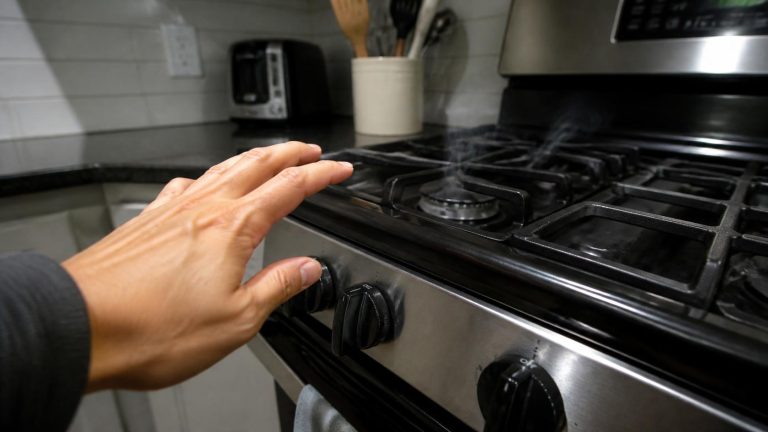
A step-by-step look at a real gas valve repair, after the utility company confirmed and isolated the leak
A stove gas smell near your stove always starts with the same first step: get safe, and call your gas utility or 911. Once the utility traces the leak to the appliance itself and shuts off gas to it, here is the exact process our certified technicians use to find and repair the actual failure point.
Case Snapshot
Symptom
Faint gas odor near the stove
Appliance
Gas Range / Stove
Location
Diagnosis
Degraded valve seal, confirmed leak
Time to Repair
Same day, after utility clearance
Outcome
Zero leak readings, repair verified
The Problem
A homeowner in Niles noticed a faint gas odor near her stove, most noticeable when standing close to it. She immediately turned off the burners, opened windows, left the kitchen, and called her gas utility's emergency line from outside the home.
The utility sent a crew the same day. They confirmed a small leak, traced it specifically to the stove itself rather than the gas line or meter, shut off gas to the appliance, and advised her to have the stove serviced by a licensed repair technician before gas could be safely restored to it. She called Dara Appliance Repair to handle that part.
The Diagnostic Process
Confirmed the gas was already safely isolated
Before touching anything, our technician confirmed with the homeowner that the utility company had already shut off gas specifically to the stove and had documented that the leak was isolated to the appliance, not the home's gas line.
Checked every connection with a calibrated gas leak detector
With the gas still off, the technician used a calibrated electronic detector to methodically check every fitting, hose connection, and valve on the range, not just the burner the homeowner had noticed the smell near.
Isolated a reading at one burner's valve
The detector showed a consistent reading at the base of the affected burner's valve, even with the valve in the closed position, pointing to an internal seal issue rather than a loose connection.
Removed and inspected the valve
With the valve removed, the internal seal was visibly hardened and worn from age and heat exposure, no longer able to fully seal the valve even when closed. This matched the small, continuous leak the utility had detected.
Re-checked every other connection before proceeding
Before beginning the repair, the technician re-tested every remaining connection point on the range to confirm this was the only source of the leak.
The Root Cause
A degraded internal seal inside the burner valve, worn down by age and years of heat exposure, had lost its ability to fully seal the valve even in the closed position. That allowed a small, continuous amount of gas to escape near that burner regardless of whether it was on or off, exactly the kind of low-level leak a gas utility's field equipment is built to detect and a homeowner may only notice as a faint, intermittent smell.
The Fix
Because this involved gas safety, our technician replaced the full valve assembly rather than attempting a seal-only repair:
- Installed a new valve assembly matching the range's manufacturer specifications
- Retested the new valve and every other connection on the unit with the calibrated detector, across multiple cycles
- Confirmed zero leak readings anywhere on the appliance before considering the job complete
- Provided documentation of the completed repair for the homeowner to share with her gas utility, since most utilities require confirmation before restoring service to a previously isolated appliance
Once your gas utility has cleared the appliance for repair, our stove repair service handles valves, connectors, and burners on gas ranges across Chicago and the suburbs.
The Result
The stove tested completely leak-free across every connection, and the homeowner had documentation in hand to give her gas utility so they could safely restore service to the appliance. The $89 diagnostic fee was waived since she moved forward with the repair, and the repair is backed by our standard 3-month warranty. As a first-time customer, she also received 10% off the total repair cost.
Common Causes of a Gas Smell Near a Stove
| Cause | Signs | Who Handles It |
|---|---|---|
| Degraded or worn valve seal | Faint, persistent odor near a specific burner even when off | Utility confirms first, then appliance repair. A failing valve can also leave a stove burner that won't turn off |
| Loose or damaged flexible gas connector | Odor concentrated behind or under the range | Utility confirms first, then appliance repair. Older uncoated brass connectors should be replaced, per Nicor Gas safety guidance |
| Brief smell during ignition on older units | Momentary odor before the burner catches, then gone | Have it inspected if it happens consistently. A slow-to-catch burner is often the same issue as a stove burner not lighting reliably |
| Gas line or meter issue upstream of the appliance | Odor not tied to the stove specifically, may be noticeable elsewhere in the home | Gas utility and/or fire department only |
| Loose burner cap after cleaning | Odor around one burner right after reassembly | Reseat carefully, then have it verified professionally. A badly seated cap also causes an uneven stove flame |
How to Prevent This
Never ignore a gas smell, however faint or brief, treat every instance seriously
Know where your home's gas shutoff valve is located before you need it
Save your gas utility's emergency line somewhere you can find it quickly
Schedule a professional inspection of valves and connections on a gas range older than 10 to 15 years
Keep gas connections and valve areas free of grease buildup, which can mask early warning signs
Immediate Safety Steps vs. Requires a Professional
If You Smell Gas Right Now
- Leave the house immediately, don't stop to investigate
- Do not use light switches, phones, or anything that could create a spark inside
- Turn off the gas supply valve only if it's safe and quick to reach on your way out
- Call your gas utility's emergency line and/or 911 from outside
Requires a Professional
- Locating and confirming the source of any suspected leak
- Repairing or replacing a faulty gas valve, seal, or connector
- Restoring gas service to an appliance after a repair
- Any work on the gas line, meter, or main shutoff itself
Gas Utility Cleared You for Appliance Repair?
Same-day stove valve and connector repair across Chicago and the suburbs, once your gas utility has confirmed it's safe to proceed. $89 diagnostic fee, waived when you book the repair.
Book a Repair Call (773) 377-4212Gas Smell Questions
Stove Gas Smell FAQs
What should I do right now if I smell gas near my stove?+
Leave the house immediately and get everyone out with you. Don't use light switches, phones, matches, or anything else that could spark while you're inside. Once you're outside, call your gas utility's emergency line or 911. In Chicago, that's Peoples Gas at 866-556-6002. Many suburbs are served by Nicor Gas at 888-642-6748.
Is it safe to stay in the house if I smell gas?+
No. Even a faint smell means gas is escaping somewhere, and you can't tell from inside how much has built up. Stay outside and away from the home until your gas utility or emergency crews tell you it's safe to go back in.
Can I find a gas leak myself?+
Please don't try. Gas utilities specifically advise against searching for the source or attempting to fix a leak, because staying inside to look keeps you in danger. Utility crews and appliance technicians use calibrated gas detectors to pinpoint leaks safely. Your job is to get out and make the call.
Why did the smell come back after I turned off the burner?+
A smell that lingers or returns with the burner off usually means gas is escaping even when the valve is closed. A worn internal valve seal can do this, as can a loose or damaged gas connector behind the range. Don't keep testing it by turning burners on and off. Leave the home and call your gas utility from outside.
Who do I call first, the gas company or an appliance repair company?+
Always the gas company or 911 first. The utility will check for a leak, find out whether it's coming from the appliance or the gas line, and shut off gas to whatever is leaking. Once they've traced the leak to the stove and cleared it for repair, call us to fix the valve or connector so gas can be restored.
How much does a gas valve replacement cost?+
Our visit starts with an $89 diagnostic fee, waived when you book the repair. Most repairs fall between $129 and $400. Your exact price depends on the issue and the part your range needs, and we quote it before any work starts. First-time customers also get 10% off, and every repair is backed by a warranty.
How long does this repair take?+
Repair starts only after your gas utility has cleared the appliance. If the replacement valve or connector is on hand, it can often be installed and leak-tested in a single visit. If the part needs to be ordered for your model, we'll return once it arrives, and gas to the range stays off until then. We offer same-day and next-day appointments seven days a week.
How can I prevent gas leaks in the future?+
Have an older range's valves and gas connector inspected, and replace any old uncoated brass connector. Avoid pushing the range back so hard that it kinks or strains the connector. Know where your gas shutoff is, save your utility's emergency number in your phone, and never ignore a gas smell, however faint.