
Furnace Leaking Water? Here's What Was Really Wrong
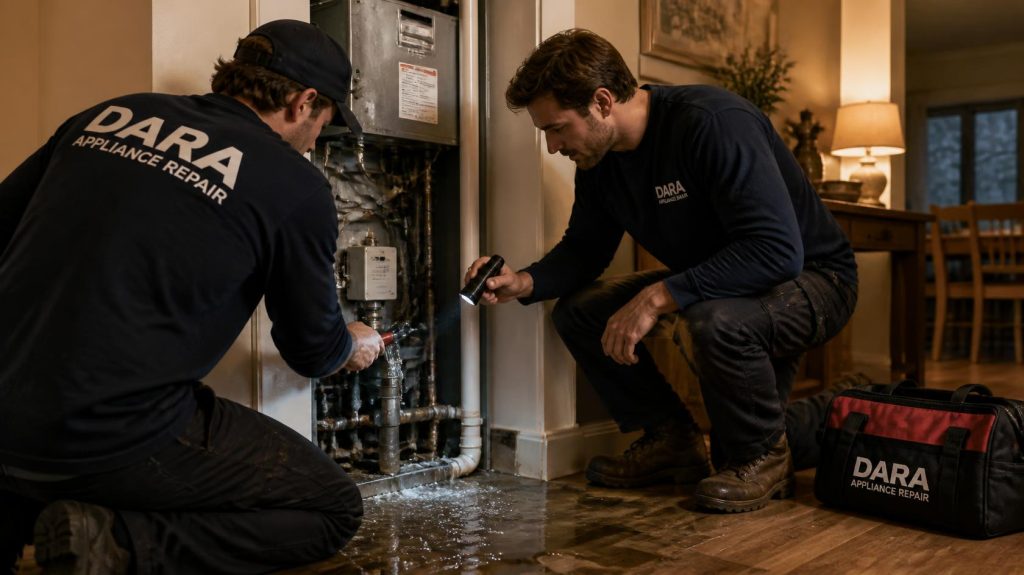
A step-by-step look at a real furnace leak repair, from pooling water to the fix
A high-efficiency furnace produces condensate as part of normal operation, so a leak isn’t automatically a red flag, but it always deserves a proper look.
In this case, water was pooling on the floor near a newer high-efficiency furnace, mostly during heating cycles. Clearing a clogged drain fixed most of it, but a slow drip remained, and that drip turned out to be the more important finding.
Here is the exact diagnostic process our certified technicians used to check both the routine explanation and the more serious one, and to confirm the furnace was safe to run, as part of our heating system repair service.
Case Snapshot
Symptom
Water pooling near the furnace during cycles
System
High-Efficiency Condensing Furnace
Location
Elmwood Park, IL
Diagnosis
Clogged condensate drain + cracked heat exchanger
Time to Repair
Same visit, under 2 hours
Outcome
No leakage, confirmed safe operation
An Elmwood Park homeowner called Dara Appliance Repair after noticing water pooling on the floor near her furnace, especially during heating cycles. Her furnace was a newer high-efficiency model, and she'd heard that some water production is normal for that type of system, but wasn't sure how to tell routine condensate from an actual problem.
That's a fair question. In a condensing furnace, the water is supposed to stay inside the drain system: the trap, the tubing, and on some models a small condensate pump. Water on the floor means something in that path has failed, or that water is coming from somewhere it shouldn't, which is why it's worth tracing rather than just mopping up. A leak isn't the only early warning sign, either. An odor is another, covered in our furnace burning smell case study.
A quick safety note: high-efficiency condensing furnaces produce condensate as a normal part of operation, so water alone isn't automatically alarming. That said, any water leak is worth having checked by a professional, since the same inspection that finds a simple drain clog is also how a more serious issue, like a cracked heat exchanger, gets caught early. A confirmed heat exchanger crack is always treated as a safety issue requiring replacement, never something to patch or simply monitor, since it involves the component that separates combustion gases from the air the furnace circulates through your home.
Keep carbon monoxide alarms working. Because a damaged heat exchanger can let combustion gases into the home, the CPSC recommends a yearly professional furnace inspection and at least one CO alarm in every home. If an alarm sounds, or anyone feels headaches, dizziness, or nausea that ease outdoors, leave the home and call 911 or your gas utility from outside.
Confirmed the furnace type and traced the water
Our technician confirmed this was a high-efficiency condensing furnace, which produces condensate as a normal byproduct, and traced the pooling water to the area around the base of the unit.
Checked the condensate drain line and trap
The drain line and trap were clogged with sediment and algae buildup, a common cause that was backing water up and overflowing rather than draining properly. A backed-up drain can also trip a safety switch and shut the furnace down.
Cleared the blockage and retested
After flushing the drain line and trap, the pooling improved, but a slow, persistent drip was still present, indicating a second source was also involved.
Inspected the secondary heat exchanger
Since condensing furnaces produce condensate directly from the secondary heat exchanger, the technician inspected it closely and found a hairline crack letting moisture escape outside the normal collection path.
Performed a full safety check
Given the safety-critical nature of any heat exchanger crack, the technician used a calibrated carbon monoxide detector at the unit and throughout the surrounding area, confirming CO levels were within a normal, safe range and that the crack was affecting only the condensate collection path.
The Root Cause
Two separate issues: a clogged condensate drain line and trap causing the initial pooling, a common and straightforward cause on its own, and a hairline crack in the secondary heat exchanger separately allowing condensate to escape at a point outside the normal drain path. The heat exchanger crack required attention as a safety-critical finding regardless of the water symptom, since any breach in that component is treated seriously, even though testing in this case confirmed no active carbon monoxide issue.
Finding both mattered. Clearing the drain alone would have reduced the pooling enough that the job looked finished, while the crack kept leaking slowly in the background. That's why retesting after the first fix is part of the process, not an extra step.
Each part has its own weak spot. A condensate drain is a damp, dark path, so sediment and algae can build up over time, especially if it hasn't been cleaned in a while. The secondary heat exchanger handles cooled exhaust gases and the acidic condensate they produce, which is why it gets a close look whenever a condensing furnace leaks.
The Fix
With both causes confirmed, our technician completed the repair in a single visit:
- Fully cleared and flushed the condensate drain line and trap
- Replaced the affected secondary heat exchanger assembly with a manufacturer-spec part, since a confirmed crack is always replaced rather than patched or sealed
- Performed a complete post-repair safety check, including a combustion analysis and carbon monoxide test, to confirm safe, proper operation
- Ran extended test cycles to confirm no further water leakage of any kind
The safety check after the repair mattered as much as the new part. Replacing a heat exchanger means working on the side of the furnace that handles combustion, so the combustion analysis and CO test confirm the burners are running cleanly and the exhaust is leaving the home the way it should before the furnace goes back into regular use.
As with every heating system repair we handle, the price was quoted before any work started. Every repair is backed by a warranty, and coverage terms depend on your appliance brand.
The Result
The furnace now runs full heating cycles with no water leakage anywhere, and the completed safety check confirmed proper, safe combustion. Because she moved forward with the repair, the diagnostic fee was waived, and as a first-time customer, she also received 10% off the total repair cost.
Water near a condensing furnace is easy to dismiss as normal. Here, having it checked led to a cracked heat exchanger that was found and replaced while testing still showed no carbon monoxide issue.
Going forward, a few habits help. Keep the condensate drain clean, protect any part of the drain line that runs through an unheated space from freezing during a Chicago winter, and have even a small amount of water around the furnace checked early.
Common Causes of a Leaking Heater
Not every puddle near a furnace means the same thing. Here are the most common causes, from simple fixes to safety-critical repairs. If water shows up in summer when the air conditioning runs, the cooling system may be the source instead; see our AC leaking water case study.
| Cause | Signs | DIY-Fixable? |
|---|---|---|
| Clogged condensate drain line or trap | Water pooling or dripping near the furnace, especially during or after a heating cycle | Sometimes, if the drain is accessible, otherwise professional |
| Cracked or corroded secondary heat exchanger | Condensate leaking from an unexpected point on the unit | No, always requires professional replacement, a safety-critical repair |
| Disconnected or damaged condensate line | Water leaking along the line's path rather than pooling at the unit | No, requires professional repair |
| Malfunctioning condensate pump, if equipped | Water backs up when the pump can't keep up or fails | No, requires professional diagnosis and repair |
| Condensation on nearby ductwork | Moisture that looks like a leak but isn't coming from the furnace itself | Sometimes, insulating exposed ductwork can help |
How to Prevent This
Most furnace leaks start small. A few habits keep the drain system working and help you catch a problem early.
- ✓ Have your furnace inspected every fall, including condensate drain line and trap cleaning
- ✓ Never ignore water pooling near a furnace, even if it seems minor
- ✓ Change the furnace filter regularly, since a clogged filter makes the furnace run hotter and puts extra stress on the heat exchanger
- ✓ Protect any condensate line that runs through an unheated space from freezing during winter
- ✓ Have any suspected heat exchanger issue inspected immediately given the safety implications
- ✓ Install and maintain a working carbon monoxide detector near the furnace and throughout the home, regardless of furnace type
- ✓ Address a slow drip promptly, before it leads to water damage or points to a larger issue
DIY vs. Call a Professional
Safe to Try Yourself
- Checking and clearing an accessible condensate drain line of visible debris
- Checking that a condensate pump, if your system has one, is running properly
- Keeping carbon monoxide detectors in place and tested regularly
Call a Professional
- Any water leak that doesn't stop after clearing an obvious drain clog
- Heat exchanger inspection and replacement
- Condensate trap and line clearing beyond simple visible debris
- Combustion analysis and carbon monoxide safety testing
Water still pooling after you've cleared what you can reach? Book online and we'll trace the source and quote the price before any work starts. Have a question first? Send us a message.
Furnace Leaking Water?
Same-day heating repair across Chicago and the suburbs. $89 diagnostic fee, waived when you book the repair.
Book a Repair Call (773) 377-4212