
Furnace Turning On and Off Too Often? Here's What Was Really Wrong
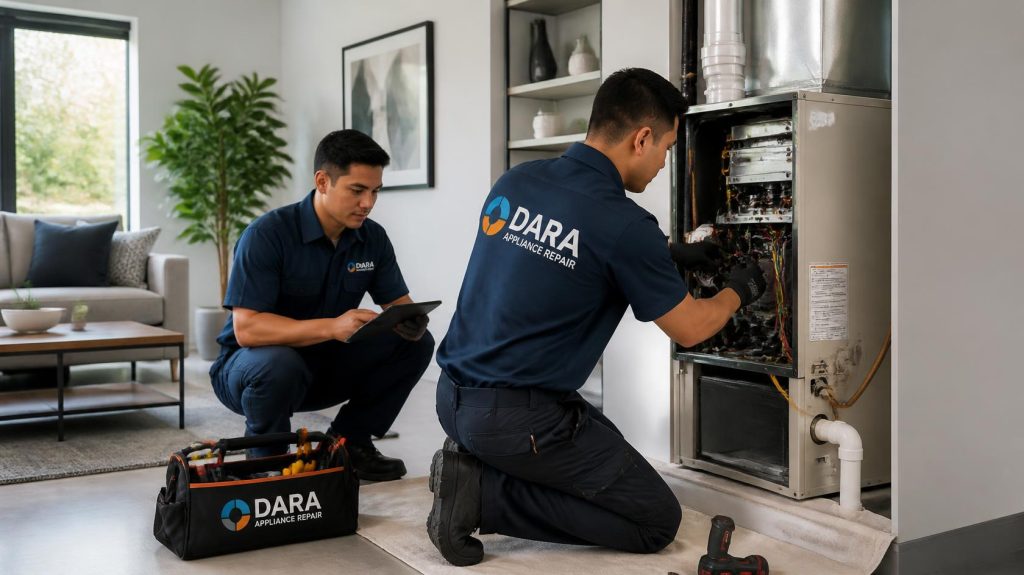
A step-by-step look at a real short cycling repair, from frequent on-off cycles to the fix
A limit switch tripping doesn’t always mean the furnace is actually overheating; sometimes the switch itself is the problem.
In this case, the furnace had started turning on and off far more often than normal, sometimes running only a few minutes before shutting down and starting again. The house never felt quite warm enough, and the pattern showed up no matter how cold it was outside.
Here is the exact diagnostic process our certified technicians used to tell the difference, find both causes, and fix them in a single visit as part of our heating system repair service.
Case Snapshot
Symptom
Frequent on/off cycling, uneven heating
System
Gas Furnace
Location
Bolingbrook, IL
Diagnosis
Miscalibrated thermostat + false-tripping limit switch
Time to Repair
Same visit, under 1.5 hours
Outcome
Normal run cycles restored
The Problem
A Bolingbrook homeowner called Dara Appliance Repair because her furnace had started turning on and off far more often than normal, sometimes running for only a few minutes before shutting down and restarting shortly after. The house never felt quite warm enough, and she'd noticed the pattern seemed to happen regardless of how cold it was outside.
Nothing about the furnace looked obviously broken, which made it harder to guess where to start.
Short cycling is worth fixing even when the house still gets some heat. Every extra start puts wear on the ignition system and blower motor, and a furnace that keeps shutting off early never runs long enough to warm the house evenly. If your furnace has the opposite problem, running longer than usual with rising bills, that points to a different set of causes.
The Diagnostic Process
Checked the thermostat's accuracy
Our technician compared the thermostat's reading against a calibrated reference thermometer and found it reading noticeably warmer than the actual room temperature, meaning it was satisfying calls for heat before the room was actually warm.
Corrected the thermostat and monitored the result
With an accurately calibrated thermostat in place, cycling improved, but a slightly irregular shutdown pattern still showed up during extended monitoring, suggesting a second factor was also involved.
Ruled out airflow as a cause
Since restricted airflow can cause a furnace to genuinely overheat, the technician checked the air filter and found it reasonably clean, ruling out a filter-related airflow restriction.
Tested the limit switch directly
The limit switch, a safety device that shuts the burner down if it senses overheating, was tripping during normal operation. The technician placed a reference thermometer at the switch location to compare its actual reading against the switch's response.
Confirmed the switch was tripping falsely
The actual plenum temperature never reached an unsafe level even when the switch tripped, confirming the switch itself had drifted out of calibration and become overly sensitive, not that the furnace was genuinely overheating.
The Root Cause
Two separate issues compounding each other: a miscalibrated thermostat that was ending calls for heat before the room was actually warm, and a limit switch that had drifted out of calibration and was tripping falsely, shutting the burner down as if the furnace were overheating even though actual temperatures never reached an unsafe level. Neither issue alone fully explained the pattern the homeowner described, but together they produced far more frequent cycling than either would have caused on its own.
Here's how they stacked up. The thermostat cut each heating cycle short because it thought the room was already warm. On the cycles that did run longer, the oversensitive limit switch shut the burner down early anyway. With both parts cutting cycles short from different directions, the furnace rarely completed a normal cycle, which is why the house never felt quite warm enough.
A falsely tripping limit switch still needs proper attention, because it's a safety device. Its job is to shut the burner down if the furnace really does overheat, so the right fix is replacing it with a correctly calibrated part, never bypassing or disconnecting it to stop the shutdowns.
The Fix
With both causes confirmed, our technician completed the repair in a single visit, in under an hour and a half:
- Installed a new, accurately calibrated thermostat
- Replaced the limit switch with a manufacturer-spec part
- Verified actual plenum temperature stayed within a normal, safe range across multiple test cycles
- Confirmed normal run-cycle length was restored, with no false shutdowns
The test cycles were the proof. Because the old switch only tripped during normal operation, a single quick test wouldn't have shown whether the problem was really gone. Watching several full cycles confirmed that the new switch stayed quiet at safe temperatures, and that the furnace now ran long enough to warm the house properly.
As with every heating system repair we handle, the price was quoted before any work started. Every repair is backed by a warranty, and coverage terms depend on your appliance brand.
The Result
The furnace now runs full, normal heating cycles and reaches the set temperature reliably without shutting off prematurely. Because she moved forward with the repair, the diagnostic fee was waived, and as a first-time customer, she also received 10% off the total repair cost.
With both parts fixed, the house now warms evenly instead of hovering just below comfortable, and the furnace is no longer putting extra wear on its ignition system and blower motor with every needless restart.
If you ever notice the cycling pattern coming back, time how long the furnace runs before it shuts off and note how often it restarts. That simple record helps a technician narrow down the cause much faster.
Common Causes of Heater Short Cycling
Short cycling has several possible causes, and some of them look alike from the outside. Here are the most common ones, starting with the two found in this case. The fix depends on which one is actually behind the cycling, which is why testing matters more than guessing.
| Cause | Signs | DIY-Fixable? |
|---|---|---|
| Miscalibrated or poorly placed thermostat | Satisfies calls for heat prematurely, cycles off before the room is actually warm | Sometimes, check placement and calibration |
| Limit switch tripping falsely | Furnace shuts down mid-cycle as if overheating, even without an actual airflow or overheat issue | No, replacement required |
| Restricted airflow causing genuine overheating | Limit switch trips accurately in response to real high temperatures, often paired with a dirty filter | Yes, check and replace the filter first |
| Oversized furnace for the home | Heats the space too quickly and shuts off before completing a full cycle | No, a sizing issue requiring professional evaluation |
| Flame sensor or ignition issue causing repeated restarts | A different failure pattern that can resemble short cycling but is tied to ignition | No, requires professional diagnosis |
How to Prevent This
Short cycling usually starts small, so a few simple habits help you catch it before it wears on the furnace.
- ✓ Have thermostat placement and calibration checked periodically
- ✓ Replace the air filter regularly to prevent airflow-related overheating
- ✓ Have your furnace professionally inspected each year to catch limit switch drift early
- ✓ Address short cycling early. Frequent starts strain the ignition system and blower motor
- ✓ Have system sizing evaluated if short cycling has been present since installation
- ✓ Keep the thermostat away from drafts, direct sun, and heat sources like lamps or vents, which can make it misread the room
- ✓ Keep a working carbon monoxide alarm in your home, as with any gas furnace
DIY vs. Call a Professional
Safe to Try Yourself
- Checking thermostat placement, away from drafts or direct sun
- Replacing the air filter
- Timing how long the furnace runs before shutting off, useful detail for a technician
Call a Professional
- Frequent on/off cycling that continues after checking the thermostat and filter
- Thermostat calibration or replacement
- Limit switch testing or replacement
- Airflow or overheat diagnosis, or a sizing evaluation
Still cycling on and off after checking the thermostat and filter? Book online and we'll find the cause and quote the price before any work starts. Have a question first? Send us a message.
Furnace Short Cycling?
Same-day heating repair across Chicago and the suburbs. $89 diagnostic fee, waived when you book the repair.
Book a Repair Call (773) 377-4212Frequently Asked Questions
What does it mean if my furnace keeps turning on and off?
It's called short cycling: the furnace shuts off before finishing a normal heating cycle, then starts again shortly after. Common causes include a thermostat that's misreading the room, a limit switch that's tripping when it shouldn't, restricted airflow from a dirty filter, or a furnace that's too large for the home. In this case, two causes were working together: a miscalibrated thermostat and a falsely tripping limit switch.
Could my thermostat really be causing this?
Yes. If the thermostat reads the room as warmer than it really is, it ends each call for heat too early, so the furnace keeps stopping short. Placement matters too: a thermostat near a draft, in direct sun, or next to a heat source can misread the room. Here, our technician confirmed the problem by comparing the thermostat with a calibrated reference thermometer.
What is a limit switch, and why would it trip without an actual overheat problem?
A limit switch is a safety device that shuts the burner down if the furnace gets too hot. Over time, a switch can drift out of calibration and become overly sensitive, tripping at temperatures that are actually safe. In this case, the technician measured the real temperature at the switch and found it never reached an unsafe level. A faulty limit switch should be replaced, never bypassed, because it protects the furnace from genuine overheating.
Is short cycling bad for my furnace long-term?
It can be. Every start puts wear on the ignition system and blower motor, so a furnace that starts far more often than it should wears those parts faster. Short cycling also leaves the house unevenly heated, because the furnace rarely runs long enough to warm every room. Fixing it early is easier on the system and more comfortable.
Could my furnace just be too big for my house?
It's possible. An oversized furnace heats the space too quickly and shuts off before completing a full cycle. A useful clue is timing: if short cycling has been happening since the furnace was installed, sizing is worth evaluating. If it started recently, as in this case, a failing part is the more likely cause.
How much does this repair cost?
It depends on the cause and which parts need replacing. Most of our repairs fall between $129 and $400. Your exact price depends on the issue, and we quote it before any work starts. First-time customers also get 10% off their first repair.
How long does this repair take?
In this case, both fixes were completed in the same visit, in under an hour and a half, including test cycles to confirm the furnace ran normally. Timing depends on the cause. If a part has to be ordered, we'll explain the timing when we quote the repair.
How can I prevent this from happening again?
Replace the air filter regularly, keep the thermostat away from drafts, direct sun, and heat sources, and have the furnace professionally inspected each year so parts like the limit switch are checked before they drift. If you notice the furnace cycling more often than usual, have it looked at early, before the extra starts add wear.