
Why oven not heating?
If you’re looking for why oven not heating symptoms right now, it’s most likely one of four things: a burned-out bake element, a failed igniter, a faulty temperature sensor, or a control board fault. Electric ovens usually point to the element or sensor. Gas ovens usually point to the igniter. A quick diagnostic look at your oven’s behavior can narrow it down before you spend money on the wrong appliance repair.
An oven that won’t heat is one of the more stressful appliance failures, mostly because it happens right when you need it. The good news is that the causes are limited, and most of them show a distinct symptom that points straight at the culprit.
1. Bake Element Failure
If you have an electric oven and the bake element (the coil at the bottom of the oven cavity) isn’t glowing red when you set a bake temperature, it has likely burned out.
What it looks like: No heat at all, or heat that starts and then cuts out. Sometimes you’ll see a visible break, blister, or bulge in the coil itself.
Why it happens: Bake elements degrade with age and repeated heating cycles. Self-cleaning cycles, which run at very high heat, can accelerate wear.
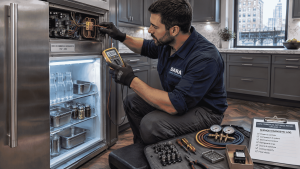
What we check: A visual inspection first, since a damaged element is often obvious. If it looks fine, a multimeter test across the element checks for continuity. No continuity means the element has failed internally, even if it looks intact.
Fix: Bake element replacement is usually a straightforward appliance repair and one of the more affordable oven fixes.
2. Faulty Igniter (Gas Ovens)
For gas ovens, the igniter is the most common point of failure. Its job is to get hot enough to open the safety gas valve and light the burner.
What it looks like: The igniter glows but the oven never ignites, or it glows weakly and takes far longer than normal (more than about 90 seconds) to light.
Why it happens: Igniters wear out from repeated heating and cooling cycles, similar to a lightbulb filament.
What we check: We watch the igniter through a full ignition cycle and test its amperage draw. A weak igniter often still glows, which is why this cause gets missed by homeowners doing a quick visual check. It just isn’t pulling enough current to trip the gas valve open.
Fix: Igniter replacement. This is a common, well-understood repair on most gas oven models.
3. Broken Temperature Sensor
The temperature sensor is a thin metal probe, usually mounted near the back wall of the oven cavity, that tells the control board how hot the oven actually is.
What it looks like: The oven turns on and seems to heat, but food comes out undercooked, overcooked, or the oven never reaches the set temperature. Sometimes the oven cycles on and off rapidly.
Why it happens: The sensor can drift out of calibration, short out, or physically fail. It can also read incorrectly if it’s touching the oven wall, which throws off the entire temperature reading.
What we check: Resistance testing on the sensor against manufacturer specs at room temperature, plus a check that the sensor is positioned correctly and not touching the cavity wall.
Fix: Sometimes repositioning the sensor solves it. If it’s out of spec, sensor replacement is a relatively low-cost fix.
4. Control Board Faults
The control board is the “brain” that tells the heating element or igniter circuit when to fire. When it fails, none of the other components ever get the signal to turn on, no matter what else checks out fine.
What it looks like: The oven display works, the burners on a gas range may work fine, but the oven itself never attempts to heat. Sometimes you’ll see an error code.
Why it happens: Control boards can fail from power surges, age, or a failed relay that’s supposed to switch power to the heating circuit.
What we check: We rule out the element, igniter, and sensor first, since a bad control board is diagnosed by process of elimination combined with voltage testing at the connector during a heat command.
Fix: Control board replacement is typically the most expensive of the four repairs, which is exactly why it’s important to rule out the cheaper causes first.
Quick Diagnostic Table
Use this table to narrow down your issue about why oven not heating before scheduling an appliance repair visit.
| Cause | Oven Type | Key Symptom | Typical Repair Cost |
|---|---|---|---|
| Bake element | Electric | No visible glow, or visible damage | $129–$200 |
| Igniter | Gas | Glows but won’t ignite, or slow to light | $150–$250 |
| Temperature sensor | Both | Heats but wrong temperature | $130–$220 |
| Control board | Both | No heat attempt, possible error code | $250–$400 |
Costs reflect typical repair ranges and can vary by model and part availability.
Brand-Specific Notes
Our certified appliance technicians have experience across most major oven brands, from everyday names like GE, Whirlpool, and Frigidaire to higher-end brands like Sub-Zero, Viking, and Thermador. Whether you’re facing oven not heating issues on an everyday model or a built-in luxury range, higher-end and built-in ovens sometimes use proprietary control boards or dual-igniter setups, which is one more reason a professional diagnosis matters before ordering parts. If your oven is under manufacturer warranty, check with the manufacturer before any repair to avoid voiding coverage.
For general troubleshooting reference, GE Appliances maintains an official support hub with model-specific guidance worth checking against your unit’s manual.
Prevention Checklist
- Avoid running the self-cleaning cycle more than a few times a year; the extreme heat shortens element and igniter life
- Keep the temperature sensor clear of food debris and make sure it isn’t touching the oven wall
- Don’t slam the oven door; repeated hard closes can jar sensor and igniter connections loose over time
- Schedule a diagnostic checkup if your oven is over 10 years old and hasn’t been serviced
FAQs
What’s the most common reason for oven not heating?
The most common reasons are a failed bake element (electric), a weak igniter (gas), a faulty temperature sensor, or a control board fault. The display and lights working normally, while the oven itself stays cold, is the classic sign of one of these four issues rather than a power problem.
Can I fix an oven that won’t heat myself?
Some causes, like a visibly damaged bake element, are DIY-friendly for comfortable homeowners. Igniter and control board issues involve gas lines or electrical testing and are safer left to a certified appliance technician.
Is it worth repairing an oven that won’t heat, or should I replace it?
A same-day appliance repair for most of the four causes above costs far less than replacing the appliance, especially on ovens under 10 years old. A diagnostic visit gives you the real number before you decide.
How much does it cost to fix an oven that isn’t heating?
Typical repairs run $129 to $400 depending on the cause, with control board repairs at the higher end. Our $89 diagnostic fee is waived when you move forward with the repair.
Why does my gas oven’s igniter glow but the oven still won’t light?
A glowing igniter can still be too weak to draw enough current to open the safety gas valve. It looks like it’s working but isn’t pulling the amperage needed, which is why professional testing catches this more reliably than a visual check.
Does a bad temperature sensor always mean my oven runs cold?
Not always. A faulty sensor can also cause an oven to overheat, undercook food, or cycle on and off rapidly, depending on how it’s failing.
How long does an oven heating repair usually take?
Most of these four repairs are same-day fixes once the part is identified, especially bake element and igniter replacements. Control board repairs occasionally require ordering a specific part.
Do you offer any discount on oven repairs?
Yes. First-time customers get 10% off the repair, and the $89 diagnostic fee is waived when you go ahead with the fix.
If oven not heating problems are keeping you from cooking tonight, our certified appliance technicians can diagnose the cause and get you back to full heat, often the same day. Schedule your oven repair or visit our oven repair page to learn more. Questions first? Contact us anytime.