By the Dara Appliance Repair Team | Serving Chicago and the North Shore
Oven and stove needs professional repair in Chicago is most affordable when the problem is caught early. The tricky part: most cooking appliance failures start as symptoms that are easy to rationalize away. This guide tells you exactly what to look for, what each sign means, and when calling a technician is the right move for your kitchen and your safety.
There is a particular kind of kitchen problem that Chicago homeowners are very good at ignoring. It is not dramatic enough to force immediate action, but it is persistent enough to create a low-level frustration that eventually becomes the background noise of cooking. The oven that runs a little hot on the left side. The gas burner that needs three or four clicks before it catches. The oven door that requires a firm push to close all the way. In Chicago kitchens, these are not quirks — they are the early warning signs that separate a $120 oven repair in Chicago from a $400 one.
These are not quirks. They are early-stage repair signals — and the gap between noticing them and acting on them is exactly where most avoidable appliance repair costs are created. A $120 igniter replacement that gets ignored for a season becomes a $300 repair when the weakening igniter begins affecting the gas valve. A door gasket that goes unreplaced for a year turns an efficient oven into one that cannot hold temperature regardless of how the element is performing.
This guide is built around one idea: the sooner you recognize what your oven or stove is telling you, the less that conversation costs. Here is what to look for, what each sign actually means, and how to decide whether you are looking at a repair appointment or a safety situation that needs to be addressed today.
The Signs Most Chicago Homeowners Misread (And Why It Costs Them)
Before getting into the specific warning signs by appliance type, it is worth understanding a pattern that shows up in almost every oven and stove repair call we make across Chicago and the North Shore.
Most homeowners who call about a failed oven or stove can identify at least one symptom that had been present for weeks or months before the failure. The oven temperature was slightly off. A burner was taking longer to light. The self-clean cycle had stopped working. In nearly every case, the symptom that preceded the failure was a repairable problem on its own — one that became a larger repair because the window for catching it early had passed.
According to the U.S. Consumer Product Safety Commission, cooking equipment is involved in an estimated 170,000 home fires annually — making it the leading cause of home fires in the country. The overwhelming majority of these incidents are preceded by warning signs that were either missed or dismissed. Early oven and stove repair in Chicago is not just about appliance longevity — in homes with older gas infrastructure, it is a safety practice.
The other pattern worth knowing: Chicago kitchens tend to run harder than average. Older bungalows and two-flats in neighborhoods like Bridgeport, Avondale, and Pilsen frequently have gas stoves and ovens that have been in service for 15 or more years without a professional inspection. When these appliances start sending signals, those signals deserve to be taken seriously — both for repair cost reasons and for safety reasons specific to older gas infrastructure.
Oven Warning Signs Chicago Homeowners Should Never Ignore
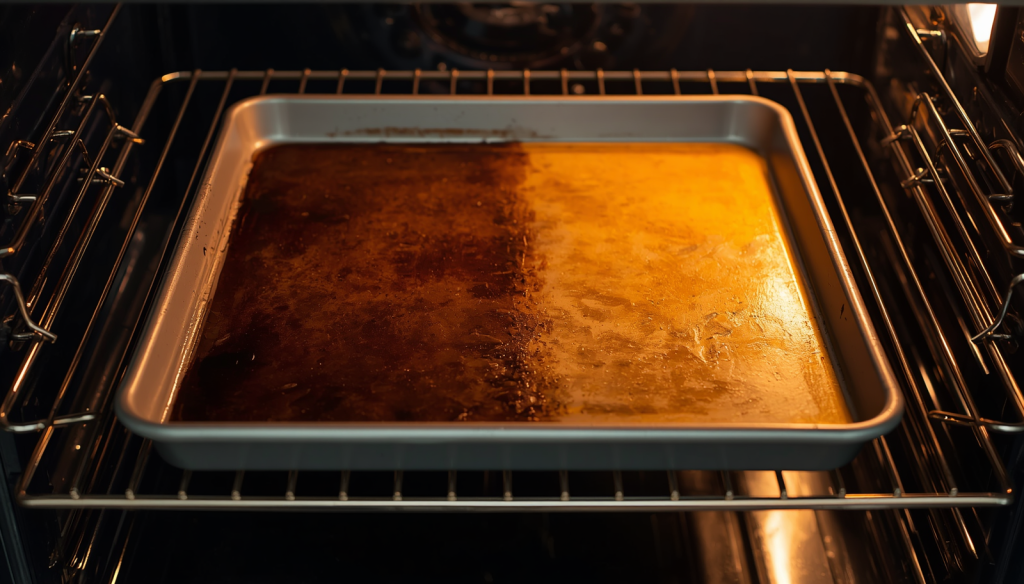
Your Oven Is Heating Unevenly or Running at the Wrong Temperature
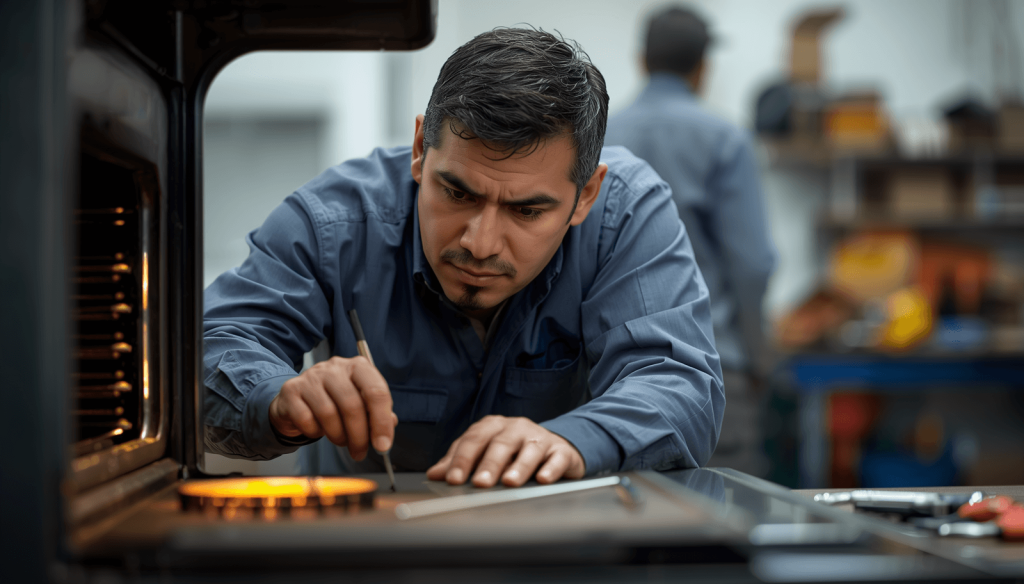
An oven that is 25 to 75 degrees off from its set temperature is the most common oven complaint we hear from Chicago homeowners — and the one most consistently dismissed as “the oven just running a little hot” or compensated for with adjusted cook times. In most cases, this is not a calibration quirk. It is a failing bake element, a degraded temperature sensor, or a failing igniter on gas models.
The cleanest way to verify this: place an inexpensive oven thermometer on the center rack, set the oven to 350 degrees, and let it fully preheat. If the thermometer reads more than 25 degrees above or below 350, you have a measurable problem, not a perception one. A temperature sensor recalibration or replacement typically costs $100 to $180. A bake element replacement runs $150 to $250. Both are straightforward single-visit repairs.
QUICK DIAGNOSTIC: Set your oven to 350 degrees. After full preheat, check an oven thermometer placed on the center rack. More than 25 degrees off in either direction means a component needs attention.
Food Cooks Unevenly — Burnt on One Side, Undercooked on the Other
Uneven baking is one of the clearest diagnostic signs a technician can work from, because it tells us exactly where in the oven the heat distribution is failing. When food browns significantly more on one side of the oven than the other, it almost always points to a bake element that has developed a hot spot — the beginning of an element failure, not a permanent feature of the oven.
This is the ideal repair window. A partially failed element is easier and less expensive to diagnose than one that has stopped working entirely. More importantly, catching it at the symptom stage prevents the mid-recipe failure that happens when the element finally gives out completely. Bake element replacement on most ovens runs $150 to $250 and is completed in a single visit.
The Oven Door Does Not Close Flush or Sits Slightly Open
A door that requires extra force to close, does not sit flush against the oven frame, or has a visible gap around any edge is leaking heat with every cycle. This forces the heating element to work harder, increases energy consumption, and makes accurate temperature impossible to maintain regardless of how well the element itself is performing.
The most common causes are a worn or damaged door gasket or a bent door hinge. Door gasket replacement is the least expensive oven repair on this list — typically $50 to $100 including labor, completed in under an hour. A bent or snapped hinge costs slightly more but is still a straightforward fix. The paper test: close the oven door on a single sheet of paper and try to pull it out. If it slides out with minimal resistance, the seal is compromised.
The Broil Function Works but the Bake Does Not (or Vice Versa)
Gas and electric ovens have separate heating elements for the bake (bottom) and broil (top) functions. When one works and the other does not, the failing element is the cause in the overwhelming majority of cases — not the control board, not the thermostat, not a wiring problem. This is one of the most clearly diagnosable oven problems a technician encounters.
Both bake and broil element replacements are single-visit repairs. If your oven broils perfectly but will not bake, or bakes but will not broil, schedule a repair rather than assuming the oven has reached end of life. The element is the issue, and it is fixable.
The Self-Clean Cycle, Interior Light, or Timer Has Stopped Working
Individual function failures are easy to dismiss because the oven still works for its primary purpose. But they matter for two reasons. First, the self-clean cycle uses extremely high heat to burn off residue — if it is not working, that heat cycle is not happening, and grease buildup accumulates at a rate that eventually affects oven performance and creates a fire risk. Second, when multiple secondary functions fail in a short period, it is usually an early sign that the oven’s main control board is beginning to degrade.
A single failed function might be a standalone component issue. Two or three failing together is a control board conversation — a repair that typically runs $200 to $400 but extends oven life by several years when addressed before the board fails completely.
Gas Stove Repair Warning Signs You Should Never Ignore in Chicago
The Burner Takes Multiple Attempts to Light
A gas burner that requires three, four, or five ignitor clicks before catching a flame is not a minor inconvenience. Each failed click is a brief release of unburned gas before the ignitor finally catches. A weakening ignitor that takes multiple attempts to fire means gas is accumulating in small amounts with each failed spark — and the ignitor is telling you it is approaching the end of its service life.
The repair is almost always a dirty ignitor that needs professional cleaning or a failed ignitor that needs replacement. Ignitor replacement on a gas stove typically costs $100 to $180. What makes this worth acting on promptly is the alternative: an ignitor that fails completely means the burner does not light, gas continues to flow when the knob is turned, and ventilation becomes essential. Catching this at the slow-lighting stage is the right time to call.
The Flame Burns Yellow, Orange, or Flickers Unevenly
A healthy gas burner produces a steady, cone-shaped blue flame. A flame that burns yellow or orange, flickers visibly, or burns higher on one side than the other is a sign the gas-to-air ratio is off. This can result from a clogged burner port, a misaligned burner cap, or in more significant situations, a gas orifice or valve issue.
Beyond the performance issue, a consistently yellow or orange flame indicates incomplete combustion. Incomplete combustion produces carbon monoxide as a byproduct — not at levels that constitute an emergency in a well-ventilated kitchen, but enough that it warrants a technician inspection rather than continued use. This is not a clean-and-forget situation.
If your kitchen does not have a carbon monoxide detector within 10 feet of the stove, install one before using the range again — regardless of whether you have called for a repair yet. This is the single most immediate protective step available to any Chicago homeowner with a gas cooking appliance.
The Ignitor Clicks Continuously When No Burner Is in Use
A gas stove that clicks constantly between uses, or that continues clicking after a burner has been lit and turned off, almost always has moisture inside the ignitor switch from a boilover or spill. The liquid wicks into the switch mechanism and creates a continuous contact. Remove the burner grates and caps, wipe the burner area thoroughly, and allow the range to dry fully — sometimes 24 hours with the top open.
If clicking continues after the area is completely dry, the ignitor switch itself has shorted and needs replacement. This is a straightforward repair and is not a safety concern on its own, but an ignitor that is continuously cycling does create wear and should be addressed rather than left as background noise in your kitchen.
You Notice a Gas Smell When the Stove Is Not in Use
A brief gas smell when a burner first ignites is normal — a small amount of gas is released in the fraction of a second before the flame catches. A gas smell that is present when no burners are in use, that appears during cooking and does not dissipate, or that is noticeable near the back or sides of the range where gas connections are located is a different situation entirely.
Do not troubleshoot a persistent gas smell yourself. Leave the house with doors and windows open, avoid any electrical switches while leaving, and call your gas provider’s emergency line. A gas technician should confirm the source is clear before an appliance technician addresses any repairs. This is not a call for later — it is a call to make immediately.
Electric Stove and Cooktop Repair Signs Chicago Homeowners Should Know
A Burner Heats Too Slowly, Does Not Heat, or Stays on One Setting
An electric coil burner that does not heat at all has almost certainly failed — coil element replacement is one of the most straightforward and least expensive electric stove repairs, typically $80 to $150. A burner that heats but does not respond to different heat settings (stays on high regardless of the knob position, or stays on low and will not boost) has a failed infinite switch — the component that regulates power flow to the element. Infinite switch replacement typically runs $100 to $200.
On smooth glass cooktops, a radiant element beneath the glass that fails partially — producing heat but not reaching target temperature, or heating only part of the burner zone — is more complex to diagnose but follows the same logic. Radiant element replacement on glass cooktops runs $150 to $350 depending on the brand.
The Glass Cooktop Has a Crack or Chip
A cracked glass cooktop is a hard stop. The glass surface on a smooth cooktop is both the cooking surface and the structural cover for the radiant heating elements below. A crack — even a small one at the edge — compromises both functions. Cooking on a cracked glass surface risks the crack propagating under heat stress, potential electrical exposure if liquid enters through the crack, and burn risk from direct contact with the element beneath.
Glass cooktop panel replacement varies significantly by brand and model. Budget to mid-range cooktops typically run $200 to $400 for panel and labor. Premium brands can run higher. For older units where the panel cost approaches 50 percent of replacement cost, this is a genuine repair-or-replace decision worth discussing with a technician before committing to either option.
The Circuit Breaker Trips When a Specific Burner Is Used
A breaker that trips repeatedly when one specific burner is turned on is a clear sign of an electrical fault in that burner’s element, wiring, or switch. This is not a resettable situation — resetting the breaker and continuing to use the burner risks a wiring fire inside the appliance. Turn the breaker off and do not use that burner until a technician has inspected the wiring.
Electrical faults in cooking appliances are the category of repair where attempting DIY diagnosis creates the most risk. The voltage involved in an electric stove is significantly higher than a typical household circuit — 240 volts on most full-size ranges. A technician with appliance-specific diagnostic experience should handle anything beyond replacing a coil element.
Oven and Stove Repair vs. Safety Emergency: How to Tell the Difference
Every warning sign in this guide represents a repair appointment — something that should be scheduled promptly but does not require you to stop using the appliance immediately. The following situations are different. These are the signs that mean stop using the appliance now, not at the end of the week.
- Persistent gas smell with no burners in use. Leave the house, open windows and doors as you go, avoid electrical switches, and call your gas provider’s emergency line. This is not an appliance repair call — it is a gas emergency call first.
- Visible sparking from the oven interior, control panel, or behind the range. Turn off the appliance at the circuit breaker (not just the control knob), and do not use it until a technician has inspected the electrical components and wiring.
- A burning smell that is chemical, plastic, or electrical in character. This is distinct from the smell of food burning or grease smoking. A chemical or plastic burning smell during operation indicates insulation or wiring breakdown inside the appliance. Stop using it immediately.
- Exterior surfaces of the range that are hot to the touch. Oven and stove exterior surfaces should be warm during operation, not hot. Surfaces that are uncomfortably hot indicate failed insulation allowing heat to transfer to the outer cabinet — a burn and fire risk.
- A visible crack in the oven cavity floor or wall. The oven cavity interior contains heat. A structural crack allows heat to escape into areas of the appliance that are not designed for those temperatures. Do not use the oven until a technician assesses the damage.
UNSURE IF IT IS A SAFETY ISSUE? Err toward caution. A same-day diagnostic call from Dara Appliance Repair costs $89 — waived when a repair is completed. That is significantly less expensive than the alternative of using an appliance that turns out to have a safety issue.
Repair or Replace Your Oven or Stove in Chicago: How to Make the Right Call
The repair-or-replace decision for ovens and stoves follows the same 50 percent rule that applies across all major appliances: if the repair estimate exceeds half the cost of a comparable new unit, replacement is generally the smarter investment. Applied to cooking appliances specifically, here is how that plays out:
Situations Where Repair Is Almost Always Right
- Single component failure on a unit under 10 years old: igniter, bake element, broil element, temperature sensor, door gasket, or infinite switch. All are standard wear items with well-established repair costs that are a fraction of replacement.
- Premium brand appliances of any age with a single component failure: a 14-year-old Viking range with a failed igniter is worth repairing because a comparable replacement costs $3,000 to $6,000. The 50 percent rule applies to replacement cost, not original purchase price.
- Gas ranges under 15 years old with any issue that is not a cracked burner body or failed heat exchanger. Gas ranges are durable, and the mechanical simplicity of the gas delivery system means most repairs are isolated to a single component.
Situations Where Replacement Deserves Serious Consideration
- Control board failure on a unit over 12 years old. A control board replacement costs $200 to $400 and extends life — but if the board is failing, other electronic components are likely approaching the same threshold.
- Multiple simultaneous failures in one service visit. Two or three components failing together is a signal about the overall condition of the appliance, not a coincidence. The next repair is unlikely to be far behind.
- Glass cooktop panel replacement on a budget-range unit over 8 years old. Panel replacement on low-cost cooktops can approach 60 to 80 percent of replacement cost. This is the one situation where replacement often wins the math.
Sam and Dan will give you this breakdown clearly after every diagnostic. If replacement is the right answer, they will tell you. If it is not, they will tell you that too. Dara Appliance Repair serves Northbrook, Highland Park, and Deerfield — North Shore communities where premium range ownership is common and where the repair-or-replace math strongly favors repair in most cases.
For a detailed look at how this same framework applies to laundry appliances, our guide to washer and dryer maintenance in Chicago walks through lifespan expectations and repair thresholds for washers and dryers.
Oven and Stove Brands We Repair Across Chicago and the North Shore
Dara Appliance Repair handles professional oven and stove repair across every major brand in the Chicago market. We source parts before the service call wherever possible so that diagnosis and repair happen in a single visit — not across two appointments.
Brands we service regularly include Viking, KitchenAid, Thermador, JennAir, Whirlpool, Samsung, GE, Maytag, LG, Kenmore, and Bosch. Call us if your brand is not on this list — we service more than we publish here.
Recognized a Sign? The Right Time to Call Is Now.
Every warning sign in this guide represents a repair that is less expensive today than it will be in four weeks. A slow-lighting burner that becomes a failed igniter. A door gasket that softens into a seal that can no longer hold temperature. A bake element developing a hot spot that eventually burns through entirely at 6 PM on a Wednesday when you have people coming over.
The weeks before Thanksgiving are the highest-demand period for oven repair across Chicago. Same-day availability in October is significantly better than in November. If something in this guide sounds familiar, now is the right time to call — not the week of.
Dara Appliance Repair offers same-day and next-day oven and stove repair across Chicago and the North Shore, seven days a week, 8 AM to 8 PM. Our $89 diagnostic fee is waived when a repair is completed. First-time customers receive 15% off their first repair.
Call Sam or Dan at (773) 377-4212 or book your oven or stove repair online. Most repairs are completed in a single visit.
We serve Chicago, Evanston, Skokie, Park Ridge, Niles, Glenview, Wilmette, Northbrook, Deerfield, Highland Park, Des Plaines, Oak Park, Berwyn, and Cicero. Monday through Sunday, 8 AM to 8 PM.
Call (773) 377-4212 or email dara.repairllc@gmail.com.
Frequently Asked Questions
How do I know if my oven heating element needs to be replaced?
Three signs point clearly to a failed or failing bake element: the oven does not reach set temperature, food cooks unevenly with one side consistently more done than the other, or you can see visible damage to the element itself (blistering, a break, or a burn mark). On electric ovens you can also do a visual check with the oven off and cool — a bake element in good condition has no visible damage. A broken element will sometimes show a visible gap or dark burn point. Call a technician if you see any of these signs rather than attempting to replace the element yourself, particularly on models where the element is wired into the back panel.
Is it safe to use my oven if the door does not close all the way?
You can use the oven with a slightly compromised door seal, but you should not continue using it indefinitely without repair. An oven door that does not seal properly loses heat continuously during operation, which means the heating element is running longer to compensate, increasing energy consumption and element wear. More significantly, if the gap is large enough to allow consistent heat escape, surfaces near the oven — countertops, adjacent cabinets — may be exposed to temperatures they were not designed for. Get the door gasket or hinge repaired before the next heavy-use period (Thanksgiving, holiday cooking season).
Why does my gas stove smell like gas briefly when I turn on a burner?
A very brief gas smell lasting one to two seconds when you turn a burner knob to light is normal — it is the small amount of gas released in the fraction of a second between the knob turning and the ignitor catching the flame. This is expected behavior and is not a cause for concern. A gas smell that lasts more than a few seconds after the burner is lit, that is present when the stove is not in use, or that seems to come from the back or sides of the range rather than the burner area is not normal. That situation requires a service call before further use.
How long does an oven or stove repair take?
Most oven and stove repairs in Chicago are completed in a single visit of one to two hours. The most common repairs — bake element replacement, igniter replacement, door gasket replacement, temperature sensor replacement — involve components that are stocked or sourced overnight, meaning same-day or next-day completion is the norm. Control board replacements and glass cooktop panel replacements occasionally require a parts order of one to three business days depending on the brand and model. Dara Appliance Repair technicians confirm parts availability before booking the service visit so you know the timeline before the technician arrives.
How much does oven and stove repair cost in Chicago?
The most common oven and stove repairs in Chicago and their typical cost ranges: gas stove igniter replacement ($100 to $180), electric bake or broil element replacement ($150 to $250), door gasket replacement ($50 to $100), temperature sensor replacement ($100 to $180), infinite switch replacement on electric stoves ($100 to $200), control board replacement ($200 to $400), and glass cooktop panel replacement ($200 to $500 depending on brand). Dara Appliance Repair charges an $89 diagnostic fee that is waived when a repair is completed.
Should I repair or replace a stove that is more than 10 years old?
Age alone is not the right metric for this decision — condition and repair cost are. A 12-year-old gas range with a single failed igniter ($100 to $180 to repair) has potentially 8 to 10 more years of service life. That repair makes sense. A 14-year-old electric range where the control board, one element, and the door hinge all need work in the same visit is a different conversation. Our technicians will give you the repair-or-replace assessment clearly after the diagnostic, including what the repair buys you in expected remaining life versus what a comparable new unit would cost.
Does Dara Appliance Repair service ovens and stoves across Chicago suburbs?
Yes. Dara Appliance Repair makes same-day and next-day oven and stove repair calls throughout Chicago and all surrounding suburbs, including Evanston, Skokie, Park Ridge, Niles, Glenview, Wilmette, Northbrook, Deerfield, Highland Park, Des Plaines, Oak Park, Berwyn, and Cicero. Call (773) 377-4212 to check availability in your area.