
Chicago doesn’t do mild weather. Summers push into the 90s with heavy humidity, and winters drop well below freezing for weeks at a stretch, and your refrigerator feels every bit of that swing whether you notice it or not. Refrigerator maintenance built around Chicago weather looks different from what most manufacturer manuals assume, because those manuals are usually written around a more moderate, stable climate than what Chicago homeowners deal with every year.
This guide walks through exactly how summer heat and winter cold each stress different parts of your refrigerator, the specific risks of a garage fridge during a Chicago winter, and a seasonal maintenance checklist that can meaningfully extend the appliance’s life if you stay ahead of it.
Why Refrigerator Maintenance in Chicago Weather Isn’t One-Size-Fits-All
A refrigerator is designed to reject heat from inside the unit to the surrounding kitchen air, and that process gets harder the hotter and more humid that surrounding air is. In a Chicago kitchen without central air conditioning, especially in an older bungalow or two-flat during a July heat wave, the condenser coils are working against room temperatures the manufacturer never fully accounted for.
Winter brings the opposite problem. Refrigerators are built to operate within a specific ambient temperature range, and when that range gets undercut, whether from an unheated garage, a drafty mudroom, or a poorly insulated back porch turned into extra storage, the compressor and internal sensors can behave unpredictably. This is exactly why refrigerator maintenance Chicago weather makes necessary has to account for both extremes, not a single seasonal routine built around milder conditions.
What Summer Heat Does to Condenser Coils
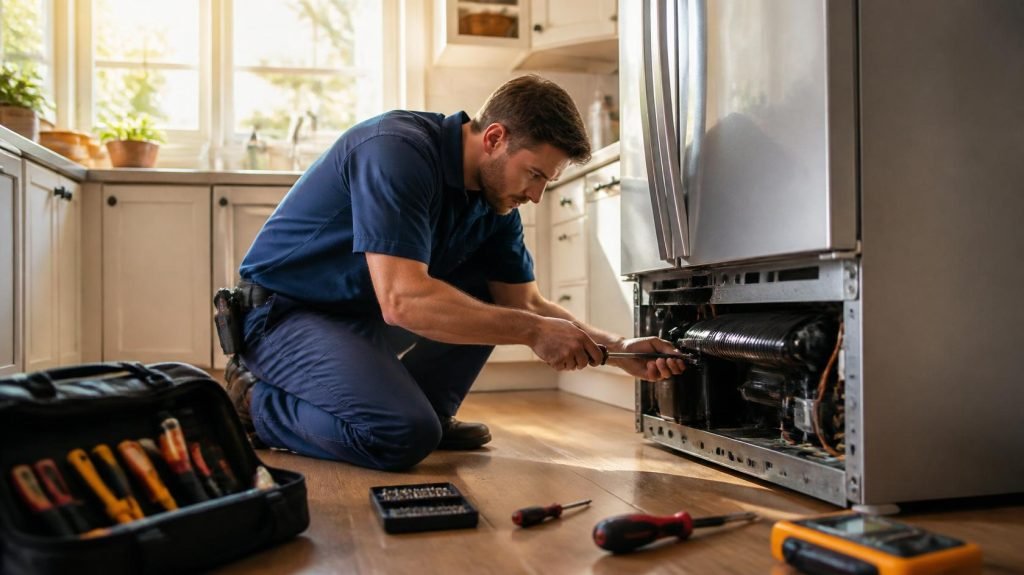
The condenser coils, usually located at the back or bottom of the unit, are responsible for releasing the heat that the refrigerator pulls out of your food compartment. In a hot, humid kitchen without air conditioning, those coils have a much harder job.
- Dust and debris accumulate faster in humid air, coating the coils and reducing their ability to release heat efficiently
- The compressor runs longer and more often to compensate, which accelerates wear on a part that’s expensive to replace
- Door seals work harder to keep humid kitchen air out of the fridge, since warm, moist air constantly trying to get in makes the compressor cycle even more
Winter Garage Fridge Pitfalls
A lot of Chicago homeowners keep a second refrigerator in the garage for overflow storage, extra drinks, or holiday hosting, and this is where winter causes some of the most overlooked damage. Refrigerators are not designed to sit in ambient temperatures near or below freezing.
When a garage dips into the 30s or lower, the refrigerator’s internal thermostat can be fooled into thinking the unit is colder than it needs to run, causing the compressor to cycle less often than it should. This can lead to the fresh food compartment actually freezing while the appliance thinks everything is fine, along with increased strain on the compressor when it does have to work through such a wide ambient swing.
Signs Your Garage Fridge Is Struggling With Winter Temperatures
- Food in the main compartment freezing unexpectedly, even on a moderate thermostat setting
- The compressor running in short, inconsistent bursts rather than a steady cycle
- Condensation or frost forming around the door seals from the temperature differential between the garage and the unit’s interior
- A noticeable delay in cooling after the garage door has been open for an extended period
Seasonal Maintenance Checklist for Chicago Homeowners
Good refrigerator maintenance in Chicago weather really comes down to matching your routine to the season rather than doing the same thing year-round.
Before summer:
- Vacuum or brush the condenser coils to remove dust before the hottest months hit
- Check door seals for gaps, since a compromised seal works twice as hard once humidity rises
- Make sure the refrigerator has adequate airflow clearance from surrounding cabinetry, especially in tighter kitchen layouts common in older Chicago homes
Before winter:
- If you run a garage refrigerator, confirm it’s rated for lower ambient temperatures, or consider relocating it if the garage regularly drops near freezing
- Check that door seals aren’t stiffening or cracking in the cold, which happens more with age
- Keep the unit away from drafts near garage doors or exterior walls where temperature swings are most extreme
Year-round:
- Replace the water filter every 3 to 4 months given Chicago’s hard water
- Keep the unit reasonably full but not overpacked, since a moderately full refrigerator holds temperature more efficiently through both extremes
- Schedule an annual inspection to catch compressor strain or seal wear before it becomes a full breakdown
When Weather-Related Wear Turns Into a Repair Situation
Even with a solid maintenance routine, Chicago’s climate puts enough strain on a refrigerator that appliance repair eventually becomes necessary, often sooner than in a milder climate. A compressor that’s been working overtime through several brutal summers, or a garage unit that’s cycled through winters it wasn’t built for, tends to show wear years before a comparable unit in a more temperate city would.
If you’re noticing new sounds alongside temperature inconsistency, our related post on refrigerator noise and what each sound means can help you figure out whether what you’re hearing is tied to this kind of seasonal strain before your appointment.
Getting Ahead of Chicago’s Weather
Protecting the compressor and seals before extreme heat or cold forces them to fail outright is really the whole point of refrigerator maintenance Chicago weather demands. Our refrigerator repair services cover everything from condenser coil issues and door seal replacement to compressor strain from garage units that have battled a Chicago winter, with certified appliance technicians who understand how the local climate specifically wears down these appliances. We offer same-day and next-day appliance repair throughout Chicago and nearby suburbs, and every visit starts with a transparent diagnosis before any refrigerator repair work begins. The $89 diagnostic fee is waived when you move forward with repair, and first-time customers also receive 15% off.
The Bottom Line on Chicago’s Weather and Refrigerator Lifespan
Staying ahead of refrigerator maintenance Chicago weather demands isn’t optional if you want your appliance to reach its full expected lifespan. Summer heat strains condenser coils and compressors, winter cold threatens garage units and door seals, and a consistent seasonal routine is the most reliable way to avoid an unexpected breakdown right when you need the fridge most.
Frequently Asked Questions
Does Chicago’s weather really shorten a refrigerator’s lifespan? Yes, particularly for units without central air conditioning nearby or garage refrigerators exposed to freezing temperatures. Both extremes put extra strain on the compressor and door seals compared to a more temperate climate.
How often should I clean my condenser coils in Chicago? Before summer at minimum, and ideally every six months, since humid air causes dust to accumulate on the coils faster than it would in a drier climate.
Is it safe to keep a refrigerator in an unheated Chicago garage during winter? Only if the unit is rated for lower ambient temperatures. A standard kitchen refrigerator can malfunction when the surrounding temperature drops too low, since its thermostat may misread how hard the compressor actually needs to work.
What’s the first sign that seasonal weather is damaging my refrigerator? Inconsistent cooling, such as food freezing unexpectedly or the compressor running in short irregular bursts, is often the earliest sign, along with door seals that feel stiff or show visible gaps.
Can regular maintenance actually prevent weather-related refrigerator repairs? It significantly reduces the risk. Seasonal coil cleaning, seal checks, and appropriate placement for garage units address the specific stress points Chicago’s climate creates before they turn into compressor failures or full breakdowns.