What’s Causing My Washer Making a Loud Banging Noise During the Spin Cycle?
Behind almost every washer loud noise spin cycle complaint is one of three causes: an unbalanced load, worn shock absorbers or suspension springs, or a failing tub bearing.
An unbalanced load is the easiest to fix and the most common cause. Worn shocks and a bad bearing both need parts, and telling them apart usually comes down to timing, sound, and whether it happens on every load or just some.
The Three Most Likely Culprits Behind a Washer Loud Noise Spin Cycle Problem
Every washer, top-load or front-load, has to keep the drum spinning true at 800 to 1,400 RPM during the final spin. At that speed, even a small amount of play or imbalance turns into a loud, rhythmic bang.
The trick is figuring out which of the three usual suspects is behind it before you call anyone or order a part.
Is It Just an Unbalanced Load?
This is the cause behind the large majority of washer loud noise spin cycle complaints, and it’s the one you can usually fix yourself in a few minutes.
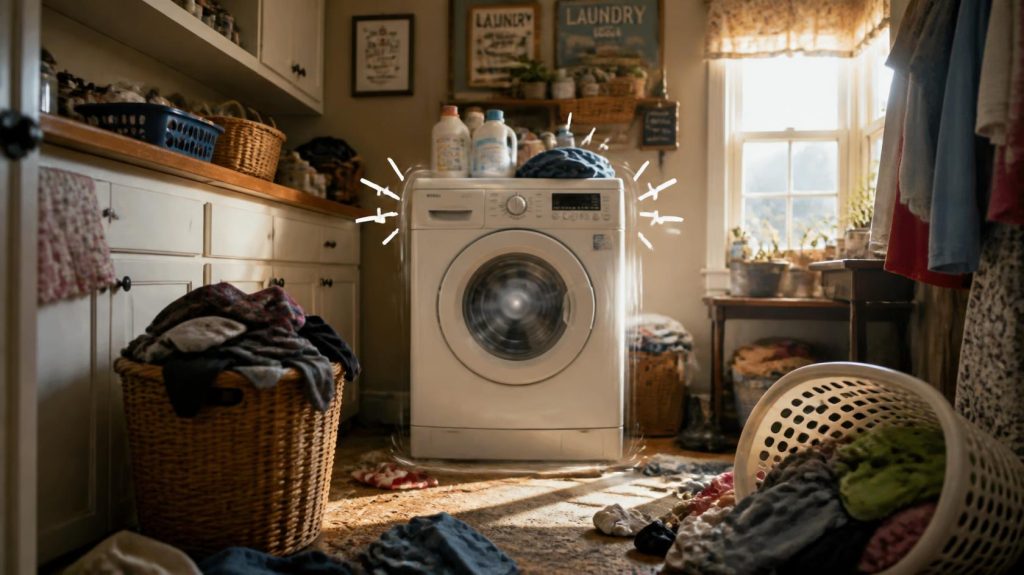
What it sounds like: A rhythmic thump that comes and goes, often paired with the whole machine shaking or “walking” across the floor.
When it happens: Usually with a single heavy item like a comforter, rug, or one soaked towel bunched to one side. It may not happen at all on a normal mixed load.
How to check: Pause the cycle, open the lid or door, and redistribute the load by hand so weight is spread evenly around the drum. Restart the spin. If the banging stops or drops off sharply, the load was the problem.
Unlevel feet make this worse. If one corner of the washer isn’t firmly planted, even a well-balanced load can rock the machine and produce the same banging sound.
Worn Shock Absorbers or Suspension Springs
If redistributing the load and leveling the feet doesn’t fix it, or the banging happens on almost every load regardless of size, the suspension system is the next place to look.
Front-load washers typically use two to four shock absorbers between the outer tub and the frame. Top-load washers use suspension rods and springs with dampers instead. Either way, their job is the same: absorb the drum’s movement so it doesn’t slam against the cabinet as it spins up.
What it sounds like: A heavier, more consistent bang than the unbalanced-load version, often with the tub visibly moving more than normal when you watch through the door or lid.
When it happens: On most spin cycles, not just ones with a single bulky item. It tends to get gradually worse over weeks or months as the shocks lose their dampening ability.
This is a parts repair, not a DIY fix. Worn shocks can be inspected by removing the back or front panel, but replacing them usually means partially disassembling the cabinet, and getting the tub reseated correctly afterward matters for the fix to hold.
A Failing Tub Bearing
This is the least common cause but the most serious, and it’s the one homeowners most often mistake for something less expensive.
What it sounds like: A grinding, growling, or rumbling noise that usually shows up before the banging does, and gets progressively louder over a period of weeks. The banging itself tends to be sharper and more metallic than the thump of an unbalanced load.
When it happens: Often at any spin speed, not just the highest one, which is a key difference from an unbalanced load or worn shocks. A bearing that’s failing may also let water past the tub seal, so a puddle under the washer alongside the noise is a strong signal.
Bearing replacement is involved. On some washers the bearing is sold on its own; on others, it’s pressed into the rear drum or outer tub, and the whole assembly has to be replaced instead of just the bearing itself. Depending on the washer’s age and the model’s parts cost, a technician may tell you honestly that replacement of the machine makes more financial sense than the repair.
Quick Comparison
| What You Notice | Likely Cause | DIY Fixable |
|---|---|---|
| Bang only with one heavy item, machine shakes or walks | Unbalanced load | Yes |
| Bang on most loads, tub visibly moves more than normal | Worn shocks or suspension | No |
| Grinding before the bang, gets louder over weeks, possible leak | Failing bearing | No |
Safety First: What Not to Do
Never open the back or top panel of a running washer, and never reach toward the drum, belt, or pulley while the machine is plugged in.
Washers hold residual charge in some internal components even after they’re unplugged, and suspension springs are under real tension, so opening the cabinet to inspect shocks or a bearing isn’t a beginner repair. CenterPoint Energy’s appliance safety guidance is blunt about this exact point: unplug any large appliance completely before working on it, and never stick anything into it while it’s connected to power.
If you see water pooling under the washer along with the noise, shut off the water supply valves behind the machine before you do anything else. A worn bearing that’s let go of the tub seal can leak steadily once the machine is running, and washing machines are consistently flagged by insurance industry loss-prevention data as one of the more common sources of home water damage, which is exactly why a leak alongside unusual noise is worth acting on quickly rather than waiting to see if it gets worse.
Safe DIY Checks Before You Call Anyone
A few steps are safe and worth trying before scheduling a repair.
- Pause the load, redistribute it by hand, and restart the spin to see if the banging changes.
- Check that all four feet are flat on the floor and adjust any that are loose or floating.
- Wash one bulky item, like a comforter or rug, with a couple of towels instead of alone.
- Listen for whether the noise happens on every load or only occasionally, and whether it’s a thump or a grind.
- Check under and behind the washer for any water, which points toward a bearing and seal issue rather than a balance problem.
If the banging keeps happening after you’ve ruled out load and leveling, that’s the point where guessing stops being useful.
When to Call a Professional
Call a technician if the washer loud noise spin cycle issue continues after redistributing loads and leveling the machine, if you hear grinding before the bang, or if the noise is getting worse week over week rather than staying the same.
Also call right away if you notice water leaking during the cycle, since that usually means a component has already failed rather than just being early wear.
What a Professional Washer Repair Visit Looks Like
When our certified appliance technicians come out for a washer loud noise spin cycle call, the visit starts with listening through a full cycle rather than guessing from a description over the phone.
We pay attention to when the noise starts, whether it’s present at low and high spin speeds or only at the top of the spin, and whether it’s a thump, a knock, or a grind. From there, we do a manual drum check: with the machine unplugged, we grab the drum and rock it side to side and up and down. Excess play or a grinding feel during that check usually confirms a bearing problem on the spot, before any panels come off.
The diagnostic fee is $89, and it’s waived entirely if you move forward with the repair. First-time customers also get 10% off the repair itself, and every job we complete carries a 3-month warranty on parts and labor.
Most washer repairs, shock and bearing replacements included, land somewhere between $129 and $400 depending on the part and the model. On older machines where a bearing replacement means replacing the whole tub assembly, we’ll walk you through whether repair or replacement makes more sense before any work starts.
Dara Appliance Repair has been diagnosing washer noise complaints across Chicago since 2019, and a washer loud noise spin cycle call is one of the most common ones we get. You can see our full washer repair services here, or book a visit online if you’re ready to get it looked at.
FAQ
What’s the most common cause of a washer loud noise spin cycle problem? An unbalanced load. A single heavy item bunched to one side of the drum is the most frequent reason a washer bangs during spin, and redistributing the load usually solves it immediately.
How do I know if it’s the bearing and not the shocks? A failing bearing usually announces itself with a grinding or rumbling sound before the banging starts, and it often happens at every spin speed, not just the fastest one. Worn shocks tend to produce a consistent thump without the grinding sound underneath it.
Is it safe to keep using the washer if it’s banging? Running a load or two while you sort out an unbalanced-load bang is generally fine, but it’s not something to ignore indefinitely. Repeated hard impacts stress the suspension and cabinet over time, so if the banging is frequent or you’re not sure of the cause, it’s worth pausing use until you’ve ruled out load and leveling. If you hear grinding or see water leaking, stop using the machine right away and have it looked at.
Can I replace the shocks or bearing myself? Shocks are a more approachable DIY repair for someone comfortable with tools. Bearings usually require pulling the tub apart and sometimes replacing the whole drum assembly, which is a much bigger job best left to a professional.
Will a banging noise get better on its own? No. Worn shocks and bearings only get worse with continued use. An unbalanced load is the one cause that resolves on its own once the load is fixed, since there’s nothing mechanically wrong with the machine.
The Bottom Line
Most washer banging during spin traces back to one of three things, and the sound itself, along with when it happens, tells you which one you’re dealing with.
An unbalanced load is worth ruling out first since it costs nothing to check. If the noise sticks around after that, or you hear grinding before the bang, that’s the signal to stop guessing and get it looked at.
Dara Appliance Repair’s certified technicians serve Chicago and the surrounding suburbs, with an $89 diagnostic fee that’s waived when you move forward with the repair. Book your appointment here or reach out with questions any day of the week, 8 AM to 8 PM.