Quick Answer: What’s the Real Washing Machine Lifespan?
Most washers last somewhere between 8 and 13 years, though that range hides more than it reveals.
Two identical machines bought the same week can end up years apart in useful life depending on how they’re loaded, how hard the water is, and whether small problems get fixed early or ignored. Age on its own is a weak predictor. What’s actually failing, and how many things have already failed, tells us far more.
Why the “10 to 15 Years” Number You’ll Find Online Doesn’t Tell the Whole Story
Search around and you’ll find the average washing machine lifespan quoted anywhere from 7 to 15 years, depending on the source. None of those numbers are wrong exactly. They’re just averages pulled across millions of machines used every different way imaginable, which makes them close to useless for predicting what happens to the one in your basement.
A machine’s real story isn’t written by its birth year. Two washers of the same age can be in completely different places depending on how they’ve been loaded, how consistently small problems were addressed, and what’s already failed versus what’s still original.
The number that matters isn’t how old the machine is. It’s what’s already broken, what’s likely to break next, and whether fixing it makes financial sense given both.
What We Actually Look At Beyond the Birth Year
When a customer asks whether their washer is worth fixing, age is one of the last things we factor into a washing machine lifespan call, not the first.
What’s failed so far. A single mechanical part failing on an otherwise sound machine, a drain pump, a lid switch, a door latch, is routine and usually an easy call to repair. Multiple unrelated failures within a short stretch, especially if they involve different systems (electrical, mechanical, and water-handling all breaking within a year or two), is a much stronger signal the machine is wearing out as a whole.
What kind of part is failing. A control board or electronic sensor issue on a machine that’s otherwise mechanically sound is often worth repairing, since electronics don’t wear out the way moving parts do. A tub bearing failure on a machine where the bearing isn’t sold separately from the drum is a different calculation entirely, since that repair can approach the cost of a new machine.
How it’s been used. Consistently overloaded machines, especially with single bulky items like comforters or rugs, put far more stress on the suspension and bearing than normal mixed loads. A washer that’s been babied tends to outlast one that’s been pushed hard, regardless of what the brand sticker says.
The One Real Difference Between Top-Load and Front-Load
Beyond usage habits, washer type is the other factor genuinely worth knowing about, and it’s one of the few generalizations in this space that holds up in the field.
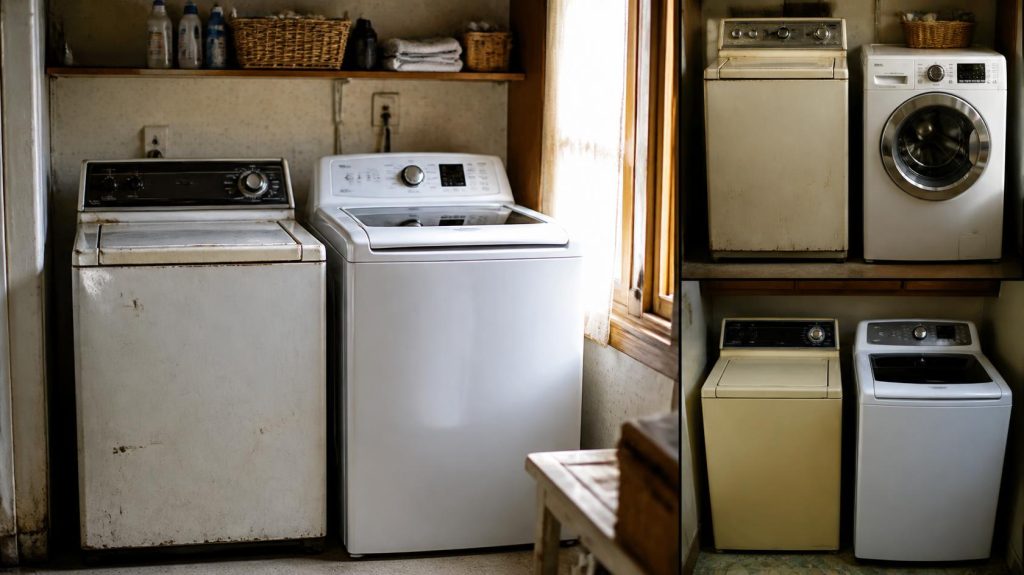
Top-load washers, especially older agitator-style models, tend to have simpler mechanical systems with fewer points of failure. Front-load washers generally offer better cleaning performance and efficiency, but the added complexity, the door seal, the bearing and suspension system supporting a horizontally mounted drum, gives them a few more common wear points over the same number of years.
Neither style is inherently the better buy. It’s a trade-off between simplicity and performance, and washing machine lifespan on either style still comes down mostly to how the machine is treated, not which type sits in your laundry room.
The Repair-or-Replace Decision We Walk Customers Through
This is the actual question behind “how long should my washer last,” and it’s the one we get asked in person more than any other.
Our rule of thumb, the same one most appliance technicians use: if a repair estimate comes in at more than half the cost of a comparable new machine, and the washer already has some age and wear behind it, replacement usually makes more financial sense. A straightforward part failure on a machine with no other history almost always favors repair, even if the machine is several years old.
The exceptions cut both ways. A cheap, easy fix on an otherwise worn-out machine can still be a bad investment if you know something bigger is coming next. On the other hand, a serious-sounding repair on a machine that’s otherwise been reliable can still be the right call if the part itself is inexpensive and the rest of the machine is holding up well.
We’ll tell you honestly which situation you’re in. A repair estimate that isn’t worth taking helps nobody, us included, if the machine fails again in six months.
Signs Your Washer Is Closer to the End Than the Beginning
A few patterns tend to show up together on machines nearing the end of their useful life.
- Repeated suspension or shock absorber failures, since a worn suspension often points to a tub or bearing issue developing underneath it.
- Visible rust on the drum, tub, or frame, which usually means water has been sitting somewhere it shouldn’t.
- More than one unrelated repair within the past year or two.
- A control board replacement on a machine already showing mechanical wear elsewhere.
- Noticeably longer cycle times or the machine struggling to reach normal spin speeds.
None of these alone means it’s time to replace the washer. Together, especially on a machine that’s already had a full decade of regular use, they’re worth taking seriously.
What Actually Extends a Washing Machine’s Lifespan
The habits that add years to a washer are simple and the same across every brand and style.
- Avoid single bulky items on their own. Wash a comforter or rug with a couple of towels to help the load balance itself.
- Use the correct amount of detergent for your machine, and HE detergent specifically if you have a high-efficiency model. Excess suds strain the pump and leave residue in the drum.
- Leave the door or lid cracked open between loads on front-load machines to let the gasket area dry out and resist mold.
- Wipe down the door seal and detergent drawer regularly rather than letting buildup sit.
- Address small noises or slow drains early. A minor issue caught at year three is a lot cheaper than the same issue ignored until year six.
What a Professional Assessment Looks Like
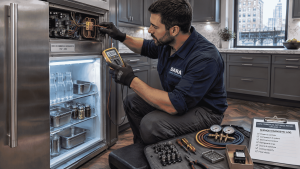
When our certified appliance technicians look at an aging washer, the goal isn’t to sell a repair. It’s to give you an honest read on where the machine actually stands.
We check what’s already failed, inspect the parts most likely to go next, given the machine’s age and how it’s been used, and price out the realistic repair against a comparable replacement. If repair is the better financial call, we’ll tell you that. If it isn’t, we’ll tell you that too, even though it means less work for us that day.
The diagnostic fee is $89, and it’s waived entirely if you move forward with a repair. First-time customers also get 10% off the repair itself, and every repair we complete carries a 3-month warranty on parts and labor.
Most washer repairs land somewhere between $129 and $400 depending on the part and the model. We’ll always walk you through the number, and the honest repair-or-replace call, before any work starts.
Dara Appliance Repair has been diagnosing washing machines of every age and brand across Chicago since 2019, and “is this worth fixing” is one of the most common questions we answer on a service call. You can see our full washer repair services here, or book a visit online if you want an honest read on yours.
FAQ
What’s considered a normal washing machine lifespan? Most sources put the average somewhere between 8 and 13 years, though the real answer depends far more on usage habits and maintenance than on the calendar. A well-treated machine can outlast that range; a heavily used, poorly maintained one can fall well short of it.
Do front-load washers really last less time than top-load washers? Generally, yes, though the gap is smaller than people assume, and usage matters more than style when you’re estimating washing machine lifespan for a specific household. Front-loaders have a few more common wear points, particularly the door seal and the suspension system, but a well-maintained front-loader can easily outlast a neglected top-loader.
Is it ever worth repairing an older washer? Often, yes. A straightforward part failure, a pump, a belt, a lid switch, is usually worth repairing even on an older machine, since the part itself is inexpensive relative to the cost of a new washer. The calculation changes when the failing part is expensive relative to a replacement, like a bearing that isn’t sold separately from the tub.
How much does a new washing machine typically cost compared to a repair? Costs vary widely by brand and features, so we’d rather quote you an actual number for your situation than give a generic figure. That’s exactly the comparison we walk through during a diagnostic visit.
Can regular maintenance really add years to a washer? Yes. Avoiding overloaded single-item loads, using the correct detergent amount, and addressing small issues early are the habits that consistently separate machines that make it well past ten years from ones that don’t.
The Bottom Line
There’s no single number that answers how long a washing machine should last, no matter how many times you see 10 to 15 years quoted online.
What actually determines washing machine lifespan is usage, maintenance, and what’s failing versus what’s likely to fail next, not the age printed on a service sticker. If you’re trying to get a straight answer about your own machine rather than a generic average, that’s exactly the kind of honest assessment we give on every visit.
Dara Appliance Repair’s certified technicians serve Chicago and the surrounding suburbs, with an $89 diagnostic fee that’s waived when you move forward with a repair. Book your appointment here or reach out with questions any day of the week, 8 AM to 8 PM.