A refrigerator that quits on a Saturday in July is never just one broken appliance. It is a tenant call, a spoiled-food complaint, a rushed service visit, and a repair request with a legal clock attached.
The fix most landlords and property managers are looking for is a move away from one-off calls and toward a commercial refrigerator maintenance plan Chicago owners can budget around. That means scheduled visits, a written log for every unit, and a clear process for when something does break.
This guide covers what a good plan includes, how often each type of refrigerator should be serviced, and how to set one up across a single building or a whole portfolio.
What Is a Refrigerator Maintenance Plan for Rental Properties?
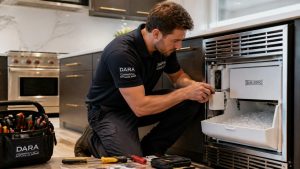
A refrigerator maintenance plan is a scheduled service arrangement where a technician inspects and cleans every refrigerator you supply on a set calendar, records its condition, and flags parts that are wearing out. For landlords, it swaps surprise breakdowns for planned visits, steadier costs, and documentation you can point to.
That is the key difference from our guide to refrigerator repair in Chicago rental apartments, which covers what to do once a fridge has already failed. This post is about keeping that call from happening in the first place.
One-Off Repair vs. an Ongoing Maintenance Plan
| Factor | One-off repair | Ongoing maintenance plan |
|---|---|---|
| When service happens | After a tenant reports a failure | On a set schedule, before most failures |
| Who spots the problem | The tenant, usually once food is already warm | The technician, during routine checks |
| Cost pattern | Unpredictable and often badly timed | Planned and easier to budget |
| Records | Scattered invoices | One log per unit with dates and findings |
| Tenant experience | Disrupted, sometimes for days | Short, scheduled visits with notice |
| Replacement decisions | Made in a hurry | Made with service history in hand |
One-off appliance repair still has a place, because even the best plan will not stop every failure.
The difference is that a plan turns most of your refrigerator spending into something you scheduled, rather than something that happened to you.
What Goes Into a Commercial Refrigerator Maintenance Plan Chicago Property Managers Can Count On?
Every visit should follow the same checklist, so the log means something from one year to the next. A solid plan covers these items for each unit:
- Condenser coil cleaning. Dust, lint, and pet hair on the coils make the compressor run longer and hotter. It is one of the easiest tasks to skip and one of the cheapest to do on schedule. A fridge that seems to run constantly often has dirty coils behind it.
- Door gasket inspection. A torn or flattened seal lets warm air in all day. The technician checks the full length of each seal and notes any that are close to failing, since door seal problems are far cheaper to fix early.
- Temperature check with a separate thermometer. The FDA recommends keeping refrigerators at 40°F or below and suggests a standalone appliance thermometer, because built-in displays are not always accurate.
- Fan and airflow check. Condenser and evaporator fans should run quietly with no grinding or ticking, and vents inside the cabinet should be clear.
- Defrost drain and drain pan. A clogged drain line is a common cause of water on the floor and ice buildup in the freezer.
- Water line, filter, and ice maker. Connections are checked for slow leaks, and filter change dates are recorded.
- Leveling and clearance. A fridge that is out of level may not close on its own, and a unit squeezed into a tight cabinet opening cannot shed heat properly.
- Age and condition notes. The model, serial number, approximate age, and anything nearing the end of its life all go into the record.
The written record is what turns a service visit into a plan. Ask for a short report per unit after each round, so you know which refrigerators are healthy and which are running on borrowed time.
Ready to see where your units stand? Book a baseline inspection and we will start your log.
How Often Should Rental Refrigerators Be Serviced?
There is no single right interval. It depends on how hard each refrigerator works and where it sits. These are reasonable starting points:
| Refrigerator type | Suggested service frequency |
|---|---|
| In-unit tenant refrigerators | Once a year, plus a check at every turnover |
| Common-area or amenity kitchen refrigerators | Every three to six months |
| Commercial reach-in units in shared or mixed-use spaces | Quarterly in most cases |
| Units in garages, basements, or other unheated spaces | Before summer and again before winter |
Your technician should adjust these after the first round of baseline inspections.
A building with older units or heavy use may need shorter gaps. Newer units in light use can often stretch longer.
Why Chicago Buildings Need Their Own Schedule
A generic maintenance calendar misses some very local problems.
Summer heat. Refrigerators in top-floor units, units without air conditioning, and kitchens that trap heat all work harder in July and August. Scheduling coil cleaning in late spring means the compressor is in the best shape before the hottest weeks arrive.
Winter cold. Many standard household refrigerators are not built for unheated garages, enclosed porches, or cold basements. When the surrounding air gets too cold, the controls may not run the compressor enough to keep the freezer section cold. Check the manufacturer’s rated operating range for any unit outside the heated living space.
Turnover season. Chicago’s busy moving months are the ideal time to inspect, clean, and test every refrigerator while the unit is empty and nobody’s groceries are at stake.
Older kitchens. Plenty of two-flats, three-flats, and courtyard buildings have compact kitchens where refrigerators are packed into tight openings with little room to breathe. Those units benefit from closer attention to clearance and coil condition.
The Landlord Side: Records, Response Time, and the RLTO
If you rent units inside the City of Chicago, a maintenance plan also supports your obligations under the Residential Landlord and Tenant Ordinance.
The city’s RLTO summary explains that landlords must keep the property in compliance with the Municipal Code, and it outlines tenant remedies when a written repair request is not handled within 14 days.
A plan helps in two practical ways. Fewer failures mean fewer repair requests and fewer emergency appliance repair calls in the first place. And when something does break, you have a dated service history showing the refrigerator was being cared for.
This is general information, not legal advice. For questions about your specific building or lease, talk to a Chicago landlord-tenant attorney. For the tenant side of the story, including who pays when a supplied fridge fails, see our rental refrigerator repair guide.
Refrigerators That Serve More Than One Tenant
Many buildings also have refrigerators that never sit inside a single apartment. Think amenity kitchens, community rooms, staff break rooms, leasing offices, and ground-floor commercial spaces in mixed-use buildings.
These units get opened far more often, by more people, and a failure affects everyone who relies on that space.
Shared and commercial units deserve their own slot in any commercial refrigerator maintenance plan Chicago owners put together, with shorter service intervals and closer temperature checks. If a commercial tenant owns and runs their own equipment, the lease should spell out who is responsible for servicing it.
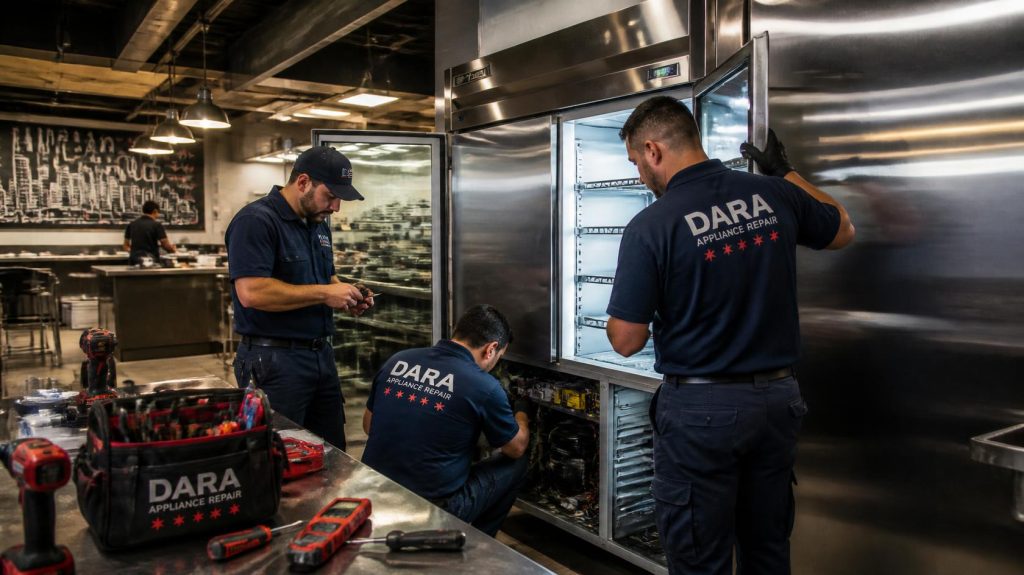
For commercial equipment in your buildings, our sister company Dara Commercial Appliance Repair handles the commercial side, so your residential and commercial units can follow one coordinated schedule.
How to Set Up a Plan Across Your Portfolio
Here is a simple way to build a commercial refrigerator maintenance plan Chicago portfolios of any size can follow:
- Take inventory. List every refrigerator and freezer you supply by address and unit number, with brand, model, serial number, and approximate age.
- Book a baseline inspection. One full round of visits shows you where every unit stands today and which ones need attention first.
- Group visits by building. Servicing a whole building in one trip keeps scheduling simple and keeps disruption short.
- Set a tenant notice routine. Give tenants the advance notice the RLTO requires before entry, and tell them what the visit involves so they can clear space if needed.
- Agree on a repair process between visits. Decide who tenants contact for appliance repair, how quickly a technician should respond, and what repair amount you want to approve personally.
- Review the log once a year. Use it to spot the units that keep needing parts and to plan replacements before they become emergencies.
Managing several buildings? Contact our team and we can help you put the inventory together.
Repair or Replace? Let the Service Log Decide
Without records, replacement decisions usually happen under pressure. A tenant is without a working fridge, and you are choosing between a repair quote and a new unit with almost no information.
With a plan in place, you can see which refrigerators keep needing parts, which ones are aging out, and which are still in good shape. That lets you budget replacements ahead of time instead of shopping during a heat wave.
Over a year or two, that history becomes the most useful part of any commercial refrigerator maintenance plan Chicago landlords keep on file. Our certified appliance technicians will always give you a straight repair-or-replace recommendation based on what the log shows.
Frequently Asked Questions
How is a maintenance plan different from a home warranty?
A home warranty pays toward covered repairs after something fails. A maintenance plan focuses on scheduled inspection and cleaning to reduce how often things fail. Some owners use both.
Can tenants clean the refrigerator coils themselves?
Some tenants can, but you have no way of knowing whether it actually happened. Putting coil cleaning on a professional schedule means it gets done and gets recorded.
Is a maintenance plan worth it for a single two-flat?
Yes, a plan scales down easily. Even one or two refrigerators benefit from an annual visit and a simple written log.
What happens if a refrigerator breaks between scheduled visits?
Your plan should include a repair process for exactly that. We offer same-day and next-day appointments across Chicago and the surrounding suburbs for repairs between visits.
Should freezers and ice makers be part of the plan?
Yes. Standalone freezers, built-in ice makers, and water dispensers wear out on the same schedule as the refrigerators around them. Our freezer repair technicians can include them in the same visits.
Set Up Refrigerator Maintenance With Dara Appliance Repair
Since 2019, Dara Appliance Repair has been keeping refrigerators running across Chicago and the surrounding suburbs. Our certified appliance technicians work on all major residential brands, we offer a warranty on our repairs, and our $89 diagnostic fee for residential repair visits is waived when you move forward with the repair.
If you are ready to set up a commercial refrigerator maintenance plan Chicago tenants never have to think about, contact us to talk through your buildings. You can also book a visit online or call (773) 377-4212, 8 AM to 8 PM, seven days a week. Learn more about our refrigerator repair service for help with any unit that cannot wait for its next scheduled visit.