By the Dara Appliance Repair Team | Serving Chicago and the North Shore
Chicago summers are brutal and short. If your AC isn’t ready before the first heat wave arrives, you’re one 95-degree weekend away from a miserable week — and a very long wait for an AC repair appointment in Chicago. Here is the checklist every homeowner should run before Memorial Day.
That is the window most Chicago homeowners miss. They run their furnace all winter, flip the thermostat to cool sometime in late May, and hope for the best. When the AC does not perform — or worse, stops working entirely on the hottest day of the year — the calls flood in simultaneously across every neighborhood from Lincoln Park to Highland Park. Every HVAC technician in the metro area has a three-day backlog. And the heat is not waiting.
The homeowners who avoid that situation are the ones who treat AC maintenance the same way they treat a car oil change: not exciting, not optional, done on a schedule before something breaks. This checklist tells you exactly what to check, what to do yourself, and when to call a technician — before the first 90-degree day arrives and your options get expensive.
Ask any Chicagoan about summer and they will tell you the same thing: it arrives without warning and does not apologize. One week you are still wearing a jacket on the L. The next week, the heat index is sitting at 103. That window between spring and the first heat wave is the only time you have to get ahead of this. Use it.
Why Memorial Day Is the Real Deadline for Chicago AC Prep
Chicago’s heat season compresses roughly from late May through mid-August, with the most dangerous heat domes typically arriving in June and July. That is a narrow window — and AC repair technicians know it.
By mid-June, same-day and next-day availability becomes genuinely difficult to find. Parts orders take longer. Emergency rates go up. The homeowners who book a pre-season check in April or early May get a technician at a convenient time, at a standard rate, with full availability to order any parts that need replacing.
The homeowners who wait until the first 90-degree day are calling into a queue. At Dara Appliance Repair, our AC repair service in Chicago is available seven days a week, 8 AM to 8 PM — but availability during peak summer weeks is first-come, first-served. The time to book is before everyone else remembers they have an AC unit.
The Pre-Summer AC Tune-Up Checklist for Chicago Homeowners
Central AC: 8 items. Window AC: 5 items. DIY items take roughly 30 minutes total. Call a Tech items should be booked in April or early May — before the peak season queue opens.
Items marked DIY are tasks most homeowners can handle themselves. Items marked Call a Tech are situations where attempting a DIY fix risks voiding warranties or causing additional damage.
- Replace or clean the air filter. DIY. A clogged filter is the single most common cause of reduced AC performance. Replace 1-inch filters monthly during peak season; 4-inch filters every three months. If the filter looks gray and dense, it is already overdue.
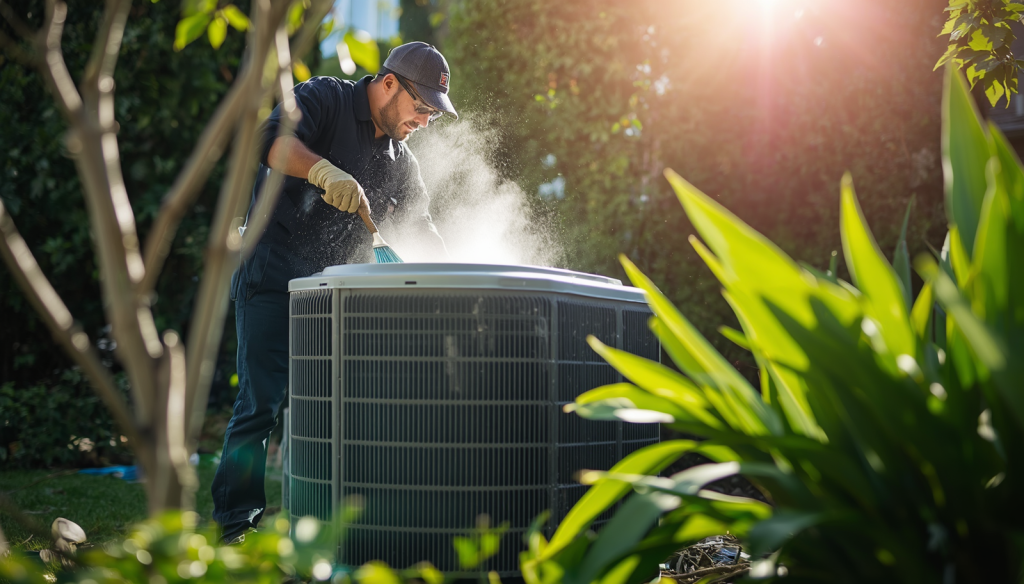
- Clear debris from around the outdoor condenser unit. DIY. Leaves, cottonwood seed, and dirt build up around the condenser through winter and spring. Clear at least two feet of space on all sides. Never run the unit with a cover still on it.
- Check the condenser fins for bending or damage. DIY/Call a Tech. The thin aluminum fins on the outside of the condenser coil bend easily and restrict airflow when damaged. Light bending can be straightened with a fin comb. Significant damage needs a technician.
- Test the system before summer arrives. DIY. Turn the system on a mild day and let it run for 15 minutes. Check that cool air is coming out of every vent and that no unusual sounds are coming from the condenser or air handler. Do this now, not on the first hot day.
- Check refrigerant lines for ice or frost. Call a Tech. Ice or frost on the copper lines running from the condenser into the house indicates low refrigerant — a job that requires a certified technician. Do not ignore this sign; running a low-refrigerant system damages the compressor.
- Listen for unusual sounds during startup. Call a Tech. Clicking, grinding, squealing, or rattling on startup are signs of failing capacitors, fan motor issues, or debris inside the unit. Any of these warrant a diagnostic before the heat arrives.
- Inspect the condensate drain line. DIY/Call a Tech. The drain line removes humidity pulled from the air. A clogged line causes water backup, potential water damage, and mold growth. Flush it with distilled vinegar annually. If it is already backed up, call a technician.
- Schedule a refrigerant level check and coil cleaning. Call a Tech. This is the professional component of a full tune-up. A technician checks refrigerant pressure, cleans the evaporator and condenser coils, inspects electrical connections, and verifies airflow. This one service call can extend the life of a central AC system by years.
Window AC Units
If you live in a Chicago greystone, vintage condo, or Rogers Park two-flat, window units are probably your entire cooling strategy. They are also the units most likely to be pulled out of a closet in late May having not been touched since September — and that six-month storage period is where most window AC problems begin. Mold growth, compressed seals, and debris inside the unit are all common after a Chicago winter. Check these five things before the unit goes back in the window.
- Clean or replace the filter. DIY. Pull the front panel off and check the filter. If it is gray, rinse it under warm water, let it dry fully, and reinstall. A dirty filter reduces cooling output by up to 15 percent and makes the unit work harder than necessary.
- Inspect the coils for dust and debris. DIY. Use a soft brush or compressed air to clean the evaporator coils on the inside of the unit. Dirty coils reduce heat transfer efficiency significantly.
- Check the seal around the unit. DIY. The foam or accordion panels on the sides of a window unit are the only thing between your room and the outside air. If they are cracked, compressed, or missing, you are cooling the street as much as your apartment. Replace them before installing.
- Test cooling performance on a moderate day. DIY. Run the unit for 20 minutes and check that air coming from the vents feels genuinely cold, not just slightly cool. If the air is barely cooler than room temperature, the unit may be low on refrigerant or have a failing compressor.
- Check for unusual sounds or smells on startup. Call a Tech. A musty smell on first startup is often mold growth inside the unit from sitting in storage. A burning smell indicates electrical issues. Both warrant attention before the unit runs for a full day.
Warning Signs That Mean Your Air Conditioner Needs a Chicago Repair Technician Now
Some AC issues can wait for a routine tune-up appointment. These are the warning signs that mean your air conditioner needs a Chicago repair technician before summer arrives, not after. If you notice any of the following, schedule a repair before the heat wave hits:
- The system runs but does not cool below 78 degrees on a mild day. Low refrigerant, dirty coils, or a failing compressor. Any of these will become a crisis on a 95-degree day.
- You hear clicking, grinding, or squealing when the system starts. Capacitor failure and fan motor issues are common pre-season failures that cost far less to fix before they cascade into compressor damage.
- You see ice on the refrigerant lines or the indoor coil. This is a low-refrigerant signal. Running the system with ice forming on the coils risks permanent compressor damage.
- The circuit breaker trips when the AC starts. Electrical issues that trip breakers are a fire risk. Do not reset and ignore. Have an appliance technician check the unit before running it again.
- The system short-cycles — turning on and off every few minutes. Short-cycling is one of the fastest ways to destroy a compressor. It usually indicates an oversized unit, a refrigerant issue, or a failing thermostat.
If you are experiencing any of these issues, the time to act is now. Dara Appliance Repair handles AC repair across Chicago and the North Shore, with same-day and next-day availability before the peak season queue fills up.
How Chicago’s Climate Creates Unique AC Stress (That Most Guides Ignore)
Most AC maintenance guides are written for the Sun Belt — climates where systems run year-round and see gradual wear. Chicago is a different situation entirely.
A Chicago AC unit sits completely idle for five to six months every year. During that time it is exposed to sub-zero temperatures, significant humidity swings, and in many cases, cottonwood, bird debris, and plant growth around the outdoor condenser. When it starts up in late May, it is being asked to go from zero to full load almost immediately.
That startup is the highest-stress moment in an AC system’s year. Capacitors that were borderline at the end of last summer often fail on the first hot startup. Refrigerant that was slightly low last fall will show up as a real problem when the system tries to handle 90-degree heat. Coils that accumulated a winter’s worth of debris will restrict airflow just when maximum performance is needed.
This is why a pre-season tune-up in Chicago is not optional maintenance — it is genuinely protective. Homeowners in Evanston, Wilmette, and Glenview who schedule a check in April or early May consistently avoid the emergency calls that pile up in June.
When to Repair vs. Replace Your AC Unit Before Summer
If a pre-season diagnostic reveals a significant problem, you may face a repair-or-replace decision before the heat arrives. Here is a straightforward framework:
- Under 10 years old with a single failed component: Repair. Capacitors, fan motors, and even refrigerant recharges on a relatively new system are almost always worth fixing rather than replacing the unit.
- Over 10 years old with compressor failure: Replace. A compressor replacement on an aging system typically costs more than half the price of a new unit. Put that money toward a new installation instead. While you are evaluating the system, it is also worth having your heating repair checked before next winter — older AC and heating systems often age together.
- Any age with R-22 refrigerant: Replace. R-22 was phased out federally in 2020. If your system still uses it, recharging is extremely expensive and parts are increasingly unavailable. A new system running R-410A will pay for itself quickly in efficiency and reliability.
- Good performance last summer, routine maintenance needed: Tune-up only. If the system cooled well through last season, a filter change, coil cleaning, and refrigerant check is all it needs to run another strong summer.
Our technicians, Sam and Dan, will walk you through the numbers after every diagnostic. Dara Appliance Repair has earned a 4.9-star rating across Chicago by giving homeowners honest repair-or-replace guidance, not upsells.
Don’t Let the First Heat Wave Catch You Off Guard
REVISED: CTA rewritten — financial consequence of waiting made explicit, emergency rate mention added, same seasonal urgency at higher conversion energy
Chicago’s summer window is short and AC technicians book up fast. Once the first 90-degree day arrives, same-day availability disappears and emergency rates apply. A pre-season diagnostic in April or May costs the same as any other service call — an $89 fee that is waived when a repair is completed. The same call in July, after your system has already failed, will cost significantly more and come with a wait.
Call Sam or Dan directly at (773) 377-4212 to schedule your pre-season AC inspection. Same-day and next-day appointments are available now — but not for long once summer hits.
Dara Appliance Repair serves Chicago, Evanston, Skokie, Park Ridge, Niles, Glenview, Wilmette, Northbrook, Deerfield, Highland Park, Des Plaines, Oak Park, Berwyn, and Cicero. Monday through Sunday, 8 AM to 8 PM.
Call (773) 377-4212 or email dara.repairllc@gmail.com.
Frequently Asked Questions
When should I schedule AC maintenance in Chicago?
The best window for AC maintenance in Chicago is April through mid-May — before Memorial Day weekend, which is typically when heat season begins and technician demand spikes. Scheduling in this window gives you the best availability, standard pricing, and enough lead time to order any parts before the first hot stretch arrives.
How much does an AC tune-up cost in Chicago?
A professional AC tune-up in Chicago typically includes a refrigerant level check, coil cleaning, electrical inspection, and airflow test. Dara Appliance Repair charges an $89 diagnostic fee that is waived when a repair is completed. If no repairs are needed beyond the tune-up, the diagnostic fee applies. Call (773) 377-4212 for current pricing on your specific unit type.
Why is my AC running but not cooling my Chicago home?
The most common causes are a clogged air filter, low refrigerant, dirty evaporator or condenser coils, or a failing capacitor. In Chicago, startup issues after a long winter idle are especially common — components that were borderline at the end of last season often fail on the first hot day. A diagnostic call can identify the specific cause and give you a repair estimate before the heat wave arrives.
Can I run my AC before a technician checks the refrigerant?
REVISED: New FAQ added — addresses a key reader objection, reinforces diagnostic value proposition, targets ‘can I run AC without’ search queries
You can, but with risk. If your system cooled well last summer and you have no visible warning signs — no ice on the lines, no unusual sounds, no reduced airflow — running it for a short test on a mild day is reasonable. If you notice any of the warning signs listed above, do not run the system until a technician checks the refrigerant level. Running a low-refrigerant AC accelerates compressor wear and can turn a $150 recharge into a $500 compressor repair. When in doubt, the $89 diagnostic is worth it.
Does Dara Appliance Repair service AC units across Chicago suburbs?
Yes. Dara Appliance Repair makes same-day and next-day AC repair service calls throughout Chicago and all surrounding suburbs, including Evanston, Skokie, Glenview, Wilmette, Northbrook, Deerfield, Highland Park, Park Ridge, Niles, Des Plaines, Oak Park, Berwyn, and Cicero. Call (773) 377-4212 to check availability in your area.
How long does an AC unit last in Chicago?
A well-maintained central AC unit typically lasts 15 to 20 years. Chicago’s climate — specifically the long winter idle followed by intense summer demand — creates more startup stress than Sun Belt climates where systems run year-round. Annual pre-season maintenance is the single most effective thing a Chicago homeowner can do to reach the higher end of that lifespan. Units that miss routine maintenance tend to fail between years 10 and 12.