What that click-click-click sound from the back of your fridge is actually telling you
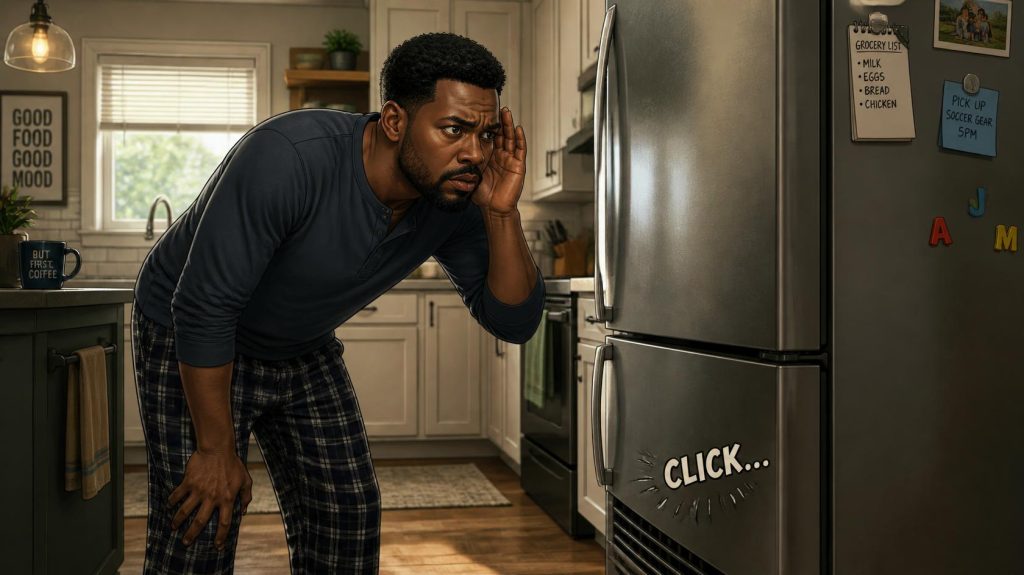
If a search for Clicking Sound Before Your Fridge Compressor repair help brought you here, you are likely standing in your kitchen right now listening to a rhythmic tick-tick-tick coming from behind or beneath the fridge, and your appliance is trying to tell you something before it fails completely. That rhythmic click, followed by a pause, followed by another click, is one of the most common appliance complaints we hear from homeowners across Chicago and the surrounding suburbs. The good news: this sound is diagnosable, and in many cases it points to a specific, fixable part rather than a dead refrigerator.
This guide breaks down exactly what that clicking pattern means, walks through a short audio-description guide so you can identify your specific sound, and explains when a repair can save your compressor versus when replacement becomes the smarter option. We wrote this specifically around the pattern of refrigerator compressor clicking Chicago homeowners report most, since local voltage conditions, older housing stock electrical panels, and appliance age all shape which failure is most likely here.
Quick Answer: A refrigerator compressor clicking on and off in a repeating cycle almost always points to the start relay or the overload protector trying (and failing) to get the compressor motor running. The compressor itself hums or buzzes for a second, then clicks off, then tries again a few minutes later. This is not normal operation. Left alone, repeated clicking cycles can burn out the compressor motor windings, turning an affordable relay repair into a full compressor replacement. If your fridge is clicking and not cooling, book a diagnostic or call (773) 377-4212 before the compressor itself is damaged.
Table of Contents
- Why Your Refrigerator Compressor Is Clicking Instead of Starting
- The Audio Guide: Matching Your Sound to the Problem
- Start Relay Clicking Cycles Explained
- What It Means When the Overload Protector Trips
- Compressor Buzzing Then Stopping: A Different Warning Sign
- Is This Dangerous? Can I Keep Using the Fridge?
- DIY Checks You Can Safely Do First
- Brand-Specific Clicking Patterns to Know
- Prevention: Keeping Your Compressor Off the Clicking Path
- When to Call a Professional
- Frequently Asked Questions
1. Why Your Refrigerator Compressor Is Clicking Instead of Starting
A refrigerator compressor is a sealed motor that needs a strong jolt of electrical current to overcome the pressure already sitting inside the sealed system every time it starts. Two small components manage that jolt: the start relay and the overload protector. When either one wears out, the compressor cannot get the current it needs, so instead of starting smoothly it clicks, tries, fails, and shuts itself off as a safety measure. Then it waits, and tries again.
That repeating cycle, a click, a brief hum or buzz, then silence, is the signature of a refrigerator relay clicking problem rather than a fully dead compressor. Chicago homeowners tend to notice it first at night, when the kitchen is quiet and the fridge cycles on in the background.
2. The Audio Guide: Matching Your Sound to the Problem
Because appliance repair techs diagnose a huge share of compressor issues by ear before ever pulling the fridge from the wall, here is a short audio-description guide to help you narrow down what is happening before we arrive.
Single sharp click, no hum at all: A quick, dry click with nothing following it usually means the start relay contacts are not closing at all. The compressor is not getting power. This points to a failed start relay.
Click, followed by a 1 to 3 second hum or buzz, then a second click and silence: This is the classic refrigerator compressor clicking pattern. The relay is closing, the compressor motor is trying to spin up, and the overload protector is tripping because the motor cannot reach running speed. This cycle often repeats every 2 to 8 minutes.
Continuous rapid clicking, several clicks per second: This is a chattering relay, and it can indicate low household voltage, a loose wiring connection, or a relay that is physically failing. This pattern deserves prompt attention.
Deep buzz or hum that runs for 10 to 30 seconds, then a loud click and full silence: This points to a compressor with a locked or seized motor. The relay and overload are functioning correctly. They are shutting the compressor down because the motor itself cannot turn. This is the pattern most likely to mean the compressor is failing, not just the relay.
Clicking with a burning or hot plastic smell from the back panel: Stop running the fridge and unplug it. This combination suggests the overload protector or relay may be overheating internally, which is a safety-first situation, not just a performance issue.
3. Start Relay Clicking Cycles Explained
The start relay sits on the side of the compressor, usually tucked behind a small plastic cover on Chicago-area refrigerators built in the last 15 years. Its job is simple: briefly connect the start winding of the compressor motor to give it the torque needed to begin spinning, then disconnect once the motor is up to speed.
When the relay’s internal contacts wear out or corrode, it can no longer make a clean connection. The result is exactly the clicking cycle described above: the relay tries to close, the compressor gets a partial jolt of power, the connection breaks, and the whole sequence resets a few minutes later. Because this cycle repeats every few minutes around the clock, it puts real strain on the compressor’s windings each time. A relay that has been clicking for a few days is a very different repair than one that has been clicking for three weeks.
4. What It Means When the Overload Protector Trips
The overload protector is a small thermal safety switch mounted directly on the compressor body, usually right next to the start relay. Its entire job is protecting the compressor motor from damage. If the motor draws too much current for too long, whether from a failing relay, low voltage, or an aging motor, the overload protector trips and cuts power before the windings overheat.
Once it trips, the overload protector needs to cool down before it resets and tries again, which is exactly why the clicking cycle has that multi-minute pause built into it. An overload protector that trips occasionally is doing its job. One that trips every single cycle, day after day, is telling you the compressor is struggling to start and needs a professional look before permanent damage sets in. Older housing stock is common across our Chicago service area, and homes on older electrical panels sometimes run slightly lower voltage, which can make an already weak overload protector trip more often than it would on a newer circuit.
5. Compressor Buzzing Then Stopping: A Different Warning Sign
Compressor buzzing then stops without any real clicking sound is a slightly different symptom worth separating out. If you are hearing a steady hum or buzz that runs for a longer stretch, then cuts out abruptly with no distinct click, that pattern more often points toward the compressor motor itself struggling against internal resistance, rather than the relay failing to make contact. This can still be an overload protector doing its job, but it can also indicate early-stage compressor winding damage or a refrigerant pressure issue inside the sealed system. This distinction matters for diagnosis, since a relay replacement will not fix an issue that originates inside the sealed system itself.
6. Is This Dangerous? Can I Keep Using the Fridge?
A clicking compressor is not an immediate safety hazard in most cases, but it is actively shortening the compressor’s remaining lifespan every time it cycles. Food safety is the more immediate concern: if the compressor is not completing a full start cycle, your fridge is not cooling, and food in both the fridge and freezer can climb into the danger zone within a few hours. If you notice items are not cold, treat it as a same-day issue rather than something to monitor for a week.
7. DIY Checks You Can Safely Do First
Before scheduling refrigerator repair, a few checks take five minutes and can save a wasted service call:
- Pull the fridge away from the wall and check that the power cord is fully seated in the outlet, and that the outlet itself is not on a tripped GFCI or breaker.
- Vacuum the condenser coils and the compressor compartment. Heavy dust buildup traps heat around the compressor and can cause the overload protector to trip even on a healthy compressor.
- Confirm nothing is blocking airflow around the compressor at the back or bottom of the unit.
- Listen for the specific pattern using the audio guide above and note how many minutes pass between clicks. This detail helps a technician diagnose the issue faster over the phone or on arrival.
If the clicking continues after coils are clean and airflow is confirmed clear, the issue is very likely electrical or mechanical rather than something a homeowner can safely resolve, since compressor and relay work involves the sealed refrigerant system and should be handled by a professional.
8. Brand-Specific Clicking Patterns to Know
Relay and overload designs vary somewhat by manufacturer, and our certified appliance technicians see a few recurring brand patterns across Chicago service calls:
- Whirlpool and Kenmore refrigerators commonly use a solid-state relay that tends to fail suddenly, going from normal operation to constant clicking within a day or two, rather than a gradual decline.
- GE and Samsung models frequently use a relay and overload combined into a single sealed unit, which means both parts typically get replaced together even if only one has failed.
- LG refrigerators with linear or inverter compressors behave differently than standard compressors and may produce a softer clicking or ticking sound tied to the inverter board rather than a traditional start relay, which changes the diagnostic approach.
- Sub-Zero and other built-in brands often isolate the compressor further for noise reduction, so clicking may sound quieter or more muffled even when the underlying issue is the same start relay or overload failure.
If you are not sure which category your refrigerator falls into, mentioning the brand and approximate age when you book helps our technicians arrive with the right relay and overload parts on the truck.
9. Prevention: Keeping Your Compressor Off the Clicking Path
A little routine maintenance goes a long way toward keeping refrigerator compressor clicking off your radar entirely.
- Vacuum condenser coils every 6 months to reduce heat buildup around the compressor and relay.
- Leave at least 2 inches of clearance behind and beside the refrigerator for airflow.
- Avoid overloading a single household circuit with the refrigerator and other high-draw appliances, since voltage drops can stress the start relay over time.
- Address a single clicking cycle immediately rather than waiting, since early relay replacement is one of the least expensive appliance repair visits, while a burned-out compressor motor often costs several times more.
10. When to Call a Professional
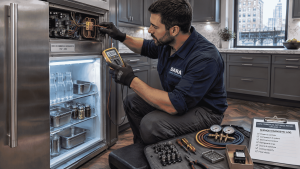
Call for refrigerator repair as soon as you notice a repeating click-hum-click pattern, especially if it has been going on for more than a day or the fridge has stopped cooling. Diagnosing whether the issue is the start relay, the overload protector, or the compressor motor itself requires testing with a multimeter and checking the compressor’s electrical windings directly, which is not a safe DIY project given the sealed refrigerant system involved.
Dara Appliance Repair offers an $89 diagnostic fee, which is waived when you move forward with the repair, so you get an exact answer on what is clicking before committing to any repair cost. For refrigerator compressor clicking Chicago service calls specifically, our technicians carry the relays and overload protectors for the brands most common in local kitchens, which usually means a same-visit fix rather than a return trip.
11. Frequently Asked Questions
Why does my refrigerator compressor keep clicking but not starting? A clicking-but-not-starting compressor almost always points to a failed or failing start relay, or an overload protector that keeps tripping because the motor cannot reach running speed. Both parts are replaceable without replacing the whole compressor in most cases.
Is a clicking fridge compressor an emergency? It is not an electrical safety emergency in most cases, but it is a food safety issue. If the compressor is not completing a start cycle, the fridge is not cooling, and food can reach unsafe temperatures within a few hours. Treat it as a same-day repair need.
Can I replace a refrigerator start relay myself? The relay itself is a small, accessible part, but confirming it is actually the source of the problem, rather than the overload protector or the compressor motor, requires electrical testing. Misdiagnosing this can lead to buying the wrong part or missing a larger sealed-system issue.
What does it mean if my compressor buzzes then stops with no click? A buzz that runs longer and stops without a sharp click can point toward the compressor motor itself struggling, rather than a straightforward relay failure. This pattern is more likely to involve winding damage or a sealed-system pressure issue and should be diagnosed promptly.
How much does it cost to fix a clicking refrigerator compressor? Cost depends on whether the issue is limited to the start relay and overload protector, or has progressed to the compressor motor itself. Our $89 diagnostic fee is waived with repair, so you get an exact quote before any work begins.
Why does my fridge clicking noise happen mostly at night? The compressor cycles on and off around the clock, so nighttime is simply when a quiet kitchen makes the sound noticeable. It is not a sign the problem is worse at night, just easier to hear.
Will dirty condenser coils cause compressor clicking? Yes. Heavy dust buildup traps heat around the compressor and can cause the overload protector to trip even when the relay and compressor are otherwise healthy. Cleaning the coils is a good first check before assuming a part has failed.
Does Dara Appliance Repair service my Chicago suburb? We serve Chicago and surrounding suburbs including Evanston, Skokie, Park Ridge, Niles, Glenview, Wilmette, Northbrook, Deerfield, Highland Park, Des Plaines, Oak Park, Berwyn, Cicero, and Lincoln Park.
Get Your Compressor Diagnosed Before It Fails Completely
Dara Appliance Repair has been diagnosing refrigerator compressor clicking in Chicago kitchens since September 2019, and our certified appliance technicians carry the relays, overload protectors, and testing equipment needed to give you a same-visit answer. If your fridge is clicking, buzzing, or has stopped cooling, book online or call us today. Every diagnostic comes with our $89 fee waived when you move forward with the repair, plus 10% off your first repair.
Call: (773) 377-4212 Book Online: dara-repairllc.com/form2 Refrigerator Repair Services: dara-repairllc.com/refrigerator-appliance-repair