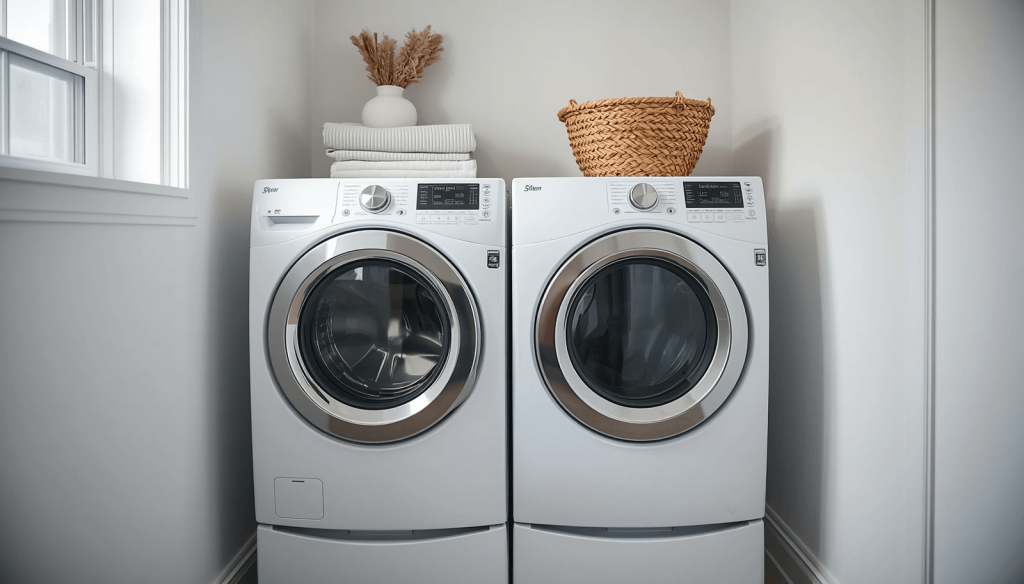
Proper washer and dryer maintenance in Chicago can extend appliance lifespan by four to six years and prevent the most common emergency repair calls. Here is the complete guide — what to do, how often to do it, and when to call a technician before a small issue becomes an expensive repair.
Most Chicago homeowners do not think about their washer and dryer until one of them stops working. And that is exactly the problem.
Laundry appliances are among the hardest-working machines in any home. The average household runs five to eight loads per week — which adds up to 260 to 400 cycles per year. Over a decade, that is thousands of cycles of heat, vibration, water, and mechanical stress on components that were designed to last, but not designed to last without any attention whatsoever.
The good news is that washer and dryer maintenance is not complicated — most of it takes less than 15 minutes per month and requires no tools or technical knowledge. This guide covers the full maintenance schedule for both appliances, the Chicago-specific factors that affect lifespan, the warning signs most homeowners miss, and when to call a technician before a small issue becomes an expensive repair.
Why Chicago Washer and Dryer Maintenance Matters More Than You Think
Chicago’s water supply is among the hardest in the Midwest. Hard water — water with high mineral content — is the silent enemy of washing machines. Chicago’s water hardness typically measures 8 to 10 grains per gallon, classified as hard to very hard by the Water Quality Association. At this mineral concentration, calcium and magnesium deposits build up inside the drum, on heating elements, and in hoses and pumps in as little as six months without regular cleaning cycles. This mineral buildup forces the machine to work harder, reduces cleaning efficiency, and accelerates wear on internal components.
Chicago’s humidity swings also matter for dryers. A dryer vent system that works efficiently in July may develop condensation and lint buildup issues in winter when cold outdoor air meets warm, moist exhaust air inside the vent run. According to the U.S. Fire Administration, dryers cause an estimated 2,900 home fires per year nationally — and failure to clean the vent is the leading contributing factor. In Chicago two-flats and condos with long or kinked vent runs, the risk is higher than average and the vent run is frequently more complex than in single-family homes.
Homeowners in Evanston, Skokie, and Oak Park with older in-unit laundry setups are particularly likely to have vent runs that have never been professionally cleaned. That is a maintenance task that belongs on the annual calendar, not the someday list.
Washer Maintenance Schedule: What Chicago Homeowners Should Do and How Often
Washer Care: Every Load
- Do not overload the drum. Overloading is the single fastest way to wear out a washer. It strains the motor, throws the drum off-balance, and puts stress on the bearings that support the drum shaft. A good rule: the drum should be filled no more than three-quarters full, and clothes should move freely when the cycle runs.
- Use the correct amount of detergent. More detergent does not mean cleaner clothes. Excess detergent creates soap residue that coats the drum interior, clogs the pump filter, and leaves a film on fabrics. High-efficiency (HE) washers require HE detergent specifically — using standard detergent in an HE machine produces excess suds that the machine cannot handle.
- Leave the door open after each cycle. Front-load washers are especially prone to mold and mildew growth inside the rubber door gasket when the door is kept closed between uses. Leaving the door ajar for an hour after each cycle allows moisture to evaporate and prevents the musty smell that is one of the most common front-load washer complaints.
Monthly Washer Maintenance Tasks
- Clean the door gasket on front-load washers. Pull back the rubber gasket and wipe the inner fold with a damp cloth. Lint, hair, and detergent residue collect in this area and create mold if left unaddressed. A diluted white vinegar solution works well for routine cleaning.
- Check and clean the pump filter. Most front-load washers have an access panel near the bottom front of the machine that conceals a pump filter. This filter catches coins, lint, and small items before they reach the pump. A clogged filter causes slow draining and can trigger error codes. Pull it out, rinse it under warm water, and reinstall.
- Wipe down the detergent dispenser drawer. Detergent and fabric softener residue builds up in the dispenser drawer and creates mold over time. Pull the drawer out completely and rinse it under warm water. Most drawers are dishwasher-safe.
Washer Deep Maintenance: Every 1 to 3 Months
- Run a cleaning cycle. Modern washers have a dedicated cleaning cycle — use it with a washing machine cleaner tablet or two cups of white vinegar in the drum. This removes mineral deposits from Chicago’s hard water, kills mold and bacteria in the drum, and flushes residue from the pump and hoses. If your washer does not have a cleaning cycle, run the hottest available cycle empty with the same additives.
- Inspect the inlet hoses. The hoses connecting your washer to the water supply are one of the most commonly overlooked failure points in a laundry room. Check them for bulging, cracking, or corrosion at the connection points. Standard rubber hoses should be replaced every three to five years regardless of appearance. Braided stainless steel hoses are more durable and worth the upgrade.
- Level the machine. A washer that is not level will vibrate excessively during spin cycles, walk across the floor over time, and wear out its bearings faster. Adjust the leveling feet until the machine is stable and does not rock on any corner.
Annual Washer Inspection Checklist
- Inspect all water supply connections. Tighten any loose fittings at the wall shutoff valves and at the back of the machine. Look for water stains on the wall or floor behind the washer — these indicate a slow leak that has been going unnoticed.
- Consider a professional diagnostic if the machine is over 7 years old. Older washers develop worn drum bearings, weakening door gaskets, and pump wear that are difficult to detect without a diagnostic. Catching these issues before they cause a failure is far less expensive than an emergency repair.
Dryer Maintenance Schedule: Protecting Your Dryer From Chicago’s Unique Wear Factors
Dryer Care: Every Load
- Clean the lint trap. This is the one maintenance task every dryer owner knows — and the one that is most frequently skipped on busy days. A full lint trap reduces airflow, makes the dryer work harder, extends drying time, and is a fire hazard. Clean it before every single cycle, not every few cycles.
- Do not overdry. Running the dryer past the point where clothes are dry puts unnecessary heat stress on fabrics and on the heating element. Use moisture-sensing cycles when available — they shut off automatically when clothes reach the target dryness level. This both protects the machine and reduces energy use.
Monthly Dryer Maintenance Tasks
- Wipe down the drum interior. Dryer sheets and fabric softeners leave a waxy residue on the drum interior over time. Wipe the drum with a damp cloth and a small amount of dish soap, then run a short cycle with a damp cloth to remove any soap residue before drying clothes again.
- Clean behind and underneath the dryer. Lint escapes the trap and accumulates behind and beneath the dryer. This lint is a fire hazard and should be vacuumed out monthly. Pull the dryer away from the wall and use a vacuum with a crevice attachment to clear lint from the floor and from around the exhaust connection at the back of the machine.
Annual Dryer Maintenance and Safety Checklist
- Clean the dryer vent duct. This is the most important annual dryer maintenance task and the one most homeowners never do. The vent duct runs from the back of the dryer through the wall to an exterior exhaust point. Lint accumulates in this duct regardless of how faithfully the lint trap is cleaned — especially at bends and elbows. A clogged vent duct forces the dryer to run longer, increases energy bills, and is a leading cause of dryer fires. Clean the full duct run with a dryer vent cleaning brush kit or hire a technician to do it.
- Inspect the exterior vent cap. The vent cap on the exterior of your home prevents birds and pests from entering the duct. Check that the flap opens freely when the dryer runs and is not blocked by lint buildup, bird nesting, or debris. A blocked vent cap is one of the most common causes of dryers taking two cycles to dry one load.
- Check the vent duct material. Flexible plastic or foil accordion-style duct is a fire hazard and is no longer code-compliant in most jurisdictions. If your dryer is connected with this type of duct, replace it with rigid metal duct. This is a straightforward job that makes a significant safety difference.
- Have gas connections inspected if you have a gas dryer. Gas dryers should have the gas line connection inspected by a certified technician annually. A slow gas leak at the fitting behind the dryer may not be detectable by smell at low concentrations. This is not a DIY inspection.
Washer and Dryer Warning Signs That Mean You Need a Chicago Repair Technician
WORDPRESS: Add id=’warning-signs’ to this H2
Most washer and dryer maintenance is genuinely DIY-friendly. But some symptoms are signs of a component failure that will not resolve with cleaning or adjustment. Attempting to diagnose or repair these without technical experience risks making the problem worse and voiding any remaining warranty.
In Chicago, where laundry appliances in older buildings and two-flats run harder and are inspected less frequently, these symptoms tend to appear earlier than national averages suggest. If your machine is over eight years old and you are noticing any of the following, washer and dryer repair in Chicago is almost always less expensive than waiting.
Washer Warning Signs
- Water on the floor during or after a cycle. Could be a failed door seal, a cracked hose, a loose drum bearing seal, or a pump failure. Each has a different repair path and a different cost. Do not run the machine again until the source is identified.
- The drum fills with water but will not drain. A blocked pump filter is the first thing to check — but if clearing the filter does not resolve it, the drain pump itself may have failed. Drain pump replacement on most washers runs $150 to $300.
- Loud banging or grinding during the spin cycle. This is almost always a drum bearing failure. Drum bearings that have worn past the point of adjustment will continue to deteriorate rapidly and can eventually damage the drum shaft. The longer this is ignored, the more expensive the repair becomes.
- The machine vibrates violently even when properly loaded and leveled. Shock absorbers or suspension rods have worn out. Do not continue running the machine — ongoing vibration accelerates bearing wear and can damage the drum shaft to the point where repair is no longer cost-effective. These are standard wear items on machines over eight years old and are straightforward to replace.
- Error codes that reappear after clearing. A one-time error code is often a sensor glitch. An error code that returns every few cycles is the machine telling you a component is consistently failing. Look up the specific code for your model and call a technician if it points to a motor, pump, or control board issue.
Dryer Warning Signs
- Clothes are still damp after a full cycle. The first thing to check is the vent duct — a blocked vent is the most common cause. If the vent is clear, the issue is likely a failing heating element (electric dryers) or ignitor (gas dryers). Both are repairable at moderate cost.
- The dryer runs but produces no heat at all. On electric dryers, this typically means a blown thermal fuse — a safety device that trips when the dryer overheats, usually due to a blocked vent. The fuse is inexpensive to replace, but the underlying cause (blocked vent) must be addressed or the new fuse will blow again.
- You smell burning during a cycle. Stop the dryer immediately. A burning smell can indicate lint ignition inside the duct, an overheating motor, or a failing belt. Do not run the dryer again until a technician has inspected it.
- The drum does not rotate but the motor runs. The drive belt has broken. Belt replacement is one of the most straightforward dryer repairs and typically costs $100 to $200 including labor.
If you are experiencing any of these symptoms, Dara Appliance Repair offers washer repair and dryer repair across Chicago and all surrounding suburbs. Same-day and next-day availability, seven days a week.
How Long Should a Washer and Dryer Last in Chicago? And When Should You Replace?
A well-maintained top-load washer typically lasts 14 to 16 years. Front-load washers average 11 to 14 years — they are more efficient but have more complex components that require more consistent maintenance. Dryers generally last 13 to 17 years regardless of type, since they have fewer water-related components and simpler mechanical systems.
These numbers assume regular maintenance. Units that skip annual vent cleaning, run with consistently blocked filters, and operate on worn shock absorbers typically fail four to six years earlier than this range.
The repair-or-replace decision comes down to one number: if the repair estimate exceeds 50 percent of the cost of a comparable new unit, replacement is usually the smarter financial call. If the machine is under eight years old and the repair is a single failed component, repair almost always wins. Our technicians, Sam and Dan, will give you this breakdown honestly after every diagnostic — no pressure, just the numbers.
The same 50 percent rule applies to other appliance repair decisions around the home. If you are weighing that question for multiple appliances at once, our guide to refrigerator repair and Chicago winters walks through the framework in detail for one of the most commonly repaired appliances in Chicago homes.
Does Brand Affect Washer and Dryer Lifespan? What Chicago Homeowners Need to Know
Yes — but maintenance matters more than brand for most households. A mid-range Whirlpool or Maytag that is consistently maintained will outlast a premium Samsung or LG that is neglected. That said, brand does affect the cost and availability of replacement parts, which matters when a repair is needed.
Dara Appliance Repair handles washer and dryer repair across all major brands including Whirlpool, Samsung, LG, Maytag, GE, Kenmore, and KitchenAid. If your machine needs a part, we source it before the service call so repair happens in a single visit wherever possible.
When Maintenance Is Not Enough, We Are One Call Away
Even the best-maintained washer and dryer will eventually need a repair. When that happens, the difference between a $150 fix and a $500 one is usually how quickly you call.
Dara Appliance Repair serves Chicago homeowners with same-day and next-day washer and dryer repair, seven days a week, 8 AM to 8 PM. Our $89 diagnostic fee is waived when a repair is completed. First-time customers receive 15% off their repair.
Call Sam or Dan directly at (773) 377-4212 or book your washer and dryer repair online. We restore peace of mind.
We serve Chicago, Evanston, Skokie, Park Ridge, Niles, Glenview, Wilmette, Northbrook, Deerfield, Highland Park, Des Plaines, Oak Park, Berwyn, and Cicero. Monday through Sunday, 8 AM to 8 PM.
Call (773) 377-4212 or email dara.repairllc@gmail.com.
Frequently Asked Questions
How often should I clean my washing machine?
Run a cleaning cycle with a washing machine cleaner tablet or white vinegar every one to three months. Chicago’s hard water accelerates mineral buildup inside the drum and pump, so erring toward monthly cleaning is worthwhile for most households. The door gasket on front-load washers should be wiped down weekly if the machine runs daily.
How often should a dryer vent be cleaned?
At minimum, annually. Households with large families running eight or more loads per week should clean the vent duct every six months. Chicago two-flat and condo residents with long vent runs — especially those with 90-degree bends — should prioritize this task, as lint accumulation at bends is disproportionately high in these configurations. A dryer that consistently takes more than one cycle to dry a normal load is a sign the vent needs cleaning immediately.
Is it safe to use my washer if it is shaking violently?
No — not until the cause is identified. The most common causes are an overloaded drum, an unlevel machine, worn shock absorbers, or failed suspension rods. An overloaded drum can be fixed immediately by removing items. An unlevel machine can be corrected by adjusting the leveling feet. If the machine is properly loaded and level and still shakes violently, stop running it and call a technician. Continued use accelerates bearing wear and can damage the drum shaft to the point where repair is no longer cost-effective. What might be a $150 shock absorber replacement today can become a $400 bearing job if ignored for another month.
Why does my washer smell musty?
Musty odor is almost always mold or mildew growing inside the rubber door gasket or drum of a front-load washer. It develops when the door is kept closed between cycles and moisture has no way to evaporate. The fix is to leave the door ajar after every cycle, clean the gasket fold monthly with a diluted vinegar solution, and run a hot cleaning cycle. If the smell persists after consistent cleaning, the gasket may need to be replaced.
Why is my dryer taking two cycles to dry clothes?
The most common cause is a blocked dryer vent duct. Even if the lint trap is clean, lint accumulates in the duct run itself over time and restricts airflow. A dryer that cannot exhaust moist air efficiently will never fully dry a load in a single cycle. Clean the full vent duct first. If drying time is still poor after the duct is clear, the heating element (electric) or ignitor (gas) may be failing and a technician should inspect it.
What is the best washing machine cleaner for Chicago’s hard water?
White vinegar is the most cost-effective option for routine mineral removal — two cups in the drum on a hot empty cycle every one to three months. For heavier buildup, commercial washing machine cleaning tablets such as Affresh are more effective and widely available at Chicago-area hardware stores. Avoid bleach-based cleaners in HE machines unless the manufacturer specifically recommends them. If your washer has visible mineral deposits on the door seal or drum interior despite regular cleaning, a technician can assess whether professional descaling service is needed. Chicago’s water hardness of 8 to 10 grains per gallon makes this a more common issue here than in softer-water markets.
How much does washer and dryer repair cost in Chicago?
Costs vary by the specific component and brand. Common repairs include drain pump replacement ($150 to $300), drive belt replacement ($100 to $200), heating element replacement ($150 to $250), and door gasket replacement ($150 to $280). Drum bearing replacement is the most significant washer repair, typically $250 to $450 depending on the model. Dara Appliance Repair charges an $89 diagnostic fee that is waived when a repair is completed.
Does Dara Appliance Repair service washers and dryers across Chicago suburbs?
Yes. Dara Appliance Repair makes same-day and next-day washer and dryer repair calls throughout Chicago and all surrounding suburbs, including Evanston, Skokie, Park Ridge, Niles, Glenview, Wilmette, Northbrook, Deerfield, Highland Park, Des Plaines, Oak Park, Berwyn, and Cicero. Call (773) 377-4212 to check availability in your area.