It’s 10pm, you’re standing in the kitchen in your socks, and the refrigerator just made a sound it’s never made before. If you’ve searched refrigerator making noise repair Chicago while staring into the fridge trying to figure out whether to worry or just go to bed, you’re not alone, and you’re in the right place. Not every strange sound means disaster. Some are completely normal. Others are your refrigerator’s early warning system, and catching them early can mean the difference between a simple fix and a full breakdown that costs you everything in the freezer.
This guide breaks down the most common refrigerator sounds by type, what’s likely causing each one, and whether it’s safe to keep an eye on it or worth calling for same-day appliance repair tonight. If you’re renting rather than owning, most of these same signs apply, though you’ll want to loop in your landlord or property manager before scheduling a repair yourself.
Why Refrigerator Making Noise Repair Chicago Searches Spike at Night
There’s a reason so many of these searches happen late at night. Refrigerators run more or less silently most of the day while the rest of the house is making its own noise, and it’s only in a quiet kitchen at 10pm that a new hum, click, or rattle actually stands out. The sound was probably there for days before you noticed it.
That timing matters because it means most refrigerator noise problems aren’t sudden. They build gradually, which is good news. A compressor that’s starting to strain, a fan blade that’s picked up frost, or a water valve that’s beginning to stick will usually give you some warning before it fails completely. Knowing what each sound means gives you a head start, whether you end up handling it yourself or calling for appliance repair.
The Five Sounds Worth Knowing
Most refrigerator noise complaints fall into one of five categories: buzzing, clicking, humming, rattling, and knocking. Each one points toward a different part of the appliance, and each carries a different level of urgency.
Buzzing: Usually the Compressor or Condenser Fan
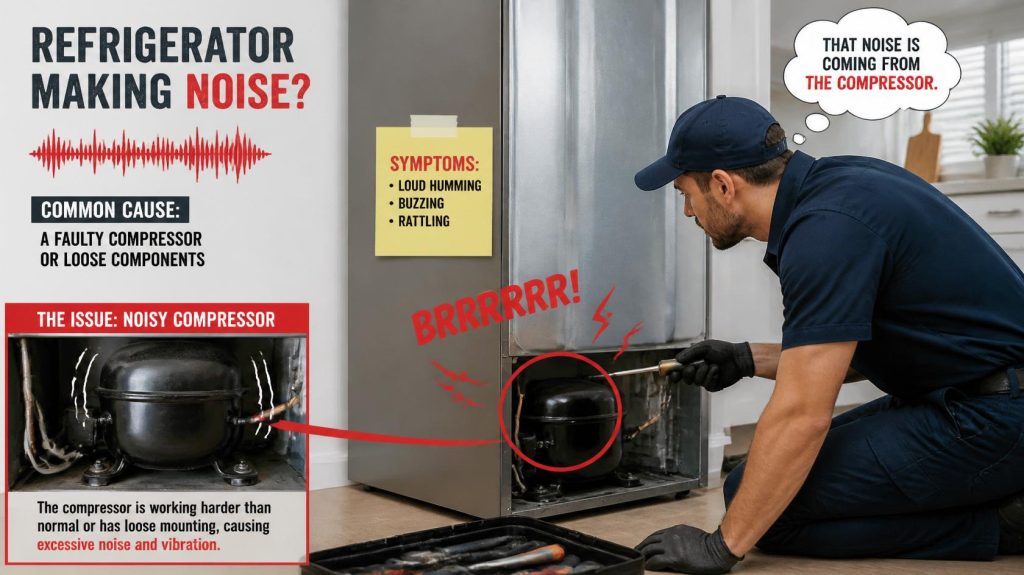
A steady buzz, especially one that seems to come from the back or bottom of the unit, is often the compressor cycling on, which is completely normal. But if the buzzing is louder than usual, continuous, or paired with the fridge not cooling properly, it can point to a failing condenser fan motor or a compressor under strain.
DIY-safe to monitor: A quiet, consistent buzz that matches the fridge’s normal cooling cycle.
Needs a technician: Buzzing that’s new, loud, constant, or happening alongside warm food in the fridge or freezer.
Clicking: Often the Ice Maker or Defrost Timer
A clicking sound, especially one that repeats every few seconds, frequently comes from the ice maker cycling or the defrost timer switching modes. This is one of the more brand-specific noises. Samsung refrigerators in particular are known for a distinct ice maker click as the auger and shutoff arm cycle, which can sound alarming even when it’s working correctly.
DIY-safe to monitor: Occasional clicking tied to the ice maker filling or the defrost cycle switching, especially if ice production still seems normal.
Needs a technician: Rapid, repetitive clicking with no ice being produced, which often points to a stuck water valve or a failing ice maker motor.
A Note on Samsung and LG Quirks
Samsung units often develop a clicking or ticking sound from the ice maker assembly well before any visible problem shows up, which makes it easy to dismiss until the ice maker eventually stops producing altogether. LG refrigerators, on the other hand, are known for a low compressor hum that’s actually part of their inverter compressor technology and is normal even when it’s more noticeable than older models. Knowing your brand’s normal quirks helps you tell the difference between “this is just how it sounds” and “something’s actually wrong.”
Humming: Usually Normal, But Not Always
A soft, steady hum is one of the most common refrigerator sounds, and in most cases it’s just the compressor or condenser fan doing their job. Newer refrigerators, especially those with inverter compressors, tend to run at a low, constant hum rather than the louder cycling sound older models make.
DIY-safe to monitor: A consistent low hum that hasn’t changed in pitch or volume recently.
Needs a technician: A hum that’s grown noticeably louder, changed pitch, or started vibrating against the wall or floor, which can indicate the compressor is working harder than it should.
Rattling: Check for Loose Items First, Then the Fan
Rattling is one of the easier noises to troubleshoot yourself before assuming the worst. Loose items on top of the fridge, a shifted drip pan, or bottles rattling against each other on the door shelves are common, harmless causes.
If you’ve ruled those out, a persistent rattle can point to a fan blade that’s hitting built-up ice or frost, which is common in freezers that have developed a frost buildup issue around the evaporator coil.
DIY-safe to monitor: Rattling tied to loose items or bottles, easily fixed by rearranging.
Needs a technician: Rattling that continues after removing loose items, especially if paired with frost buildup or a freezer that isn’t cooling evenly.
Knocking: The One to Take Seriously
Knocking or banging is the sound most likely to mean something has actually failed or is about to. It often points to a fan blade that’s physically obstructed, a compressor mount that’s loosened, or in some cases a water line that’s developed air pockets from mineral buildup.
DIY-safe to monitor: Rarely. Knocking is one of the few sounds on this list that usually warrants at least a quick professional look, even if the fridge still seems to be cooling normally.
Needs a technician: Any persistent knocking, especially if it’s new, getting louder, or accompanied by any change in temperature performance.
When to Stop Guessing and Call for Same-Day Service
Some of these sounds are harmless background noise. Others are your refrigerator telling you it needs attention before a full breakdown ruins everything inside it. If you’ve gone through this guide and you’re still not sure what you’re hearing, or the noise falls into the “needs a technician” category, it’s time for a real diagnostic visit. That’s the core of what refrigerator making noise repair Chicago homeowners and renters alike actually need: someone who can identify the cause on the spot instead of another night of guessing.
Our refrigerator repair services cover exactly this kind of diagnostic work, from compressor and fan issues to ice maker clicking and water valve knocking. We offer same-day and next-day appliance repair across Chicago and nearby suburbs including Evanston, Skokie, Oak Park, and Lincoln Park, and every visit starts with a straightforward diagnosis from certified appliance technicians. The $89 diagnostic fee is waived when you move forward with repair, and first-time customers also receive 15% off. If your refrigerator noise turned out to be related to mineral buildup in the water line, our related post on hard water refrigerator damage in Chicago covers that specific cause in more detail.
The Bottom Line on Refrigerator Noise
Refrigerator noise rarely means what it sounds like at 10pm in a quiet kitchen. A hum or a soft click is usually nothing to worry about, while a new knock or a loud, constant buzz deserves a closer look. Learning to tell the difference is really what refrigerator making noise repair Chicago residents need most: a way to sort a normal sound from an early warning sign before the food inside goes warm.
If in doubt, treat the sound as information rather than a verdict. Most refrigerator making noise repair Chicago situations resolve with a quick, affordable fix once a technician actually sees what’s going on, and waiting rarely makes the underlying problem cheaper to fix.
Frequently Asked Questions
Is it normal for a refrigerator to make noise sometimes? Yes. Compressors, condenser fans, and ice makers all make sound during normal operation. The key is noticing when a sound is new, has changed, or has gotten louder compared to what you’re used to hearing.
Why does my Samsung refrigerator’s ice maker click so much? Samsung ice makers are known for a distinct clicking sound as the auger and shutoff arm cycle. It’s usually normal, but rapid clicking with no ice production can point to a stuck valve or motor issue worth having checked.
My LG refrigerator hums louder than my old one. Is that a problem? Not necessarily. LG’s inverter compressor technology often runs at a low, steady hum that’s more noticeable than older cycling compressors, but it’s typically normal unless the pitch changes or it starts vibrating.
What’s the difference between a sound I can ignore and one that needs same-day repair? Soft, consistent sounds tied to normal cycles like cooling or ice making are usually fine to monitor. Loud, new, or worsening sounds, especially knocking or rattling paired with cooling problems, are worth a same-day diagnostic visit.
Can a rattling refrigerator fix itself, or does it always need repair? Sometimes. Rattling caused by loose items or bottles usually resolves once you rearrange them. If the rattle continues after that, it typically points to a fan or frost buildup issue that needs professional attention.