Why Gas Oven Igniter Not Lighting But Glowing?
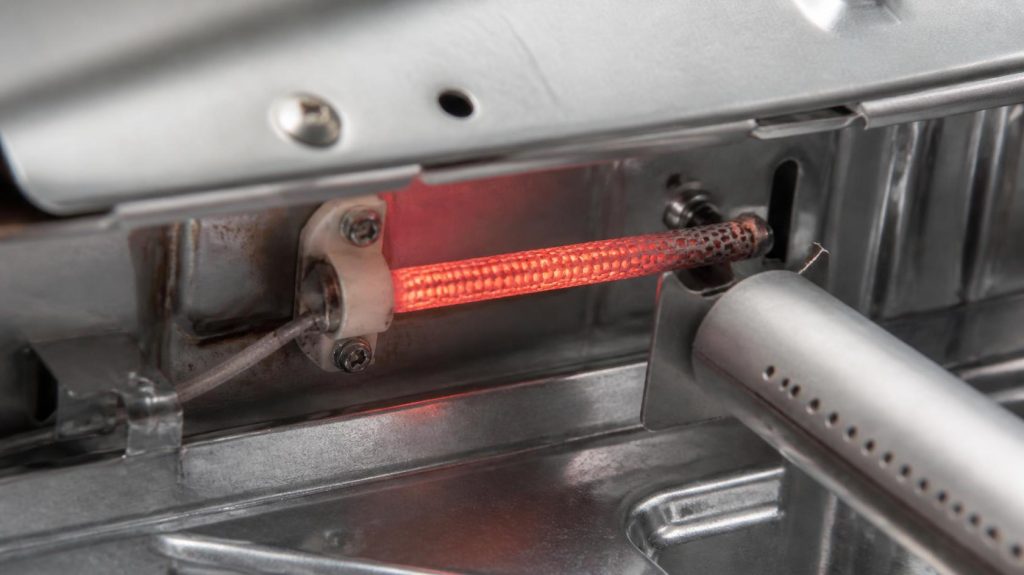
A glowing igniter that never lights the burner almost always means the igniter is weak, not dead.
Gas oven igniters and the gas safety valve are wired together, so the valve only opens once the igniter pulls enough electrical current.
An aging igniter can still glow orange while drawing too little current to trigger that valve, which is the single most common reason behind a gas oven igniter not lighting.
How Gas Oven Ignition Actually Works
Most gas ovens built in the last twenty years use a hot surface igniter instead of a standing pilot light.
When you set the oven to bake, the control board sends power to the igniter. The igniter heats up fast, usually glowing orange within 30 to 90 seconds.
Here’s the part most homeowners never learn: the igniter isn’t just a spark source. It’s also wired in series with the oven’s gas safety valve.
As the igniter heats, its electrical resistance drops, which lets more current flow through the circuit. Once that current crosses a set threshold, the safety valve opens and gas reaches the burner, where the hot igniter lights it.
That threshold matters because it’s the whole reason a glowing igniter can still leave you with a cold oven, and it’s the mechanical explanation behind almost every gas oven igniter not lighting complaint we hear.
Why the Igniter Glows but Gas Never Flows
An igniter that has been in service for years develops higher resistance as the silicon carbide or silicon nitride element wears down.
Higher resistance means less current gets pulled through the circuit, even when the igniter looks like it’s glowing normally.
If the current stays just under the valve’s opening threshold, you get the classic symptom: the igniter glows bright orange, sometimes for two or three minutes straight, and the valve simply never opens.
No valve opening means no gas, no flame, and an oven that never comes up to temperature no matter how long you wait.
This is different from an igniter that’s fully burned out. A dead igniter won’t glow at all. A weak one glows and glows, which is exactly what makes a gas oven igniter not lighting so confusing to diagnose without testing the amp draw directly.
Other Causes Worth Ruling Out
A weak igniter accounts for the large majority of cases, but a few other issues produce a similar symptom.
A failing gas safety valve. If the igniter tests fine on a multimeter and still isn’t pulling the valve open, the valve itself may be the faulty part instead of the igniter.
Loose or damaged wiring. Corroded connectors or a partially disconnected wire between the igniter and the control board can mimic a weak igniter.
A control board issue. Less common, but a board that isn’t sending full, steady power to the igniter circuit will produce the same “glows but won’t light” pattern.
Gas supply problems. A closed supply valve, a tripped regulator, or a kinked gas line will also stop the burner from lighting, though this usually shows up on the cooktop burners too, not just the oven.
Because several of these overlap in symptoms, testing the actual current draw at the igniter is the only reliable way to confirm which one you’re dealing with.
Safety First: What Not to Touch
Gas ovens involve a live gas line, and that changes the risk profile compared to most other appliance repairs.
Never attempt to adjust, repair, or bypass the gas safety valve yourself. It’s designed to stay closed unless the igniter proves it’s hot enough to safely burn the gas, and disabling that safeguard is dangerous.
If you ever smell gas, hear hissing near the oven, or notice soot or a yellow, flickering flame instead of a steady blue one, stop troubleshooting and ventilate the area immediately. Turn off the gas supply at the shutoff valve if you can do so safely, then call your gas utility or a licensed professional. Peoples Gas’s own safety guidance flags that exact same warning sign, a dull yellow-orange flame instead of a bright blue one, as a reason to stop using the appliance.
The CPSC’s carbon monoxide safety resources are a good place to review the broader warning signs of CO exposure, since faulty combustion in a gas appliance is one of the more common sources.
Cleaning debris off a cool, unplugged igniter is generally safe for a homeowner. Testing amp draw, adjusting the safety valve, or working inside the gas line is not a DIY job.
Why This Is Almost Always a Replacement, Not a Repair
Once an igniter’s resistance has drifted with age, there’s no reliable way to restore it to factory current draw. Cleaning off carbon buildup sometimes buys a few more weeks, but the underlying element has already degraded.
That’s why professionals treat a gas oven igniter not lighting as a replacement job rather than a repair. The part itself is inexpensive relative to the labor and diagnostic time, and a patched igniter tends to fail again within a short window, which usually costs more in repeat visits than just replacing it once.
The exception is when testing points to the valve, the wiring, or the control board instead of the igniter. In those cases, the fix is targeted at whatever component is actually failing, and the igniter itself may be left alone.
Safe DIY Checks Before You Call Anyone
A few steps are safe to try on your own before scheduling a repair.
- Turn the oven off, unplug it or shut off the breaker, and let it cool fully before touching anything inside.
- Open the oven and look at the igniter. A visible crack, a spot that’s clearly not glowing, or heavy discoloration points toward a dead (not just weak) igniter.
- Gently brush away any dust, grease, or food debris around the igniter and burner tube with a soft brush.
- Check that the oven’s rear vent and burner ports aren’t blocked by spills or buildup.
- Restore power and run one test bake cycle, watching how long the igniter glows before you give up and shut it off.
If the igniter glows for more than 90 seconds without any sign of flame, that’s a strong signal you’re looking at a weak igniter rather than a quick fix.
When to Call a Professional
Call a technician once you’ve ruled out the easy stuff and you’re still stuck with a gas oven igniter not lighting on a consistent basis.
You should also call right away, without troubleshooting further, if you notice a gas smell, scorch marks, an error code on a newer oven’s display, or a burner that won’t light even with a match held near it.
Testing current draw at the igniter connector requires a multimeter and the knowledge to interpret the reading safely against the valve’s opening threshold, which is exactly the kind of diagnostic work a professional visit is built for.
What a Professional Gas Oven Repair Visit Looks Like
When our certified appliance technicians come out for a gas oven that won’t light, the visit typically follows the same pattern.
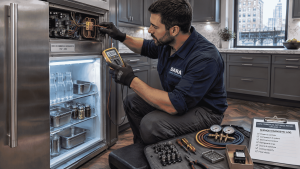
First, we clamp a meter onto the igniter circuit and watch the draw build as the igniter heats, rather than judging it by eye. A healthy igniter’s current climbs steadily and clears the valve’s opening threshold within the first minute or so. A weak one plateaus below that line and just sits there, still glowing, never quite getting the valve to open. That reading alone usually tells us whether the igniter, the valve, or the wiring is at fault, before anything gets taken apart.
If the igniter is confirmed weak, we also check the connector and wiring for corrosion while we’re in there, since a marginal connection can shave just enough current off the reading to produce the same symptom as a worn igniter.
The diagnostic fee is $89, and it’s waived entirely if you move forward with the repair. First-time customers also get 10% off the repair itself, and every job we complete carries a 3-month warranty on parts and labor.
Most gas oven repairs, igniter replacements included, land somewhere between $129 and $400 depending on the part and the model. We’ll always confirm the number before any work starts, not after.
Dara Appliance Repair has been troubleshooting gas ovens, ranges, and stoves across Chicago since 2019, and igniter issues are one of the most common calls we get. You can see our full oven and range repair services here, or book a visit online if you’re ready to get it looked at.
FAQ
What usually causes a gas oven igniter not lighting even though it’s glowing? The igniter has aged to the point where it draws too little current to trigger the gas safety valve. It still glows, but the valve never opens because the current never crosses the threshold it’s waiting for.
Can I fix a weak gas oven igniter myself? Cleaning the igniter is a reasonable DIY step, but testing amp draw and working near the gas valve is not something to attempt without training. Most weak igniters need replacement rather than a repair.
Is a glowing igniter dangerous? A glowing igniter by itself isn’t dangerous. It only becomes a safety concern if you smell gas, see a yellow or flickering flame once it does light, or notice soot around the burner, any of which means it’s time to stop and call a professional.
How long does a gas oven igniter usually last? Most igniters last several years of regular use before resistance drift causes the “glows but won’t light” symptom. There’s no fixed lifespan since it depends on how often the oven runs and the specific igniter type.
Does a weak igniter affect the cooktop burners too? No. Oven igniters and stovetop burners are usually on separate ignition systems, so a weak oven igniter typically won’t stop your cooktop from lighting.
The Bottom Line
A glowing igniter that never lights the burner is one of the more predictable gas oven problems out there, and in most homes it comes down to one aging part rather than anything more serious.
Ruling out the safety valve, wiring, and control board takes the right tools, though, so if the DIY checks above don’t solve a gas oven igniter not lighting, that’s the point to bring in a professional rather than keep guessing.
Dara Appliance Repair’s certified technicians serve Chicago and the surrounding suburbs, with an $89 diagnostic fee that’s waived when you move forward with the repair. Book your appointment here or reach out with questions any day of the week, 8 AM to 8 PM.