Reviewed by the Dara Appliance Repair team · Last updated September 2026
Quick Answer: Why your washer not draining is almost always one of seven things: a kinked drain hose, a clogged pump filter, an overloaded load, a door switch that hasn’t latched, a blocked standpipe, a failed drain pump, or a faulty control board. The first four are usually DIY-checkable in ten minutes. The last three need a certified technician.
1. Check the Drain Hose First
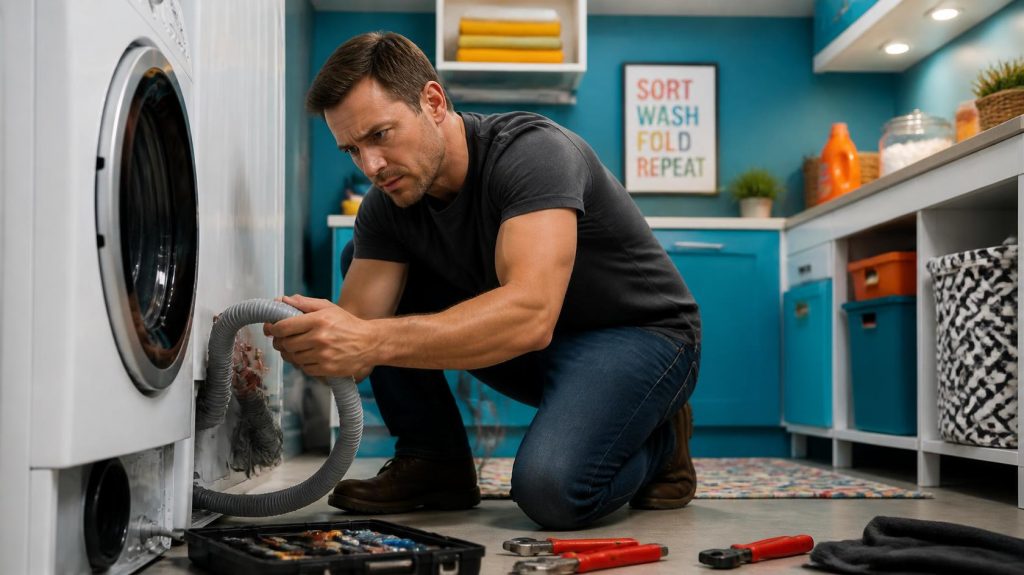
A washer not draining most often comes down to something as simple as a kinked or crushed drain hose. If the washer was recently moved, pushed back against a wall, or shares a tight utility closet, the hose can bend sharply enough to choke off water flow entirely.
What to check: Pull the washer out a few inches and look at the hose running from the back of the machine to the wall or standpipe. Straighten any kinks and make sure nothing heavy is resting on it.
DIY-checkable: Yes. This takes under five minutes and needs no tools.
2. Clear the Pump Filter
Front-load washers, and many newer top-load models, have a small access panel near the bottom-front of the machine that hides a debris filter. Coins, buttons, hair ties, and small socks collect here and can block water from draining, even when everything else works fine.
Whirlpool’s own product support team notes that a blocked filter is one of the first things to check when a washer fills, agitates, and then stalls without draining or spinning.
What to check: Open the small access door (check your owner’s manual for the exact location), place a shallow pan underneath, and remove the filter cap slowly. Water will run out. Clear any debris and reseat the filter firmly.
DIY-checkable: Yes, on most models. Some older top-loaders don’t have a user-accessible filter, in which case this step isn’t available to you.
3. Reduce an Overloaded Wash
An overloaded drum can throw the load off balance badly enough that the washer’s safety sensors halt the spin and drain cycle to prevent damage. This is one of the most common calls we get for what looks like serious appliance repair but turns out to be a laundry-day habit.
What to check: Open the lid or door and see if the load is packed tight or sitting lopsided (heavy items like towels bunched to one side). Redistribute the load or remove a few items and restart the cycle.
DIY-checkable: Yes, immediately, at no cost.
4. Confirm the Door or Lid Switch Latched
Most washers won’t drain, spin, or complete a cycle at all if the door or lid switch doesn’t sense a secure latch. This is a safety feature, not a flaw, but a worn or misaligned switch can trigger it even when the door looks closed.
What to check: Open and firmly close the door or lid, listening for a click. If the washer still won’t proceed, the switch itself may be worn or a small object may be blocking it from fully engaging.
DIY-checkable: Partially. Confirming the issue is easy. Replacing a worn switch involves accessing wiring behind the panel and is a professional-only fix.
5. Inspect the Standpipe or Wall Drain
If the hose and filter are clear but water still backs up, the problem may be downstream, at the wall standpipe or utility sink drain the washer empties into. A clog here affects drainage the same way a kink in the hose does, just further along the line.
What to check: Look at the standpipe or drain opening for standing water or slow drainage after you run water into it separately (not through the washer).
DIY-checkable: Partially. Clearing surface debris is doable. A clog deeper in household plumbing is a plumbing issue, not strictly a washer repair, and may need a plumber rather than an appliance technician.
6. Drain Pump Failure
If the hose, filter, load, switch, and standpipe are all clear and the washer still won’t drain, the drain pump itself has likely failed. The pump is an electric motor and impeller assembly, and once its motor windings burn out or the impeller cracks, no amount of clearing debris will fix it.
This is one of the two most common reasons a washer not draining needs a technician rather than a home fix. Pumps fail from age, from small objects working past the filter over time, or from simple wear after years of use.
DIY-checkable: No. Pump replacement means partially disassembling the washer cabinet and involves electrical components. This is squarely professional-only appliance repair territory.
7. Faulty Control Board
The control board is effectively the washer’s brain, telling the drain pump when to activate during each stage of the cycle. When the board itself malfunctions, it can fail to send that signal at all, even though the pump, hose, and filter are in perfect working order.
This is the least common of the seven causes, but it’s also the one homeowners are least likely to diagnose correctly on their own, since the symptoms look identical to a failed pump from the outside.
DIY-checkable: No. Diagnosing a control board issue requires testing components with a multimeter and cross-referencing manufacturer wiring diagrams, which is exactly the kind of work our certified technicians handle during a same-day visit.
DIY vs. Professional: Quick Reference Table
| Cause | DIY-Checkable? | Typical Fix |
|---|---|---|
| Kinked drain hose | Yes | Straighten hose |
| Clogged pump filter | Yes (most models) | Clear debris, reseat filter |
| Overloaded wash | Yes | Redistribute load, restart |
| Door/lid switch | Partially | Confirm latch; replacement is professional |
| Blocked standpipe | Partially | Clear surface debris; deeper clogs need a plumber |
| Drain pump failure | No | Professional appliance repair |
| Faulty control board | No | Professional appliance repair |
If you’ve worked through the first four steps and your washer still isn’t draining, you’re most likely looking at a pump or control board issue, and that’s when a certified technician’s diagnosis saves you from guessing at parts.
Brand-Specific Notes
Our technicians have hands-on experience across the full range of residential washer brands, and while the seven causes above apply broadly, a few brand patterns are worth knowing.
Whirlpool: Whirlpool’s official troubleshooting guidance confirms that a blocked pump filter and unlatched door switch are among the first things to rule out before assuming a mechanical failure.
Samsung and LG: Front-load models from both brands commonly display a specific drain-related error code (such as Samsung’s 5E or LG’s OE) when the pump can’t clear water within the expected window, which can help narrow down the cause before a technician even arrives.
GE and Maytag: Many top-load models in this range lack a user-accessible pump filter, meaning debris clogs that would be a five-minute DIY fix on a front-loader require a technician to access the pump housing directly.
Prevent It From Happening Again
- Empty pockets fully before every load. Coins and small items are the leading cause of clogged pump filters.
- Clean the pump filter every one to two months if your model has one.
- Avoid overloading, especially with bulky items like comforters and towels.
- Check the drain hose position any time the washer is moved, even slightly.
- Run an empty hot-water cycle monthly to help flush residue from the drain path.
FAQs
Why is my washer filling with water but not draining at all?
This usually points to a blocked pump filter, a kinked hose, or a drain pump that has failed completely. Start with the filter and hose, since those are the fastest and cheapest to rule out.
Can I fix a washer not draining myself?
Often, yes. Clogged filters, kinked hoses, unbalanced loads, and unlatched doors are all things homeowners can check safely without tools. Pump and control board issues need a certified technician.
How much does it cost to fix a washer that won’t drain?
Most drain-related repairs fall in the $129 to $400 range depending on the cause and part needed. Our $89 diagnostic fee is waived when you book the repair with us.
Is a washer not draining always the pump’s fault?
No. The pump is actually one of the less common causes. Filter clogs, kinked hoses, and overloaded washes account for a large share of drain complaints and cost nothing to fix.
Will an overloaded washer damage the pump over time?
Repeated overloading puts extra strain on the motor and pump over years of use, which can shorten the appliance’s lifespan even if it doesn’t cause an immediate failure.
How do I know if it’s the drain pump or the control board?
Both can produce the same symptom: water sitting in the drum with no drainage. Distinguishing between them requires testing electrical components, which is why we recommend a professional diagnostic once DIY checks are exhausted.
Is it safe to keep using a washer that won’t drain?
We’d recommend against running additional cycles until the issue is resolved, since a struggling pump motor can overheat and a persistent clog can eventually back water up into your home.
Do all washer brands have a user-accessible pump filter?
No. Most front-load washers do. Many top-load models, especially older or budget models, require a technician to access the pump directly.
Ready to Get Your Washer Draining Again?
If you’ve worked through the checks above and your washer is still holding water, it’s time for a professional diagnosis rather than a guess. Our certified technicians serve Chicago and the surrounding suburbs seven days a week, 8 AM to 8 PM, with same-day and next-day appointments available.
We’ll diagnose the real cause on the first visit, explain it in plain language, and give you an upfront estimate before any work begins. Every repair comes with a 3-month warranty, and new customers save 10% on their first repair.
Book your washer repair online or contact us to schedule.