
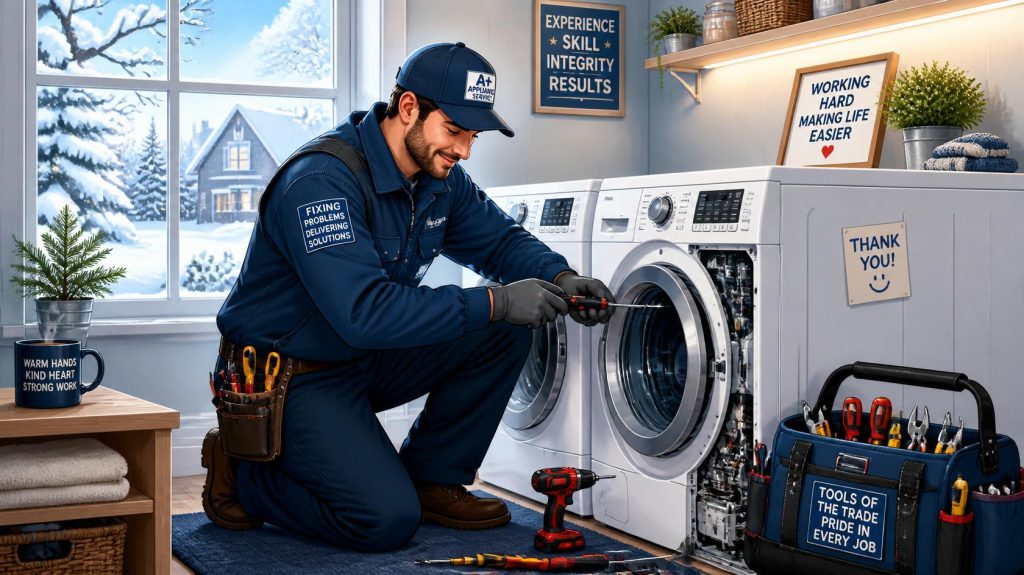
Chicago winters are rough on laundry rooms. When temperatures drop below freezing, water left in a washer’s hoses and pump can freeze and crack parts, and a dryer vent packed with lint or buried under snow can trap heat where it shouldn’t be.
The good news is that a short checklist this fall protects both machines. Here is how to winterize washer dryer setups in a Chicago home, step by step, before the first hard freeze arrives.
How do you winterize a washer and dryer?
Keep the laundry area above freezing, inspect and insulate the washer’s water supply hoses, and drain the hoses and pump if the machines sit in an unheated space. For the dryer, clean the lint screen and vent duct, then confirm the outside vent flap opens freely and stays clear of snow and debris.
That’s the short version. The sections below walk through each step and the warning signs worth watching for.
Why Chicago winters are hard on laundry rooms
A lot of Chicago laundry lives in places that get cold fast. Think basement laundry in a two-flat, hookups along a foundation wall in a bungalow, or a washer tucked into an attached garage.
Those spots can dip well below the rest of the house during a hard freeze. Water supply lines running along exterior walls are usually the first to feel it.
LG’s washer winterizing guide explains the problem well: washers hold leftover water in the pump and hoses, and because water expands as it freezes, it can damage both the machine and the pipes in your home.
Dryers have their own winter risk, and it follows a well-documented seasonal pattern. A U.S. Fire Administration report on clothes dryer fires found that residential dryer fires climb in the fall and winter months and peak in January, with failure to clean as the leading contributing factor.
Winter loads also tend to be bulkier. Sweaters, blankets, and flannel sheets can shed more lint, which means the vent fills up faster right when you’re using the dryer most. That’s why it pays to winterize washer dryer hookups here, more than in milder cities.
Washer checklist: protect your hose lines from freezing
Most of the work needed to winterize washer dryer connections happens on the washer side, because that’s where the water is. Start here.
1. Check where your washer lives. A washer in a heated basement or interior laundry closet mostly needs a hose inspection. A washer in an unheated garage, three-season porch, or a unit that sits empty for the winter needs the full draining steps below.
2. Inspect both fill hoses. Look for bulges, cracks, stiff or brittle rubber, and any drips at the connections. Cold makes worn rubber even less forgiving. If your hoses are old rubber, swapping them for braided stainless steel hoses is an easy upgrade.
3. Insulate exposed supply lines. If the hot and cold lines run along an outside wall or near a drafty basement window, wrap them with foam pipe insulation. Sealing obvious drafts nearby helps too.
4. Find and test your shutoff valves. Make sure you know where they are and that they turn smoothly. If a hose ever splits in January, you want to stop the water in seconds, not minutes.
5. Drain the washer if it sits in an unheated space. Unplug the washer first. Then turn off the water supply, disconnect the fill hoses, and let them drain into a bucket. Lower the drain hose to empty it, and on front-load washers, drain the pump filter as well. Some manufacturers recommend adding RV-type antifreeze for long-term cold storage, but only do this if your owner’s manual calls for it.
6. Let it warm up before using it again. If the washer sat in freezing temperatures, give it a full day at room temperature before you reconnect the hoses and run a cycle.
If you notice leaks, fill problems, or error codes after a cold stretch, our washer repair service can track down whether a hose, valve, or pump took the hit.
Dryer checklist: clear vent blockages before winter
The dryer side is less about freezing and more about airflow. A clear vent keeps drying times short and heat moving out of the house.
1. Clean the lint screen after every load. This one habit does the most to keep lint out of the duct. If you use dryer sheets, wash the screen with warm soapy water now and then, since residue can build up and restrict airflow.
2. Clean the duct behind the dryer. Pull the dryer out, disconnect the duct, and clear the lint inside. If you find a plastic or foil accordion-style duct, replace it with a rigid or semi-rigid metal duct, which traps less lint and holds up better.
3. Check the outside vent cap. With the dryer running, step outside and make sure the flap opens and air is pushing out. Clear any leaves, lint, or nesting material. Birds and small animals like warm vents in the fall.
4. Plan for snow and ice. In Chicago, a low wall vent can disappear under a drift or a pile of shoveled snow along a gangway. After every big storm, clear the snow away from the vent. If the flap is iced shut, melt it gently instead of chipping at it with a sharp tool.
5. Watch for moisture in the duct. A long duct running through a cold basement, crawlspace, or attic can collect condensation. If you see water dripping at a joint or damp, clumped lint inside the duct, it’s worth having the vent route checked.
6. Have gas dryers inspected. If you run a gas dryer, a qualified technician should check the gas connection and venting, especially before heavy winter use.
Clothes taking longer than usual to dry is often the first sign of a vent problem. Our dryer repair service includes a vent check, so we can tell you whether the issue is airflow or a part inside the machine.
Renting or living in a condo? If you share laundry or the building owns the plumbing and ductwork, report worn hoses, a crushed duct, or a blocked vent to your landlord or building manager instead of swapping parts yourself.
A simple fall-to-winter timeline for Chicago homes
Spreading the tasks out makes it easier to winterize washer dryer equipment without giving up a whole Saturday.
- October: Inspect the washer hoses, test the shutoff valves, and clean the full dryer duct.
- November: Insulate exposed supply lines and confirm the outside vent flap opens cleanly.
- After every big snowfall: Walk outside and clear snow and ice from the dryer vent.
- During deep freezes: Keep heat reaching the laundry area. If your furnace is struggling to keep the basement warm, our heating system repair team can help before the pipes feel it.
Warning signs it’s time for appliance repair
Some winter problems are simple fixes. Others mean it’s time to stop using the machine and call for appliance repair.
Washer warning signs:
- Water pooling near the hose connections or under the machine
- The washer hums but won’t fill, which can point to a frozen or damaged line
- Fill-related error codes after a cold night
- Cracked or bulging hoses
Dryer warning signs:
- Loads taking much longer than usual to dry
- The top or sides of the dryer feel unusually hot
- A burning smell while it runs
- The outside flap doesn’t open during a cycle
- The dryer shuts off partway through
If you notice a burning smell or heavy heat, turn the dryer off and leave it off until it’s checked.
Frequently asked questions
Can a washing machine freeze in a Chicago basement?
It can if the space drops below freezing. Most heated basements stay warm enough, but laundry areas near exterior walls, drafty windows, or in attached garages are at higher risk during a cold snap.
Should I turn off my washer’s water valves in winter?
If you’ll be away for an extended stretch or the laundry area isn’t heated, turn off the valves and drain the hoses. Knowing your valves work is a good habit year-round.
How often should I clean my dryer vent?
Fire safety guidance generally recommends cleaning the vent at least once a year, and more often if drying times are getting longer or you run a lot of loads. Fall is a smart time to do it, right before heavy winter use.
What should I do if my washer hoses froze?
Turn off the water supply, unplug the washer, and let the area warm up gradually. Avoid open flames or high heat. Before running a cycle, check the hoses and connections for cracks or leaks, and call a technician if anything looks damaged or the washer won’t fill.
Is it safe to run my dryer if the outside vent is covered in snow?
No. A blocked vent traps hot, moist air and lint inside the duct. Clear the snow and make sure the flap opens before running another load.
Get your laundry room winter-ready
A little prep now saves you from a flooded basement or a dryer that quits in the middle of January. Most of these steps are quick, and the payoff lasts all season.
If something still seems off after you winterize washer dryer setups, or a machine is already acting up heading into the cold, our certified appliance technicians can diagnose and fix the problem before it turns into a mid-winter breakdown. We offer appliance repair across Chicago and the North Shore, 7 days a week, and we back our work with a warranty.
Book your appointment online or contact us to get on the schedule before winter settles in.