By the Dara Appliance Repair team | Certified appliance technicians serving Chicago and the North Shore
You open the fridge, grab the milk, and something feels off. Not obviously wrong — just… not quite cold. The leftovers from last night are still there. The beer is still there. Everything looks fine.
So you tell yourself: “It’s probably just the door. I’ll deal with it later.”
In most Chicago apartments and condos, that moment — the “I’ll deal with it later” moment — is where a $150 repair turns into a $600 repair. Or worse, a compressor replacement. Or a full fridge replacement right before the holidays.
A refrigerator not cooling in Chicago isn’t a minor inconvenience. Whether your fridge is running warm, not holding temperature, or the freezer is fine but the refrigerator section isn’t cold — these are all symptoms of the same underlying problem, and all of them are worth taking seriously in Chicago’s climate.
The longer an ailing fridge runs, the more expensive the eventual fix becomes. This guide walks you through every warning sign, every likely cause, and every reason why “wait and see” almost always costs you more.
⚠️ Food Safety Alert
Your refrigerator becomes a food safety risk in as little as 4 hours once it stops cooling properly.
Source: U.S. Food & Drug Administration (FDA) — food above 40°F for 2+ hours should be discarded.
In This Article
1. The Warning Signs Your Fridge Is Failing
2. What Actually Causes a Warm Refrigerator
3. Does the Brand Matter? Common Issues by Make
4. Chicago-Specific Factors That Make It Worse
5. The Real Cost of Waiting
6. What to Do Right Now
7. Frequently Asked Questions
1. The Warning Signs Your Fridge Is Failing
Most refrigerators don’t fail all at once. They give you signals days — sometimes weeks — before things get bad. The problem is those signals are easy to dismiss when life is busy.
Here’s what to watch for:
Food Is Spoiling Faster Than It Should
If your milk is going bad two days before its use-by date, or your produce is wilting by mid-week, your fridge isn’t holding temperature properly. This is one of the earliest and most reliable signs of a cooling problem — and one of the most commonly ignored.
It Feels Cool When You Open It — But Not Actually Cold
A properly functioning refrigerator should hold between 35°F and 38°F. If it feels like room temperature when you reach in, or if you’re not getting that familiar blast of cold air when you open the door, something is wrong. “Cool enough” is not the same as “cold enough.”
The Motor Is Running Constantly
Your refrigerator’s compressor is designed to cycle on and off. If you notice it running non-stop — a constant low hum from the back or bottom of the unit — the fridge is working overtime to maintain a temperature it can no longer hold efficiently. This dramatically shortens the compressor’s lifespan.
Frost or Ice Buildup Inside
Frost collecting on the back wall of the fridge compartment, or ice forming on food items, points to a defrost system issue. This disrupts air circulation and can cause uneven cooling — cold in some spots, warm in others.
Condensation on the Outside of the Fridge
Moisture forming on the exterior panels — especially around the door edges — usually means the door gasket (seal) is compromised. Warm air is getting in, and your fridge is struggling to compensate.
A Clicking, Buzzing, or Rattling Sound
Unusual noises from the back of the refrigerator often indicate a struggling compressor or a faulty start relay. A single click followed by silence — and no cooling — is a classic sign that the compressor is trying and failing to start.
📷 IMAGE CALLOUT
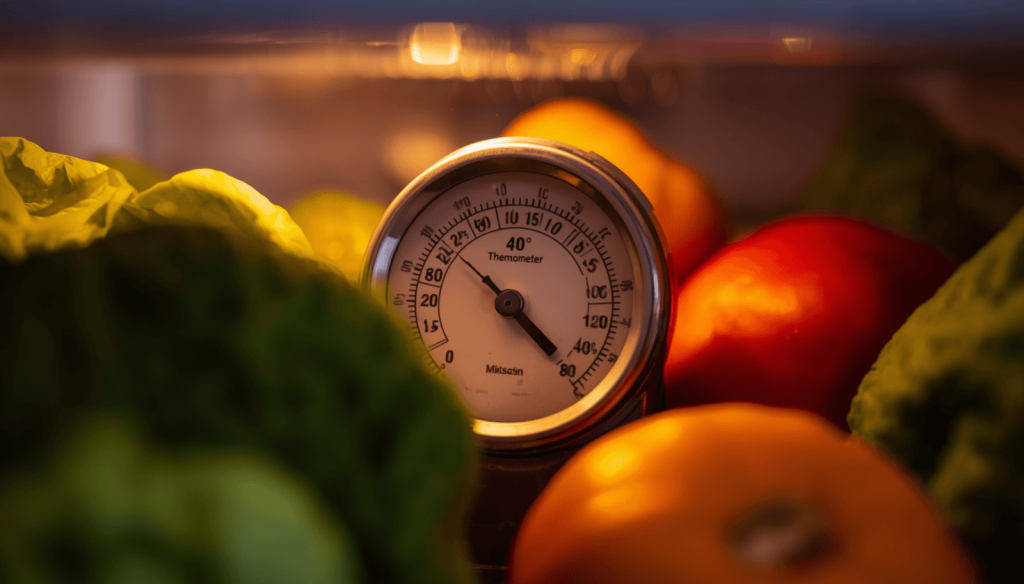
Suggested image: Close-up of a thermometer inside a refrigerator reading above 40°F, with soft warm light. Alt text: “Refrigerator thermometer showing unsafe temperature — sign your fridge is not cooling properly in Chicago.”
2. What Actually Causes a Warm Refrigerator
Once you’ve spotted the signs, the next question is: what’s causing it? The answer determines whether you’re looking at a quick fix or a major repair — and the difference often comes down to how long you waited.
Dirty or Clogged Condenser Coils
This is the single most common cause of a refrigerator not cooling properly, and it’s almost entirely preventable.
Condenser coils sit at the back or beneath your refrigerator and release heat from the cooling cycle. When they’re coated in dust, pet hair, and debris, they can’t dissipate heat efficiently. The compressor overworks to compensate — and eventually, the whole system overheats.
In our repair calls across Chicago, dirty condenser coils are the first thing we check in any North Side apartment where the fridge is running warm. In tight kitchen spaces with poor ventilation, coil buildup happens faster and the consequences are more severe.
Faulty Thermostat or Temperature Control Board
If your thermostat isn’t reading temperature accurately, it may not be sending the right signals to the compressor. The compressor sits idle while the interior warms — or it runs constantly without ever reaching the target temperature.
A failed temperature control board has the same effect. The fridge may feel cold in one area and warm in another, making it harder to diagnose without professional equipment.
Worn or Damaged Door Gaskets (Seals)
The rubber seal around your refrigerator door keeps cold air in and warm air out. Over time, it hardens, cracks, or pulls away from the frame. Even a small gap creates a constant air leak that forces the compressor to work continuously.
Test it yourself: close the door on a piece of paper. If you can slide the paper out without resistance, the gasket needs replacing. This is one of the most affordable fixes in refrigerator repair — but only if caught early.
Evaporator Fan Motor Failure
The evaporator fan circulates cold air from the freezer section into the refrigerator compartment. If this fan fails, you may notice your freezer is fine but the fridge section is warm. It’s a common failure point on older units and on refrigerators that have been running hard in warm kitchens.
Refrigerant Leak
Refrigerant is the substance that makes cooling possible. A leak doesn’t happen often, but when it does, the fridge gradually loses its ability to cool at all. You may notice the freezer running warm as well, or a subtle chemical smell near the unit. Refrigerant issues require a licensed technician and cannot be DIY-fixed.
Compressor Failure
The compressor is the heart of your refrigerator’s cooling system. When it fails, nothing else can compensate. Compressor failures are expensive — often $400 to $600 or more in parts and labor — and they frequently happen when a unit has been running under sustained stress for months.
The most important thing to understand: compressor failures rarely happen without warning. They are almost always the end stage of a chain of events that started with something much smaller and fixable.
📷 IMAGE CALLOUT
Suggested image: Technician cleaning condenser coils underneath a refrigerator in a Chicago kitchen. Alt text: “Appliance technician cleaning dirty condenser coils on a refrigerator in a Chicago home — one of the most common causes of a warm refrigerator.”
Seeing these signs? Sam or Dan can diagnose the exact cause. 📞 (773) 377-4212 | 7 days a week, 8AM–8PM
3. Does the Brand Matter? Common Cooling Issues by Refrigerator Make
The cause of a warm refrigerator isn’t always the same across brands. Here’s what our technicians see most often across Chicago homes and apartments for each major make:
| Brand | Common Cooling Issue in Chicago Homes |
|---|---|
| Samsung | Twin Cooling Plus models prone to ice maker–related airflow blockages and evaporator freeze-over; one of the top repair calls across Chicago apartments. |
| LG | Linear compressor failures became widely documented from 2016–2022 model years; units that have been running hard in warm kitchens are at elevated risk. |
| Whirlpool / Maytag | Defrost system failures and thermostat drift are the most common issues; very repairable and parts are always in stock. |
| GE / GE Profile | Control board and temperature sensor failures are frequent; also prone to evaporator fan motor issues in older builds with poor kitchen ventilation. |
| Sub-Zero / Viking / Thermador | Dual-compressor systems mean failures often affect only one section (fridge OR freezer). Repairs are more complex and parts more expensive—book a diagnostic before assuming a full replacement is needed. |
| KitchenAid / JennAir | Door seal and ice maker water inlet valve issues are common; often first noticed as frost buildup or water on the floor near the unit. |
Note: These are general patterns. The only reliable way to identify the exact cause in your specific unit is a professional diagnostic. Our $89 diagnostic fee is waived when you move forward with the repair.
4. Why Chicago Apartments Are Especially Hard on Refrigerators
Chicago isn’t just any city. Its climate, water supply, and housing stock create a specific set of conditions that put appliances under more stress than the national average. If you’re a renter in Rogers Park or a condo owner in Lakeview, these factors apply directly to your refrigerator.
Hard Water Mineral Buildup
Chicago’s water supply registers between 8 and 10 grains per gallon — classified as moderately hard to hard. In refrigerators with water dispensers, ice makers, or internal water lines, hard water accelerates mineral deposits in valves, filters, and lines.
This doesn’t directly warm the refrigerator, but it contributes to restricted water flow, frozen water lines, and added strain on components already working hard to maintain temperature. It also shortens the life of water inlet valves — a repair that runs $100 to $200.
Basement and Ground-Floor Humidity
Chicago’s lake effect weather and heavy spring rains create high ambient humidity, especially in basement apartments, garden units, and first-floor condos. Excess moisture accelerates door gasket deterioration and promotes condensation inside the unit, which can freeze over the evaporator coils and block airflow.
If your refrigerator is in a basement or semi-below-grade space, check the door seals and interior for frost buildup at least twice a year.
Chicago Winters and Temperature Swings
This one surprises people: cold ambient temperatures can actually cause a refrigerator to stop cooling properly. Many refrigerators are calibrated to operate within a specific temperature range — roughly 55°F to 95°F. In unheated garages, enclosed back porches, or drafty coach house kitchens, winter temperatures can drop below the fridge’s operating threshold.
When ambient temps drop too low, the compressor may stop cycling because it “thinks” the space is already cool enough. Freezer temps can fall to dangerous levels while the refrigerator section warms. It’s a counterintuitive problem that affects a surprising number of Chicago homes each winter.
The reverse is also true in summer. A Chicago apartment kitchen in July — with no central air, a window unit struggling to keep up, and a refrigerator pushed against the wall with no clearance — creates ideal conditions for compressor overload. Summer is our busiest season for refrigerator repair calls, and it’s not a coincidence.
Older Building Wiring and Voltage Fluctuation
Many Chicago two-flats, greystones, and bungalows have older electrical systems. Voltage fluctuations — even minor ones — can cause the refrigerator’s control board to malfunction or the compressor to cycle incorrectly. If your refrigerator shares a circuit with a microwave, dishwasher, or garbage disposal, voltage drops under load are more likely.
Tight Apartment Kitchen Layouts
In a standard Chicago apartment kitchen, the refrigerator is often pushed directly against a wall with zero clearance on the sides and back. Manufacturers recommend at least 1–2 inches of clearance on each side and 2 inches from the back wall for proper heat dissipation. Without it, condenser coils overheat faster, especially in summer.
📍 Chicago Neighborhoods & Suburbs We Service
We regularly service Rogers Park, Lakeview, Edgewater, Lincoln Square, Andersonville, and Lincoln Park — neighborhoods with some of the city’s highest concentrations of older apartment buildings where these problems are especially common.
Also serving Evanston, Skokie, Oak Park, Niles, Park Ridge, Wilmette, Glenview, Northbrook, Highland Park, Deerfield, Berwyn, Cicero, and Des Plaines.
Chicago renter with a warm fridge? We serve your neighborhood. 📞 (773) 377-4212 | Mon–Sun 8AM–8PM
5. The Real Cost of Waiting
This is where “it’s probably fine” becomes genuinely expensive. Here’s what the delay actually costs you:
| Problem | Fix Early | Wait Until It Fails |
|---|---|---|
| Dirty condenser coils | $89–$120 cleaning | $400–$600 compressor replacement |
| Worn door gasket | $80–$150 gasket replacement | $200+ wasted food + compressor strain |
| Faulty thermostat | $120–$200 thermostat repair | $300–$500 control board + secondary damage |
| Evaporator fan motor | $150–$250 motor replacement | $400+ if compressor affected |
| Refrigerant leak (early) | $200–$350 recharge + seal | $600–$1,000+ full system failure |
Estimates based on typical repair costs in the Chicago metro area as of 2025. Final pricing depends on brand, model, and parts availability.
And that’s before you account for food spoilage. The average American household keeps $300 to $400 worth of food in the refrigerator at any given time. A failed fridge over a weekend can wipe that out entirely.
For renters, there’s an added wrinkle: while your landlord is responsible for major appliance repair in most Illinois rental agreements, you are still responsible for reporting the problem promptly. If you delay reporting and the damage worsens, your landlord may have grounds to push back on covering the full repair cost.
Document everything and report it in writing. Under the Chicago Residential Landlord and Tenant Ordinance (RLTO), your landlord is required to maintain appliances in working order and respond to repair requests within a reasonable timeframe. A timestamped text or email is your best protection.
6. What to Do Right Now
If your refrigerator is running warm, here’s a clear action plan:
Step 1: Check the Basics
- Confirm the temperature settings haven’t been accidentally changed (common in apartments with kids or roommates).
- Check that the fridge isn’t overpacked — blocked airflow can cause warm spots.
- Pull the fridge away from the wall slightly and look at the coils on the back or underneath. Visible dust and debris buildup is a problem.
- Test the door seal with the paper test: close the door on a sheet of paper. If it slides out easily, the gasket needs replacing.
Step 2: Place a Thermometer Inside
A simple appliance thermometer (under $10 at any hardware store) will tell you exactly what temperature your fridge is holding. According to the FDA’s food safety guidelines, perishable food above 40°F for more than 2 hours should be discarded. Above 45°F, act immediately.
Step 3: Don’t Overload It While It’s Struggling
If your fridge is already running warm, adding large quantities of warm food or a warm pot of leftovers puts the system under extra strain. Let hot food cool to room temperature before refrigerating it until the issue is resolved.
Step 4: Book a Diagnostic Before It Escalates
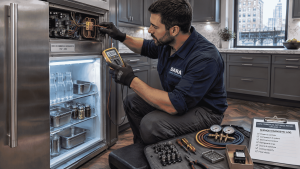
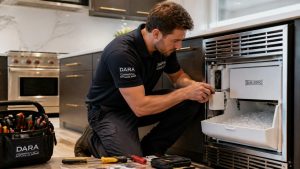
The most cost-effective move you can make is getting a technician to diagnose the problem before it cascades. At Dara Appliance Repair, we offer a $0 diagnostic fee when you move forward with the repair. Our technicians Sam and Dan serve Chicago and surrounding suburbs — including Evanston, Skokie, Oak Park, and the North Shore — seven days a week, 8AM to 8PM.
We carry parts for Whirlpool, Samsung, LG, GE, Maytag, KitchenAid, Sub-Zero, Viking, Thermador, JennAir, and Kenmore, and we back every repair with a full warranty.
Your Refrigerator Is Telling You Something. Listen to It.
Don’t wait for a $600 compressor bill. Book your $0 diagnostic today — the fee is waived when you move forward with the repair.
📞 Call or Text: (773) 377-4212 | Mon–Sun 8AM–8PM
dara-repairllc.com | Serving Chicago + 14 suburbs
7. Frequently Asked Questions
Why is my refrigerator not cooling but the freezer works fine?
This almost always points to the evaporator fan motor or a problem with the damper that controls airflow between the freezer and refrigerator sections. Cold air is being produced but not circulating into the fridge compartment. It’s a relatively straightforward repair, but it won’t fix itself.
How much does refrigerator repair cost in Chicago?
Most refrigerator repairs in Chicago fall between $150 and $400 depending on the issue and brand. Simple fixes like condenser coil cleaning or door gasket replacement run $89–$150. Fan motor or thermostat replacements typically run $150–$250. Compressor work is the most expensive at $400–$600+. At Dara Appliance Repair, the $89 diagnostic fee is waived when you move forward with the repair, so you never pay just to find out what’s wrong.
How long can food stay safe if my fridge isn’t cooling?
The FDA recommends discarding perishable food that has been above 40°F for more than two hours. If your fridge has been struggling for a day or more, be conservative: when in doubt, throw it out. The cost of spoiled groceries adds up quickly and reinforces why early diagnosis matters.
Is it worth repairing a refrigerator that’s more than 10 years old?
The general rule is: if the repair costs more than half the price of a comparable new refrigerator, replacement may make more financial sense. However, many issues — condenser coils, door seals, thermostats, fan motors — are relatively inexpensive to fix on older units. A diagnostic will give you a clear picture of what you’re dealing with before you commit to anything.
Can I clean the condenser coils myself?
Yes — it’s one of the few DIY-friendly maintenance tasks on a refrigerator. Unplug the unit, pull it out from the wall, and use a vacuum with a brush attachment to remove dust from the coils (usually on the back or underneath). Do this once or twice a year. That said, if your fridge is already running warm, coil cleaning alone may not solve the problem if a secondary issue has developed.
My landlord hasn’t responded about my fridge not cooling. What should I do?
Document your initial report with a timestamp — a text or email is ideal. Under the Chicago Residential Landlord and Tenant Ordinance (RLTO), your landlord is required to maintain major appliances in working order and respond to repair requests within a reasonable timeframe. If they don’t act, you may have options including withholding rent or arranging the repair yourself and deducting the cost. Consult a local tenant’s rights organization if your landlord is unresponsive.
What brands does Dara Appliance Repair service?
We repair all major refrigerator brands including Whirlpool, Samsung, LG, GE, Maytag, KitchenAid, Sub-Zero, Viking, Thermador, JennAir, and Kenmore. We carry parts on-hand and serve Chicago and 14 surrounding suburbs, Monday through Sunday, 8AM to 8PM.