
Refrigerator Door Seal Problems? Here’s Exactly How We Diagnosed and Fixed One in Chicago
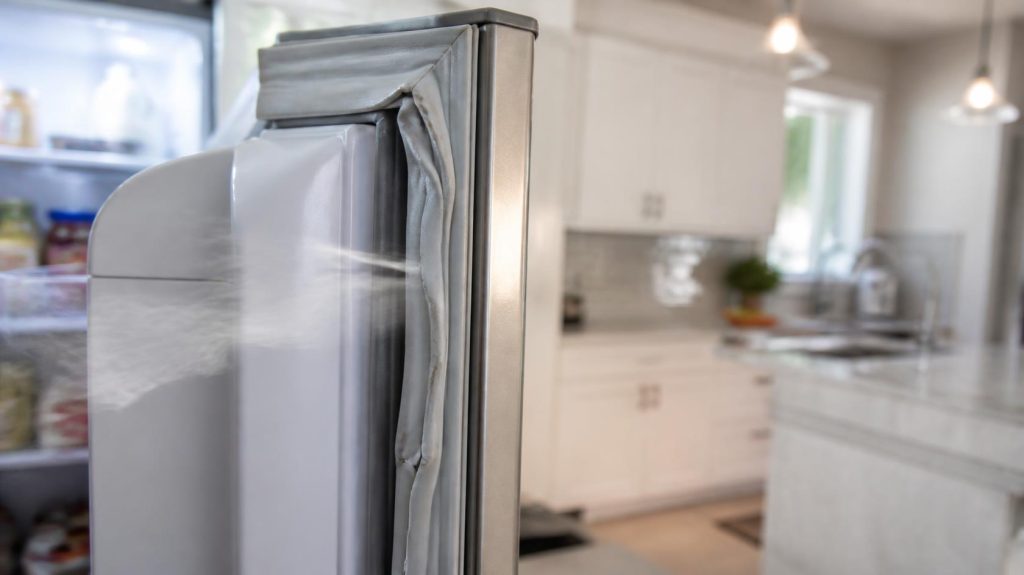
A step-by-step look at a refrigerator losing cold air through a damaged door gasket, and how our certified technicians tracked it down
A refrigerator Refrigerator Door Seal Problems that looks closed can still let cold air escape if the gasket around the edge has cracked, torn, or pulled loose. Most people don’t notice until they see frost along the door, beads of condensation, or a fridge that runs warmer on some shelves than others.
That’s what happened at this home in Bridgeport. The door closed normally and looked fine, but frost kept building along the bottom edge. Our certified appliance technicians traced it to a gasket that had cracked and separated right where it’s hardest to see.
Below is the exact process we used to find the leak, replace the gasket, and restore a full seal. Want to check your own fridge first? Our step-by-step dollar-bill seal test takes less than a minute. If the seal fails, our refrigerator repair team will diagnose it and quote the price before any work starts.
Case Snapshot
The Problem
Frost and warm spots with no obvious cause
The homeowner noticed frost building up around the bottom edge of the refrigerator door, and food that felt slightly warmer than usual. The fridge was an 8-year-old top-freezer model, and the door appeared to close normally. Nothing looked damaged at a glance.
That combination is a typical early sign of a leaking door seal. When warm, humid kitchen air slips through a gap, it hits the cold surfaces near the door and freezes, so frost collects right where the leak is. The same leak lets the inside temperature creep up, much like we see when refrigerator temperatures fluctuate for other reasons.
A slightly warm fridge is easy to shrug off, but it matters for food safety. The FDA recommends keeping your refrigerator at 40°F or below and checking it with an appliance thermometer, since most refrigerator controls don’t show the actual temperature.
One quick way to tell the problems apart: frost along the door gasket points to the seal, while ice piling up inside the freezer more often points to the defrost system. That second problem is covered in our excessive frost buildup case study.
The Diagnostic Process
How our technicians traced the cause
- Visually inspected the gasket around the full perimeter of the door for cracks, tears, or gaps
- Ran a dollar-bill test along multiple points of the seal, pulling a bill through with the door closed to check for resistance
- Found the gasket had cracked and partially separated from the door along the bottom edge, where it's least visible
- Checked the door hinges and alignment to confirm the door itself was closing properly and the issue was isolated to the gasket
The Root Cause
A small gap doing a lot of damage
Diagnosis
The gasket had cracked and pulled away from the door along the bottom edge, most likely from years of normal wear combined with the weight of the door pulling on that section over time. The gap was small enough not to be obvious on a casual look, but large enough to let a steady trickle of cold air escape, which explained the frost and the temperature drift.
The Fix
Full gasket replacement
Our certified appliance technicians replaced the door gasket with a manufacturer-matched part and confirmed a full, even seal around the entire door perimeter. The repair was finished in the same visit.
The matched part matters. Gaskets vary in shape, size, and mounting style from brand to brand, and even between model years. A generic seal may not sit flush. Fitting the correct gasket for this exact model is what lets the door close tight along every edge, including the bottom corner where the old one failed.
As with every refrigerator repair we handle, the price was quoted before any work started. Every repair is backed by a warranty, and coverage terms depend on your appliance brand.
The Result
No more frost, normal temperature restored
The frost buildup stopped, and the interior temperature returned to normal within a few hours. The homeowner confirmed no further frost or warm spots over the following days.
That quick change makes sense when the gasket is the only problem. Once warm, humid air stops getting in, the fridge no longer has to fight a constant leak to hold its temperature.
On a top-freezer model like this one, the freezer door has its own gasket that wears the same way. If you see frost forming along the freezer door edge, our freezer door seal case study walks through that repair.
Common Causes
Common Causes of Refrigerator Door Seal Problems
| Condition | Signs | Fix |
|---|---|---|
| Cracked or torn gasket | Visible gaps, cracking, or brittleness in the rubber seal | Gasket replacement |
| Gasket pulling away from the door | Seal fails the dollar-bill test in specific spots | Gasket replacement or resecuring |
| Door misalignment | Uneven gaps around the door frame, door doesn't sit flush | Hinge adjustment |
| Food debris or buildup on the gasket | Seal looks intact but doesn't compress fully | Gasket cleaning |
| Warped door | Gaps that shift depending on where you check | Door panel inspection, possible replacement |
Brand-Specific Notes
What we see across different brands
We repair all major and luxury appliance brands, and the core problem is the same on every refrigerator: a gasket that no longer seals. What changes from brand to brand is how the gasket attaches to the door, how the door adjusts, and which exact part fits. That’s why our certified appliance technicians match the gasket to your model number before replacing it.
- Whirlpool, KitchenAid, Maytag, and JennAir: Many of these doors use a gasket that presses into a groove around the door liner. Some newer models use a foamed-in-place gasket bonded into the door, which makes replacement more involved than a simple swap.
- GE, Café, and Monogram: Depending on the model, the gasket either presses into a channel or is held by screws under the inner door liner. On screw-mounted doors, the liner needs careful handling so it isn’t bent during the swap.
- Samsung and LG: Many of their French-door models have a hinged center seal on the left door. If that flap sticks or doesn’t fold into place, the doors can leave a gap even when both gaskets are in good shape.
- Sub-Zero, Thermador, and Viking: On built-in and panel-ready models, the door sits flush with the surrounding cabinets, so a small alignment problem can be hard to spot. Our certified appliance technicians have experience across Sub-Zero, Thermador, and Viking refrigeration, and we check door alignment and hinge adjustment along with the gasket.
Don’t see your brand? See the full list of brands we repair. Having your model number handy when you book online helps us identify the right gasket faster.
Prevention
How to keep this from happening again
- ✓ Clean the gasket regularly to prevent debris buildup that keeps it from sealing fully
- ✓ Check the seal periodically with the dollar-bill test, especially along the bottom edge
- ✓ Avoid slamming the door, which stresses the gasket over time
- ✓ Address small cracks early, before they widen into a full seal failure that can leave your refrigerator running constantly
- ✓ Check the gasket at least once a year, especially on refrigerators over 5 years old
DIY vs. Professional
What you can check yourself vs. what needs a pro
You Can Try
- Running the dollar-bill test
- Cleaning the gasket
- Checking for visible cracks or debris
Call a Professional
- Gasket replacement
- Hinge adjustment
- Diagnosing whether the issue is the gasket or door alignment
Not sure whether it's the gasket or the door? Book online and our certified appliance technicians will find the cause and explain your options before any work starts. You can also send us your question.
Is Your Refrigerator Door Not Sealing Right?
$89 diagnostic fee, waived with repair · 10% off your first repair · Same-day appointments available
FAQ
Frequently Asked Questions
How do I know if my refrigerator door seal is bad?
Look for frost or condensation near the door edge, food that stays warmer than usual, or a fridge that seems to run more often. Then check the gasket itself for cracks, tears, stiff spots, or sections pulling away from the door. A failed dollar-bill test anywhere around the door confirms the leak.
What is the dollar-bill test for a refrigerator door seal?
Close the door on a dollar bill so it sits half in and half out, then pull it out slowly. You should feel steady resistance. If it slides out easily, the seal isn't gripping at that spot. Repeat the test around the door, especially at the corners and bottom edge. On doors with strong magnetic seals, a flashlight check works better. Place a lit flashlight inside, close the door, and look for light escaping in a dark room.
Can I replace a refrigerator door gasket myself?
On some models, yes. Many standard gaskets press into a groove and can be swapped with patience and the exact part for your model number. Screw-mounted, foamed-in-place, and built-in doors are more involved, and a poor fit can leave the same gaps you started with. If you'd rather not source the part or risk bending the door liner, our certified appliance technicians can handle it.
Why is my refrigerator door not sealing even though it looks closed?
A gasket can fail in one small section, often along the bottom edge or at a corner, while the rest looks fine. Other common causes include debris on the gasket, a door that sits slightly out of alignment, a refrigerator that isn't level, or an overfilled door bin holding the door open a fraction. In this case, the door closed normally, but the gasket had cracked and separated along the bottom.
How much does it cost to replace a refrigerator door gasket?
It depends on your refrigerator's brand and model, since gaskets are made for specific models and part prices vary. Most of our repairs fall between $129 and $400. Your exact price depends on the issue, and we quote it before any work starts.
Will a bad door seal increase my electric bill?
It can. Warm air leaking in makes the compressor run longer and more often to hold the temperature, and that uses more electricity. How much depends on the size of the gap and how long it has been leaking. Fixing a failing seal early is the simplest way to stop the extra cost.
How often do refrigerator door gaskets need to be replaced?
There's no fixed schedule. Gaskets wear with age, daily use, and buildup, so replace one when it cracks, hardens, loses its shape, or fails the dollar-bill test. Keeping the gasket clean and checking it at least once a year helps you catch wear early, especially on refrigerators over 5 years old.
How long does a gasket replacement take?
In this case, the replacement was finished in the same visit. Timing depends mostly on how the gasket mounts and whether the exact part for your model is available. Press-in gaskets are quicker than screw-mounted or foamed-in-place styles. If a part has to be ordered, we'll explain the timing when we quote the repair.