
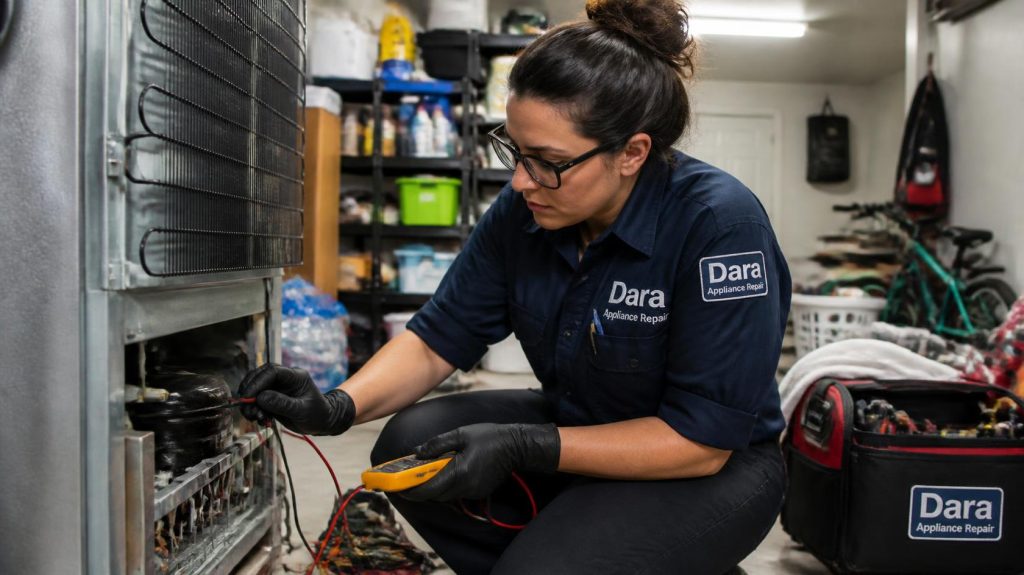
Your fridge is running louder than it used to. The freezer frosts up faster, and you’re doing quiet math in your head: how old is this thing, and is it worth one more repair?
Age is only part of the answer. Two refrigerators bought the same year can end up years apart, depending on the type, the brand tier, and how they were treated along the way.
This guide lays out what published sources say about refrigerator lifespan years, how that picture shifts from a basic top-freezer to a built-in luxury unit, and what our technicians look at when deciding whether an older fridge still has life left in it.
How Many Years Does a Refrigerator Last?
A typical refrigerator lasts about 9 to 13 years, according to InterNACHI’s life expectancy chart for home components. Standalone freezers often run 10 to 20 years. Built-in luxury models can go longer: Sub-Zero says it stress-tests components to simulate up to 20 years of daily use. Care and features shift every estimate.
Those numbers come from InterNACHI’s estimated life expectancy chart, which home inspectors use as a planning guide. The chart itself says the figures assume normal wear and regular maintenance, and that they are guidelines rather than guarantees.
ENERGY STAR lands in the same range. Its savings estimates use a 12-year product lifetime, and it notes that refrigerators over 15 years old could cost about $95 more per year to run than a newer certified model. So even a fridge that still works past that point may be costing you money every month.
Refrigerator Lifespan by Brand Tier
Brand tier changes refrigerator lifespan years more than most people expect. A basic model and a feature-loaded model from the same brand can age very differently, so the table below groups refrigerators by how they’re built rather than by logo alone.
| Tier | Example brands | Published lifespan guidance | What usually ends its life |
|---|---|---|---|
| Basic top-freezer and bottom-freezer | Frigidaire, Whirlpool, GE, Amana, Kenmore, Hotpoint | About 9 to 13 years (InterNACHI); ENERGY STAR uses 12 years in its estimates | Compressor or sealed system failure, often after years of dusty condenser coils |
| Side-by-side and French door with ice and water | Samsung, LG, GE Profile, Whirlpool, KitchenAid, Maytag | Same general 9 to 13 year guidance; no separate published figure | More parts that can fail: ice makers, water valves, dispensers, and electronic controls |
| Counter-depth and premium freestanding | Bosch, Café, Fisher & Paykel, Electrolux, KitchenAid | No separate published figure in the sources we checked | Similar failure points to mainstream units; parts can cost more |
| Built-in luxury | Sub-Zero, Thermador, Viking, Miele, Monogram, JennAir | Sub-Zero: components stress-tested to simulate up to 20 years (manufacturer claim). We found no published figures for the others | Sealed system work is a bigger job, but replacement often means cabinet work too |
| Standalone freezers (chest and upright) | Most major brands | About 10 to 20 years (InterNACHI) | Fewer door openings and simpler controls help them last |
How to read this table
No manufacturer we checked publishes independent data on refrigerator lifespan years by brand. What you’ll find instead are general industry ranges and a few manufacturer claims, like Sub-Zero’s.
That’s why tier tells you more than the badge on the door. A plain top-freezer has fewer parts to wear out. A French door model with an in-door ice maker, a water dispenser, and a touch panel has more components that can fail, even when the cooling system itself is healthy.
Why Built-In Luxury Refrigerators Often Last Longer
The biggest difference is how the cooling is split. According to Sub-Zero’s own explanation of fridge lifespans, a standard fridge freezer usually runs one compressor for both sections, while Sub-Zero’s dual refrigeration gives the fridge and freezer their own compressors. Less work per compressor means less wear over time.
Keep in mind that this comes from the manufacturer, not an independent test.
Built-in units also sit inside your cabinetry. Replacing one often means cabinet or panel work on top of the appliance cost, which is one reason repair is usually the first call for these models. Our certified appliance technicians have experience across Sub-Zero refrigeration and other luxury brands, and you can read more on our Sub-Zero appliance repair page.
What Shortens a Refrigerator’s Life?
Most refrigerators don’t fail all at once. They wear down from a few common habits and conditions:
- Dirty condenser coils. Dust on the coils traps heat, so the compressor runs longer and hotter to keep things cold.
- Tight installation. A fridge squeezed into a cabinet with no breathing room can’t shed heat. Your installation manual lists the clearance it needs.
- Unheated garages and porches. Chicago winters are hard on a garage fridge. Many standard models aren’t designed for cold rooms, and the freezer can warm up when the space around it gets too cold. Check your manual before moving one out there.
- Worn door gaskets. A leaky seal lets warm air in, which keeps the compressor running. Our guide to refrigerator door seal repair covers what to look for.
- Blocked vents inside. Overpacking the fridge can block airflow between the freezer and fresh food sections.
- Ignoring early warning signs. Clicking, constant running, and warm spots are often fixable early. Our post on warning signs your fridge is failing explains what each one means, and this guide covers the clicking sound before your fridge compressor kicks on.
How Can You Make a Refrigerator Last Longer?
You don’t need tools for most of this. A few small habits protect the cooling system and keep minor problems from becoming major ones:
- Clean the condenser coils. Unplug the fridge first, then vacuum or brush the coils. Your manual tells you where they are and how often to clean them.
- Give it room to breathe. Keep the clearance your manual recommends around the sides, top, and back.
- Check the door seals. Close the door on a dollar bill. If it slides out easily, the gasket may need cleaning or replacing.
- Set the right temperatures. Aim for 40°F or below in the fridge and 0°F in the freezer, the levels U.S. food safety guidance recommends. Colder than needed just adds run time.
- Change the water filter on schedule. A clogged filter strains the water system on models with ice and water.
- Keep it level. A fridge that tilts forward can leave doors that don’t fully close.
- Fix small problems early. Replacing a worn gasket or a failing fan early can spare the compressor a lot of extra work.
Safety note: unplug the refrigerator before cleaning coils or touching anything behind the kick plate. If a fix means moving a heavy unit or opening sealed refrigerant lines, stop and call a professional.
How Do You Find Out How Old Your Refrigerator Is?
Look for the rating plate, usually a sticker inside the fresh food section along a side wall or on the ceiling. It lists the model and serial numbers.
Most manufacturers build the production date into the serial number. The code differs by brand, so the quickest route is the manufacturer’s support website or phone line, which can decode it for you.
Count refrigerator lifespan years from that build date, not from the day you moved in. A fridge that came with the house may be much older than you think.
Is an Aging Refrigerator Worth Fixing?
Age is one input, not the whole answer. Before deciding, it helps to know three things:
- What actually failed. A worn gasket or a failed fan motor is a different conversation than a dead compressor.
- Which tier you own. A built-in luxury unit and a basic top-freezer of the same age are not the same decision.
- How it’s been treated. A well-kept 11-year-old fridge can be in better shape than a neglected 6-year-old one.
If you want to run the numbers on repair versus replacement, our guide to refrigerator repair cost in Chicago walks through the math.
How Our Technicians Decide If an Older Fridge Is Worth Fixing
An honest appliance repair visit should end with a clear recommendation, even when that recommendation is to replace. Here’s what our technicians check on an older refrigerator:
- The real build date from the serial number
- Whether the problem is in the sealed system or in a replaceable part like a fan, sensor, control board, or ice maker
- The condition of the coils, gaskets, and cabinet
- Whether a repair makes sense for the unit’s tier and remaining life
The diagnostic fee is $89, waived when you book the repair. Most repairs fall between $129 and $400. Your exact price depends on the issue, and we quote it before any work starts. Every repair is backed by a warranty, and coverage terms depend on your appliance brand.
If the numbers don’t add up, we’ll tell you. You can learn more about our refrigerator appliance repair service in Chicago, or our freezer appliance repair service if a standalone freezer is giving you trouble.
Frequently Asked Questions
How long does a Sub-Zero refrigerator last? Sub-Zero says it stress-tests components to simulate up to 20 years of daily use. Real-world life depends on maintenance and installation. We repair Sub-Zero and other luxury brands across Chicago and the North Shore.
Does a freezer last longer than a refrigerator? Usually, yes. InterNACHI’s chart lists standalone freezers at about 10 to 20 years, compared with about 9 to 13 years for refrigerators. Freezers get opened less and have simpler controls.
Is it worth repairing a 10-year-old refrigerator? Often, yes, if the problem is a replaceable part and the cooling system is healthy. Ten years sits inside the typical range, so the specific failure matters more than the age. A diagnosis tells you which situation you’re in.
Do French door refrigerators last as long as top-freezer models? We found no separate published lifespan figure for French door models. They do have more components, like ice makers, dispensers, and electronic controls, so there are more parts that can need service over the years.
Can a refrigerator last 20 years? Some do, especially built-in luxury units and well-kept standalone freezers. Published guidance puts refrigerator lifespan years at about 9 to 13 for most models, though, and ENERGY STAR notes that units over 15 years old may cost noticeably more to run.
Can I keep a regular refrigerator in my garage? Check your manual first. Many standard models aren’t designed for unheated spaces, and a cold Chicago garage can keep the freezer from staying frozen.
The Bottom Line
Most refrigerators last about 9 to 13 years, and the tier you own matters as much as the brand name. Good habits can push a unit toward the long end of its range, and catching problems early is the cheapest way to get there.
If your fridge is showing its age and you want a straight answer on whether it’s worth fixing, book online or contact our team. You can also call (773) 377-4212. We handle appliance repair in Chicago and the surrounding suburbs, seven days a week from 8 AM to 8 PM.